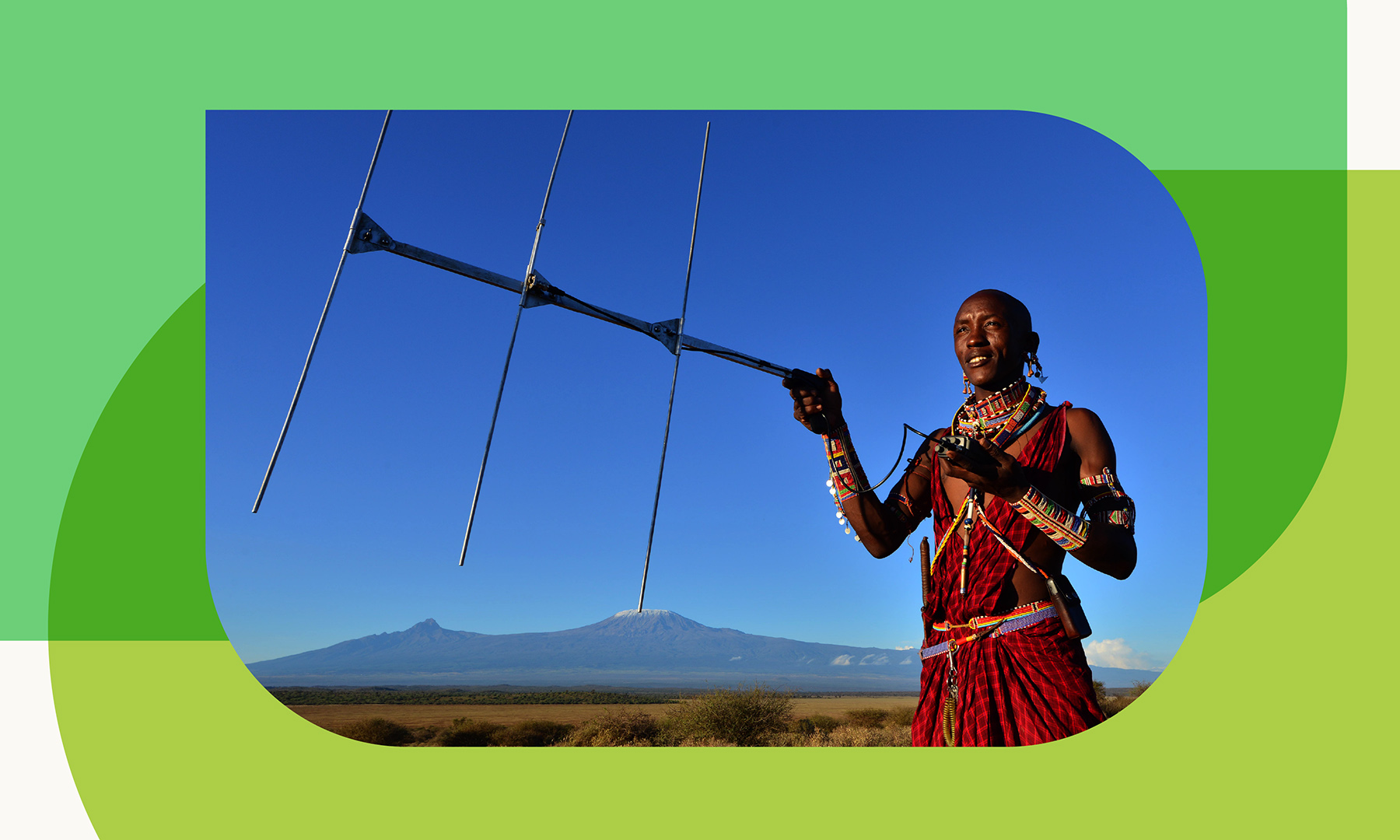
Every morning before the sun climbs too high, Saitoti Petro Lorkuta threads his motorbike through the dusty pastures east of Tanzania's Tarangire National Park. At 35, he is a Maasai warrior, but instead of carrying a spear, he carries a GPS device and a smartphone. His job is not to hunt lions — it is to protect them.
Lorkuta grew up hearing elders tell stories of legendary lion hunts. But the actual roar of a lion had almost vanished from the savannah where he grew up. For a generation of Maasai boys, seeing a lion in the wild felt like a distant dream.
That dream is coming back. Lorkuta is one of more than 160 Maasai warriors who have joined a programme called Warriors for Wildlife, run by the nonprofit African People and Wildlife (APW). Since 2005, the organization has worked in northern Tanzania to help lions and cattle-herding communities live side by side. Instead of fighting predators, these warriors track them, monitor their movements, and warn herders when lions are nearby — so everyone stays safe.
Bravery has always been central to Maasai identity. Historically, young men proved their courage by spearing lions. A century ago, there were roughly 200,000 lions across Africa, so those hunts did not push the species toward extinction. Today, the numbers are much smaller: only 20,000 to 32,000 lions remain in the wild worldwide. Climate change, shrinking habitats, and growing human settlements have pushed lions and herders into closer contact than ever before.
APW's approach blends old knowledge with new tools. Warriors use their deep understanding of the land to follow lion tracks through the bush. They carry GPS devices that log every sighting, uploading the data to a shared mapping system. Herders get updates through a community WhatsApp group, helping them choose safer grazing routes. When a lion does attack livestock, warriors rush to the scene to calm tensions before angry herders can organize a retaliatory hunt.
The turning point came in 2010, when Elvis Kisimir, a respected Maasai warrior from northern Tanzania, joined APW's leadership. He began telling pastoralists something that changed minds: "Without the lions, there could be no Maasai warriors." Lions, in other words, were not just prey — they were part of what it meant to be Maasai. Word spread fast. Communities started writing to APW asking to join, choosing a conservation model they could shape themselves, rather than one handed down by outsiders.
"The government tried its own way of conservation using men in uniform with guns, chasing people, and it didn't work," Kisimir said. "We solved it by sitting down under the tree and talking, asking people what the problem was."
For Lorkuta, protecting lions has become its own quiet test of courage. When he encounters a lion at close range, he stays still, locks eyes with the animal, and waits. "Eventually, the lion goes," he says. "The first time it happened, the lion was very close and I was scared, but not any more."
With more than 160 warriors now spread across dozens of communities, the experiment is growing. And slowly, the roar is returning to the nocturnal soundscape of Tanzania's savannah — proof that when old traditions meet new ideas, both people and wildlife can thrive.