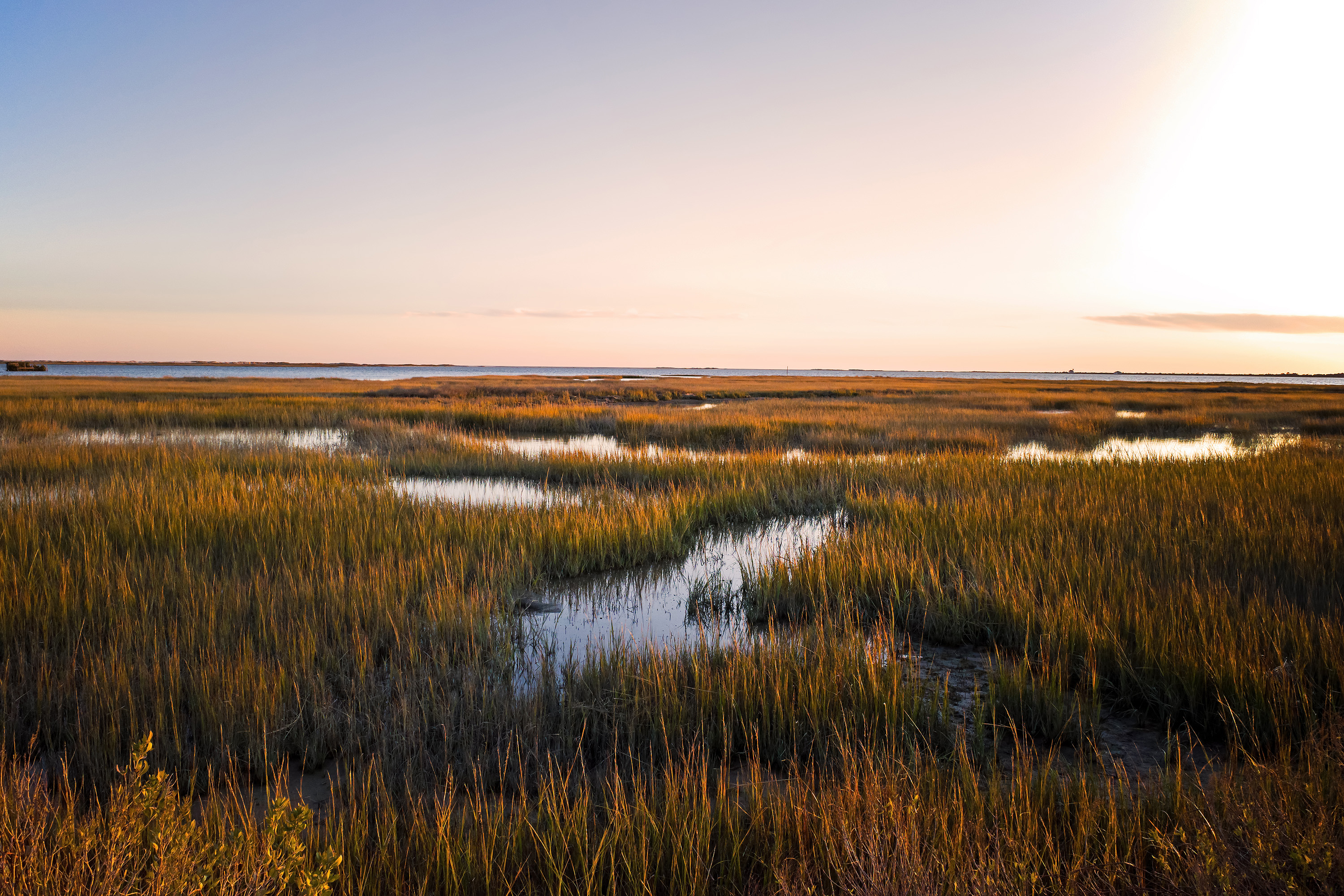
When a developer fills in a Florida wetland to build homes or businesses, it comes with a hidden cost: increased flooding. Now MIT economists have found a way to preserve the environmental and economic benefits of wetlands while still allowing development—through a carefully designed system of tradeable offsets paired with local taxes on development.
For decades, U.S. policy has operated under a "no net loss" principle for wetlands, allowing developers to offset the impact of draining one wetland by funding restoration elsewhere in the same watershed. It's a pragmatic middle ground between conservation and growth, and it's been the standard approach since the mid-1990s. But the current system overlooks something crucial: the specific flood protection value that wetlands provide to their surrounding communities. Between 1995 and 2020, Florida's development of wetlands generated $2.4 billion in net economic gains—but at the cost of $1.6 billion in preventable flood damage, according to the new study published in the American Economic Review.
The researchers, led by Daniel Aronoff and Will Rafey of MIT, built their analysis on extraordinary detail. They assembled comprehensive data on every wetland offset credit issued in Florida, maps of development and property ownership, flood risk records from FEMA, and the actual costs and timelines of wetland mitigation projects. This granular approach revealed something that national-level studies had missed: Florida's unique geography means that standard flood-risk models simply don't apply there. "The functional form that has been used to estimate the relationship between wetlands and flood risk across all America is not compatible with data on wetlands and flooding in Florida," Aronoff explains.
Their proposed solution is neither a developer's dream nor an environmentalist's stricture. Instead, it combines tradeable wetland offsets with a locally varying tax on development—higher in areas where wetland loss creates greater flood risk, lower elsewhere. Under this system, developers retain two-thirds of the economic gains from development while flood damages shrink dramatically. The tax revenue itself becomes a tool: it can fund wetland restoration and help communities prepare for inevitable floods.
The elegance of the proposal lies in its realism. "You could do this," Aronoff says. "It's an implementable thing. You could build a policy out of this." The scholars are not arguing for a return to the stricter mitigation rules of the 1970s, which required wetland restoration only in areas adjacent to development. Nor are they advocating for an unregulated free-for-all. Instead, they're proposing a market-based system that accounts for what the current one ignores: that not all wetlands are equally valuable for flood protection, and not all locations face equal flood risk.
For Florida—a state where wetlands are concentrated and dense population means development pressure is relentless—the implications are significant. The new approach would preserve most of the economic gains communities need while cutting flood costs by an order of magnitude. In a state that faces rising waters and intensifying storms, that's not a small thing. The researchers have published a detailed roadmap for how to build such a policy. The question now is whether policymakers will use it.