At 49, Jan Janisch-Hanzlik was watching her multiple sclerosis steal her life piece by piece—her active nursing career, her ability to hold her grandchildren without fear, her confidence that she wouldn't someday need a full-time wheelchair. When conventional medications failed to slow the disease's relentless march, she did something that required equal parts courage and desperation: she called a clinic in Omaha every other month until they agreed to make her their first patient in a radical experiment.
That experiment is now unfolding across hundreds of clinical trials worldwide. CAR T cell therapy, originally engineered to hunt down and destroy blood cancers, is being tested in patients with multiple sclerosis, lupus, Graves' disease, vasculitis, and dozens of other autoimmune conditions. For people like Janisch-Hanzlik, whose bodies have turned traitor—mounting attacks against their own tissue instead of protecting it—the therapy represents a fundamentally different approach: not managing symptoms, but attempting to reset the immune system itself.
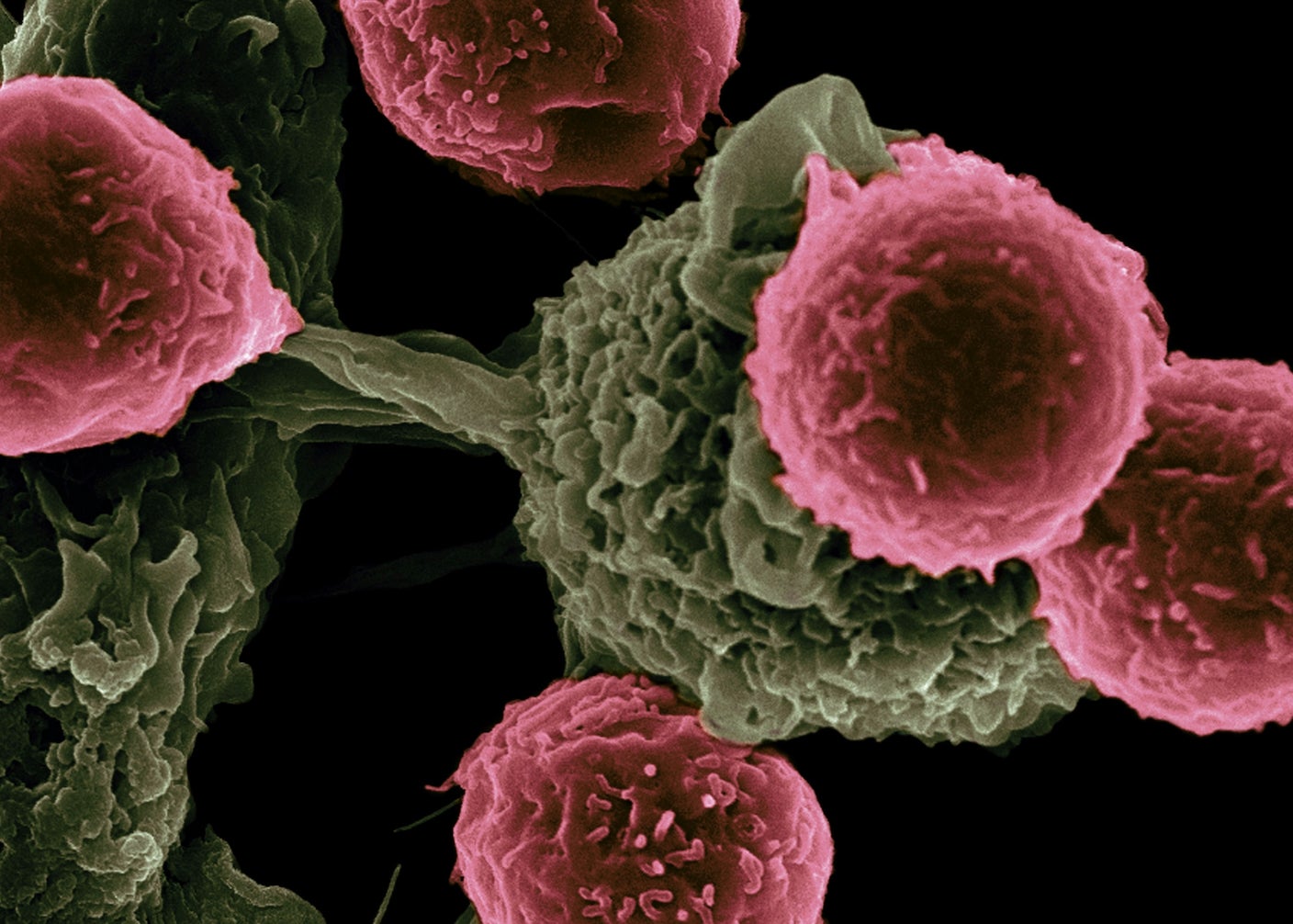
The logic is elegant. CAR T works against certain blood cancers by reprogramming T cells, the immune system's assassins, to recognize and destroy malignant cells. Scientists take these T cells from a patient, insert genetic instructions to create a "chimeric antigen receptor" that latches onto cancer cells, and reinfuse them. The FDA approved the first CAR T cancer treatment in 2017. Since then, it has delivered long-term remission for many patients with aggressive leukemias.
In autoimmune disease, the culprit is often B cells—immune cells that have begun producing antibodies against the body's own healthy tissue. So the leap from oncology to autoimmunity wasn't mysterious: if CAR T can wipe out cancerous B cells, why not the malfunctioning ones driving autoimmune attacks? A German team piloted this approach in a lupus patient in 2021 with promising results, opening the floodgates.
At the University of Colorado Anschutz in Aurora, neurologist Amanda Piquet is testing CAR T in patients with stiff person syndrome, a rare autoimmune condition characterized by debilitating muscle stiffness and spasms. There is no FDA-approved treatment. When she heard that Kyverna was developing CAR T therapy for the disease, "it seemed like a perfect opportunity," she said. Her team's study, which reported preliminary results in December 2025, gave a single dose of CAR T to 26 people with the condition. Many who had struggled with slow, mechanical gaits and used assistive devices showed meaningful improvement—a glimmer of what this technology might achieve.
Yet hope comes with significant uncertainty. How durable are the benefits? What long-term side effects might emerge? When Janisch-Hanzlik received her treatment on June 9, 2025, at the University of Nebraska Medical Center, she faced a week of monitoring for potentially dangerous inflammation and other adverse effects. The risks are real, and the answers remain unknown.
What drives patients into these trials despite the unknowns is often something deeper than their own suffering. Janisch-Hanzlik carries the knowledge that multiple sclerosis has a genetic component—her grandchildren carry an elevated risk of inheriting the disease that has constrained her life. "I would want to be able to say I did everything that I possibly could to prevent them, or anyone else, from having something like this," she explained. In that commitment lies both the human hope and the moral clarity behind this emerging frontier in medicine.