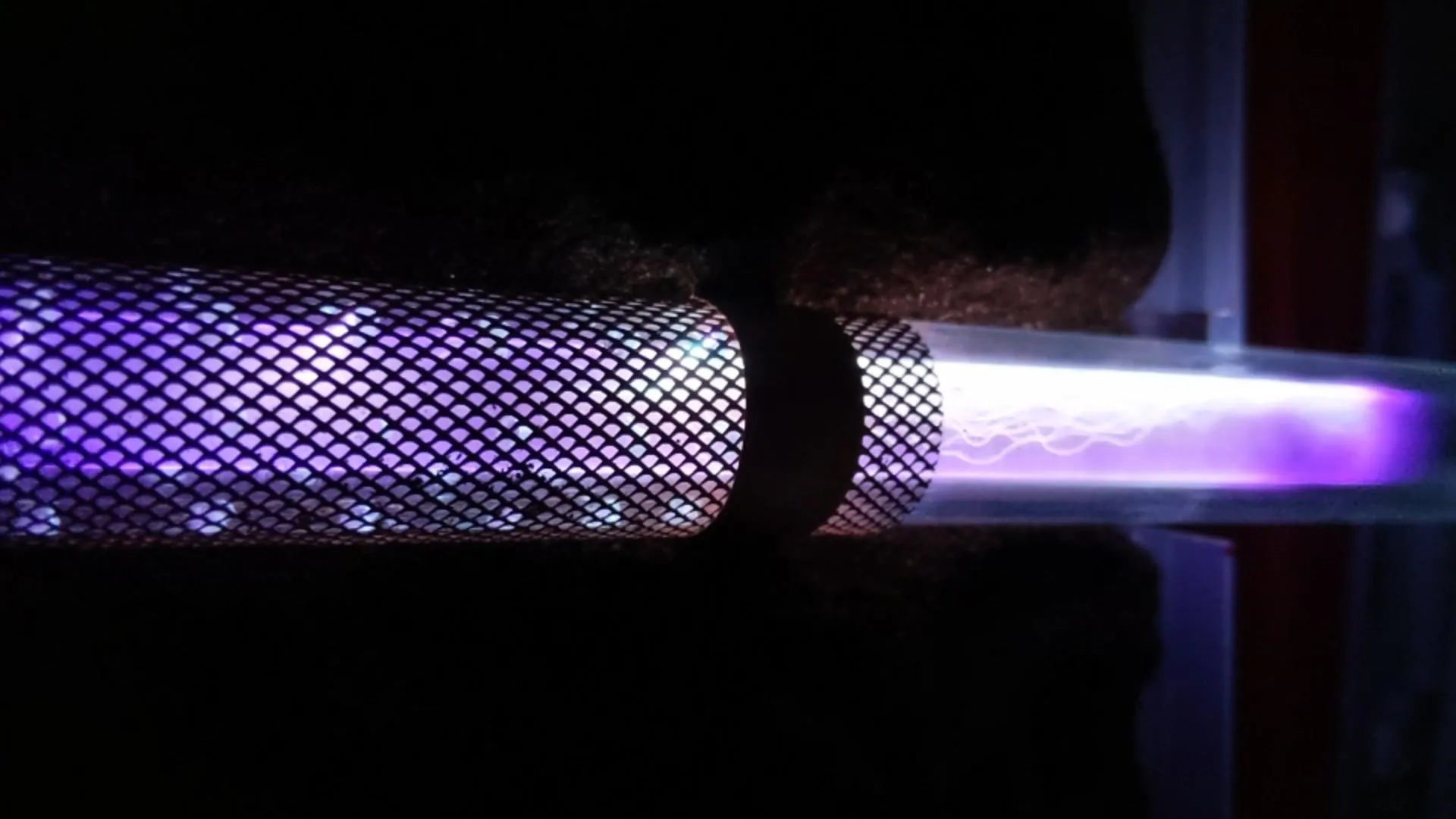
In a small lab at the University of Sydney, Professor PJ Cullen and his team have sparked something extraordinary—human-made lightning that could one day feed the world without warming it. Using a two-step process that combines plasma and electrolysis, they’ve developed a way to produce ammonia directly in gas form, bypassing the fossil fuel–hungry Haber-Bosch method that has dominated global production for over a century. Ammonia, the backbone of nearly half the world’s food supply through fertilizer, is also emerging as a promising carbon-free fuel—especially for the shipping industry, responsible for 3% of global emissions. But for decades, its production has come at a steep climate cost, accounting for 1.8% of global CO₂ emissions. Now, Cullen’s team is rewriting the chemistry.
The Haber-Bosch process, invented in the early 1900s, revolutionized agriculture by enabling mass ammonia synthesis from nitrogen and hydrogen under high pressure and temperature—conditions that demand vast amounts of natural gas. Today, 90% of the world’s ammonia still relies on this method, locking production into centralized, fossil-fueled plants far from where it’s needed. Cullen’s alternative is radically different: it starts with air. By electrifying nitrogen and oxygen in the atmosphere, the team creates plasma—essentially artificial lightning—that excites the molecules. These energized particles are then funneled into a silver-boxed membrane-based electrolyser, where they’re converted directly into gaseous ammonia using only electricity. Unlike previous green ammonia attempts that produced ammonia in liquid solution (requiring further energy-intensive processing), this method skips straight to the usable gas.
The breakthrough lies in its simplicity and scalability. For six years, Cullen’s lab has pursued a decentralized, low-cost route to green ammonia, and this plasma-electrolysis hybrid brings them closer than ever. While the plasma component is already energy-efficient and scalable, the team is now optimizing the electrolyser to match. If successful, the technology could enable ammonia production anywhere there’s renewable electricity—on farms, in remote communities, or even aboard ships. Beyond fertilizers, green ammonia could become a hydrogen carrier, releasing its hydrogen on demand through ‘cracking,’ or serve as a direct fuel. Industry leaders are already eyeing its potential to decarbonize maritime transport.
“This new approach is a two-step process, namely combining plasma and electrolysis,” Cullen explains. “We have already made the plasma component viable in terms of energy efficiency and scalability.” With further refinement, this method could transform how we grow food and power industries—without the carbon cost. As the world seeks sustainable alternatives to century-old industrial processes, Sydney’s electric skies may be lighting the way forward.