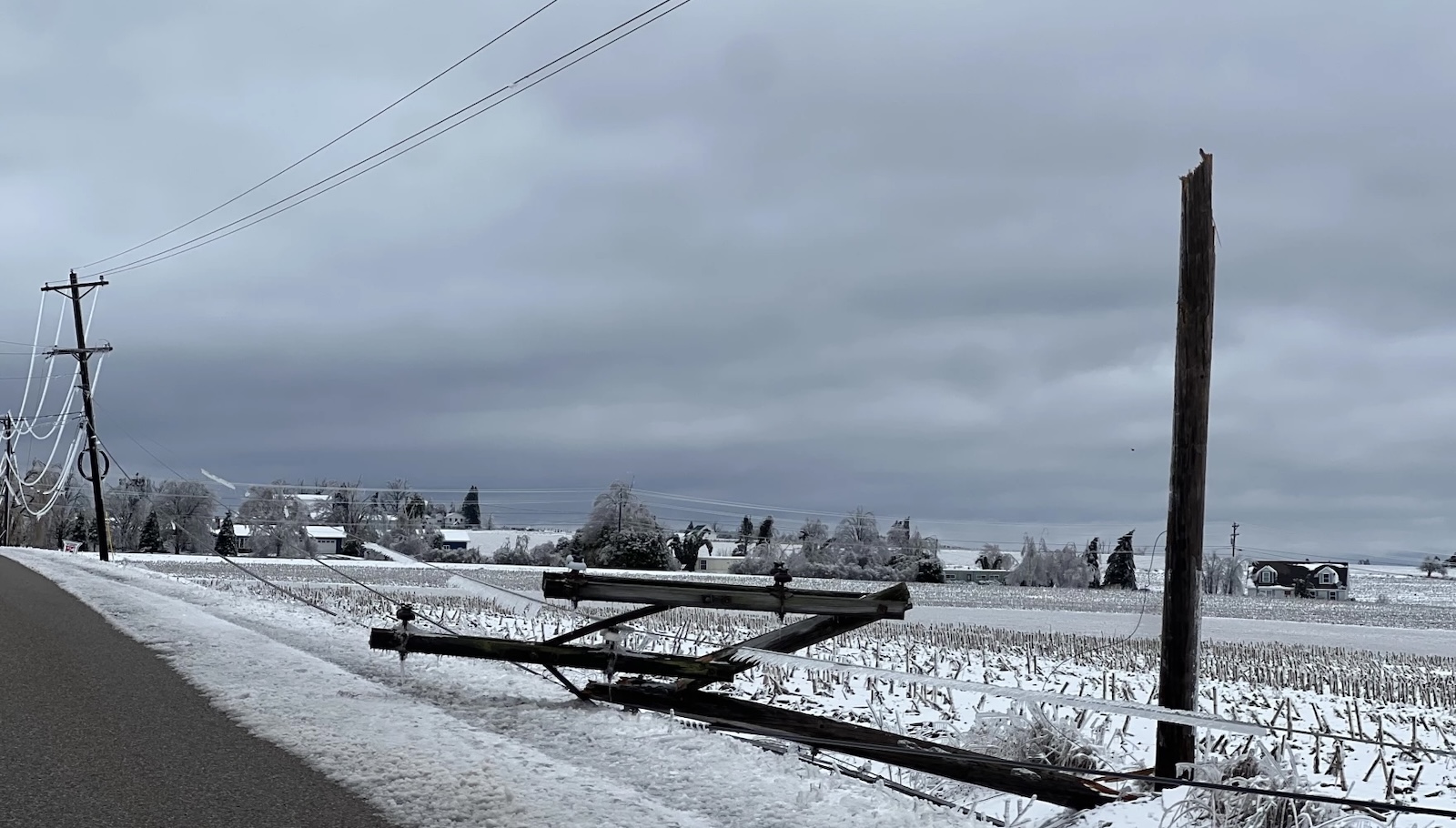
When Wanda Whiting's husband had a heart attack during a March 2025 ice storm in northern Michigan, she found herself navigating pitch-black familiar roads strewn with downed power lines, navigating by instinct alone as the utility poles lay snapped around her. That night — part of a devastating blackout that left thousands without power for weeks — crystallized a hard truth: the nation's electrical grid, much of it built more than half a century ago, was never designed for the climate chaos now unfolding.
For residents of northern Michigan, the crisis was a wake-up call, but for utilities, it became a catalyst for transformation. The ice storm caused more than 66,000 outages for Great Lakes Energy, the state's largest electric co-op serving 26 counties, and inflicted approximately $150 million in damages. The event prompted the cooperative to make an unprecedented commitment: bury all new power lines. It's a bold decision driven by necessity. Research shows northern Michigan will likely experience more freezing rain rather than snow, and more destructive ice storms as the climate shifts — a future that demands different infrastructure.
The vulnerability is widespread. Michigan already ranks among the states with the longest power outages in the country, and stronger storms nationwide cause hundreds of outages annually, many triggered by trees toppling onto above-ground lines. Richard B. Rood, a professor emeritus at the University of Michigan who studies climate adaptation, emphasizes the urgency: communities cannot assume that past patterns predict the future. "You are right in the middle of the change here," he said, underlining that climate adaptation requires bold action now, not later.
Yet bold action carries a steep price tag. Consumers Energy, one of Michigan's largest utilities, estimates that burying just one mile of power line costs approximately $400,000 in the state — and far more in urban areas, where costs can balloon to $2 million to $3 million per mile, according to the Michigan Public Service Commission. Overhead line installation, by contrast, costs a fraction of that. The economic burden means utilities must make strategic choices.
Traverse City Light & Power, serving around 42,000 customers, exemplifies this pragmatism. Director Tony Chartrand notes that burying new lines during construction is more feasible than retrofitting existing infrastructure, since crews can install underground power lines alongside other utilities like water and gas pipes. Great Lakes Energy's Shari Culver, the co-op's chief operating officer, acknowledges the reality plainly: undergrounding costs 3 to 5 times more than overhead installation, and those expenses flow directly to ratepayers. Yet she sees the long-term calculus as inescapable. "There's reliability benefits for our membership, because it's going to help prevent outages over the long term," she said.
The challenges extend beyond money. Repairing underground lines often requires excavating sidewalks and streets, creating complications utilities must weigh against the benefits of resilience. Still, Michigan's shift reflects a growing national recognition that America's power grid needs reimagining. As severe weather intensifies and outages lengthen, utilities from coast to coast are beginning to reckon with what residents like Wanda Whiting already know: a darkened road lined with downed wires is no longer an anomaly. It's the shape of storms to come.