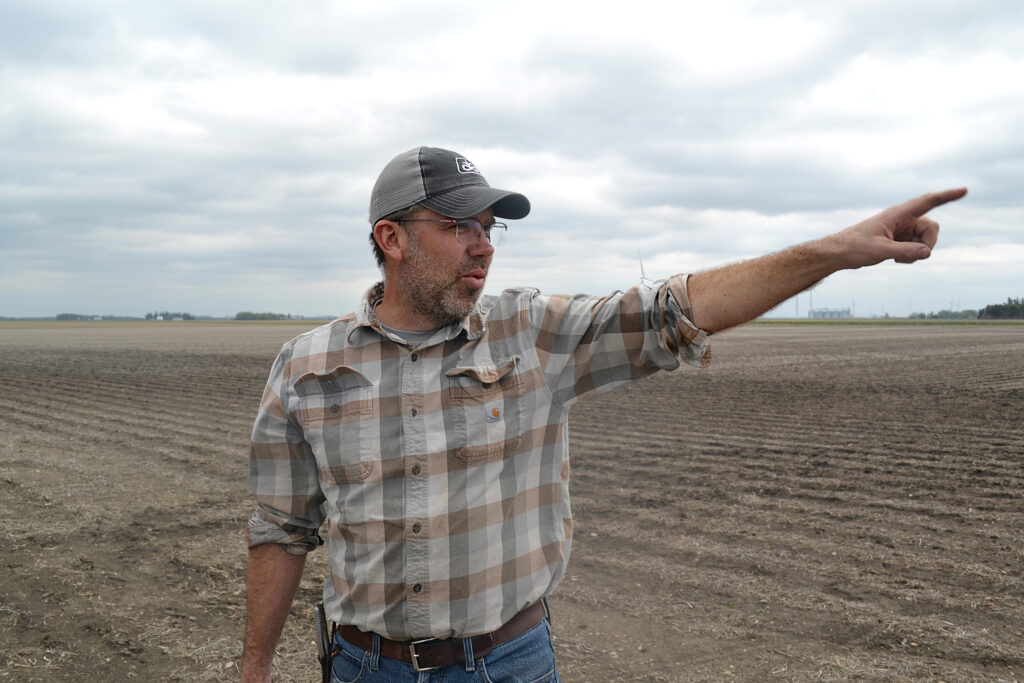
James Hepp, a 36-year-old farmer managing 1,600 acres of corn, soy and small grains in northern Iowa, is done waiting for his neighbors to do the right thing. For more than a decade, he has watched Iowa's Nutrient Reduction Strategy—a voluntary program launched in 2013 to combat agricultural pollution—fail to gain meaningful traction across the state. So he's saying what few commodity farmers dare: regulation is the only answer left.
Hepp is not alone in his frustration. He is one-third of the "Lobe Rangers," a trio of award-winning, fifth-generation and first-generation farmers in Iowa's Des Moines Lobe region who have become unlikely activists. Matthew Bormann and Zack Smith, his fellow Lobe Rangers, are drawing attention to a stark gap: between the conservation goals Iowa set for itself a decade ago and the reality on the ground, where most farmers still rely on chemical-intensive conventional practices.
What makes their call for regulation remarkable is who is making it. These are not environmental activists or coastal lawmakers—they are industry insiders, former county Farm Bureau board members, and some of the most profitable farmers in the state. They have grown thousands of acres of Iowa's two biggest commodity crops and proven, through their own operations, that sustainable agriculture is economically viable. Starting in March, they began posting short videos on Facebook showing regenerative practices in action and demanding policy change. The posts struck a chord, gaining rapid traction across the state's social media landscape.
The scale of Iowa's agricultural output underscores why their message matters. Last year, farmers in the state grew nearly 3 billion bushels of corn and 600 million bushels of soybeans—enough grain to fill over 7,000 miles of railcars, a train that could stretch from the U.S. East Coast to West Coast twice over. Yet that productivity comes at a cost. Massive applications of nitrogen and phosphorus fertilizer leach off fields, fueling algal blooms and unsafe nitrate levels in waterways before traveling south to damage the Gulf of Mexico.
The voluntary strategy, despite a decade of existence, has barely moved the needle. Only 17 percent of Iowa's farmland was cover cropped last year, compared to the 60 percent coverage the state estimates it needs to meaningfully reduce nutrient loads in waterways. Meanwhile, state programs and federal grants through the U.S. Department of Agriculture have offered financial incentives and technical support, with Gov. Kim Reynolds and state Secretary of Agriculture Mike Naig recently proposing an additional $52 million for on-farm conservation and $100 million for public water treatment infrastructure.
But Hepp and his fellow Lobe Rangers argue that voluntary measures simply are not working. Hepp practices strip-tilling and avoids applying nitrogen fertilizer when crops are not growing—moves that cut his costs while improving soil and water quality. His success proves the business case is there. "You know, the Nutrient Reduction Strategy has been around for what, 13 years now?" he said. "If you're not doing it now, I don't know what's going to make you do it besides regulation."
Their push for mandatory conservation standards represents a significant crack in agriculture's traditional resistance to regulation, and a sign that even those with the most to lose see the status quo as unsustainable.