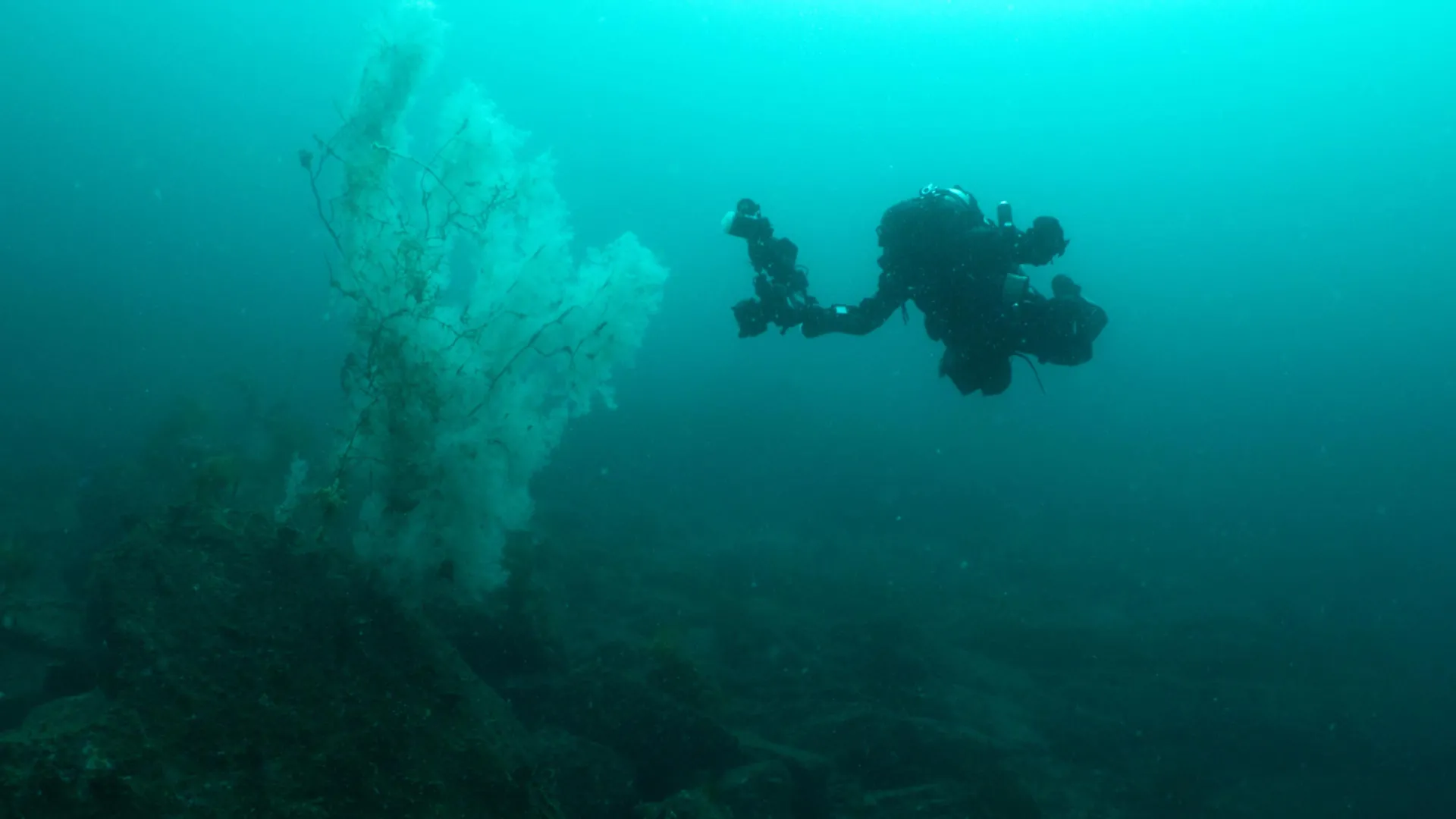
When Richard Kinsey first saw the pale, branching form emerge from the inky depths of Fiordland’s Te Awaatu Channel, he paused mid-dive. There, rooted to the seafloor 40 meters below, stood a 4-meter-tall black coral—its delicate white polyps swaying in the current, its ancient skeleton stretching 4.5 meters wide. Estimated to be between 300 and 400 years old, the colony predates European arrival in New Zealand and has survived centuries of change beneath the waves. “To see such a large coral looming out of the darkness was pretty special,” says Kinsey, a senior biodiversity ranger with the Department of Conservation who has worked in Fiordland for nearly two decades. “It’s easily the largest one I can remember seeing.”
This rare discovery isn’t just awe-inspiring—it’s scientifically vital. Black corals grow at a glacial pace, sometimes just millimeters per year, making large colonies like this one exceptionally rare and crucial for the species’ survival. These giants act as breeding hubs, seeding new life across the fragile deep-sea ecosystem. Yet they’re also vulnerable. Anchors, fishing gear, and even careless boating can destroy centuries of growth in seconds. “Pinpointing where large corals occur means we can better protect them by letting people know where not to anchor their boats or drop pots,” says Professor James Bell, a marine biologist at Te Herenga Waka—Victoria University of Wellington, who called the find “absolutely huge.” With over 25 years of diving experience, Bell notes that most black corals seen in the wild are under two to three meters tall—making this specimen a true outlier.
Despite its name, black coral doesn’t look black in the wild. The living tissue is translucent white, only revealing its dark skeleton when damaged or dead. This particular colony thrives within the protected waters of Fiordland National Park, part of Te Rua-o-te-moko, where conservation efforts are intensifying. Researchers from Victoria University, the Department of Conservation, and the Fiordland Marine Guardians are now mapping the distribution of protected coral species across the region’s labyrinthine fjords. Their goal: to identify and safeguard critical habitats before they’re threatened.
The team is now calling on local boaters, divers, and iwi to report sightings of large black corals—especially those exceeding 4 meters. Each sighting helps build a clearer picture of how many of these ancient survivors remain. As climate change and human activity place increasing pressure on marine ecosystems, discoveries like this one offer both a warning and a hope: that with awareness and care, these deep-sea elders can continue to thrive. In the quiet darkness of Fiordland’s underwater world, one 400-year-old coral stands as a silent guardian—and a powerful reminder of what’s worth protecting.