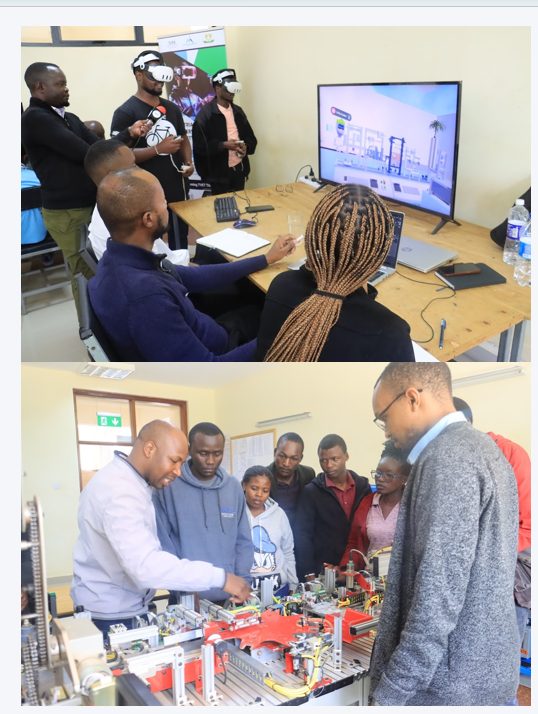
Inside a quiet campus classroom in Nyeri, Kenya, engineering student Grace Wanjiku slips on a VR headset and suddenly finds herself inside a humming semiconductor fabrication plant—thousands of miles from any physical factory, yet practicing real-time diagnostics on a virtual assembly line. This is the new face of technical education at Dedan Kimathi University of Technology (DeKUT), where over 180 engineers and technicians have already been trained using immersive metaverse and virtual reality tools, slashing training costs by up to 80%. Backed by the European Union, the German government through KfW, and implemented by the African Union Development Agency (AUDA-NEPAD), the Skills Initiative for Africa (SIFA) is transforming how vocational education is delivered across the continent. At the heart of this shift is DeKUT’s Siemens Mechatronics Certification Centre, which won the grant for its pioneering project: “Leveraging Metaverse Digital Tools and 4IR Technologies to Enhance TVET Skills Development and Innovation as a Post COVID-19 Resilience Strategy.”
For years, technical and vocational education in Africa has been hampered by the high cost of industrial equipment, limited access to real-world training environments, and a growing mismatch between skills taught and those demanded by Industry 4.0. This project flips the script. By replacing physical machinery with high-fidelity simulations, students gain unlimited access to complex systems—from robotic arms to automated production lines—without the risk of damage or downtime. Mistakes are no longer expensive; they’re part of the learning process. And because the digital content is locally developed, the training stays relevant to African industries while fostering long-term sustainability and ownership.
The impact is already measurable. Trainees report higher confidence in handling real equipment after virtual practice, and industry partners note a sharper readiness among graduates. But the ambition extends far beyond one university. The next phase aims to scale this model into a continental workforce development platform, with a strategic focus on preparing African talent for the global semiconductor value chain—a sector where the continent has had minimal presence but immense potential. With partners like TVETA, FESTO Didactic, ARSO, and the Swiss Smart Factory, DeKUT is not just training engineers; it’s incubating a pan-African digital skills revolution.
What began as a response to post-pandemic education challenges has become a blueprint for the future. As digital infrastructure spreads and demand for tech-savvy workers grows, Kenya is positioning itself as a regional leader in immersive, industry-aligned training. This isn’t just about cost savings—it’s about leapfrogging traditional barriers and building a workforce ready for the next industrial era. And for students like Grace, it means walking into a job with the confidence of someone who’s already worked in a factory they’ve never physically entered.