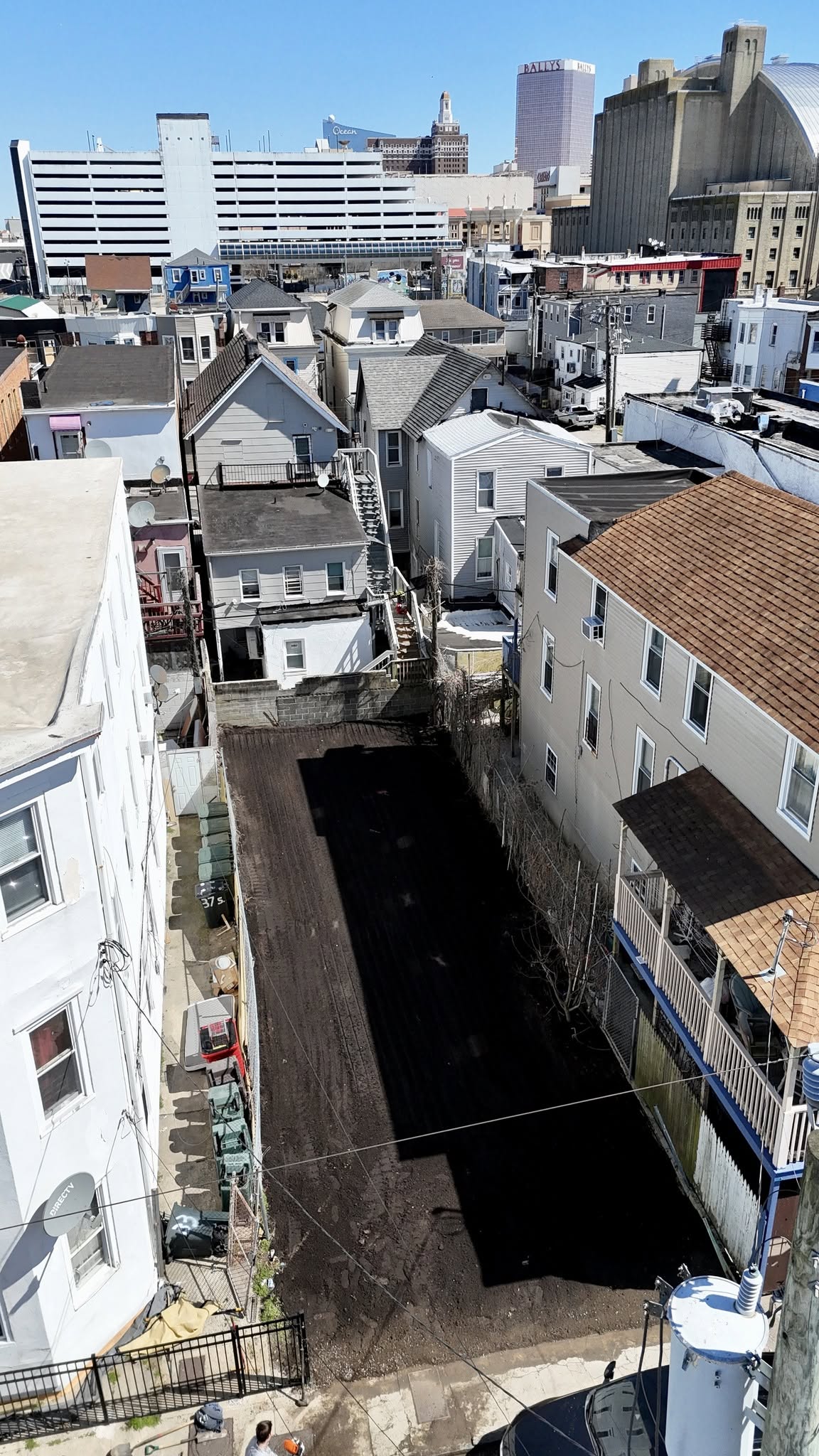
A vacant lot at 41 Bellevue Avenue in Atlantic City's Ducktown neighborhood is being cleared, leveled, and readied for something the community has long needed: a place to grow food, gather, and belong. Thanks to a $20,000 investment from the Atlantic County Economic Alliance and the Ducktown Community Development Corporation, the Bellevue Gardens project is transforming weathered concrete into raised garden beds and green space—the kind of ground-level change that ripples outward far beyond a single block.
Ducktown, like many historic neighborhoods in Atlantic City, has watched economic investment pass it by. Vacant properties become eyesores, gathering spaces disappear, and the sense that residents have a stake in their own community erodes. This project, supported by New Jersey's Neighborhood Revitalization Tax Credit program and Fulton Bank's strategic funding, is designed to reverse that pattern. The Ducktown CDC acquired the property and commissioned environmental studies to ensure it was safe for food cultivation—a practical step that matters. Those studies recommended raised garden beds, which the project has adopted, following both environmental best practices and tried-and-tested community gardening methods.
The legwork has already begun. The lot was cleared last month, and three inches of fresh topsoil were added to prepare the ground. Coastal Cousins Heritage Gardens, an organization that works to reconnect communities with agricultural traditions while advancing food equity and climate resilience, will lead implementation of the first phase. Michael Cagno, president of the Ducktown CDC, frames the work precisely: "Community gardens do more than improve the appearance of a neighborhood—they create opportunities for residents to connect, collaborate, and take ownership of shared spaces." That distinction matters. This isn't just beautification; it's about agency and belonging.
Lauren Moore, president of the Atlantic County Economic Alliance, emphasizes the neighborhood-driven nature of the investment. "This project represents the kind of neighborhood-driven investment that creates lasting impact for residents and strengthens communities from the ground up," she said. "Transforming an underutilized lot into a safe, welcoming community space supports beautification efforts while also encouraging engagement, sustainability, and neighborhood pride." The language reflects something often overlooked in development: that residents themselves are the primary architects of change, not outside saviors parachuting in with solutions.
What makes Bellevue Gardens significant is its confluence of practical and aspirational goals. On one level, it addresses food equity in a neighborhood where fresh produce access is often limited. On another, it creates a gathering place where isolation gives way to collaboration. The project also models climate resilience—urban gardens reduce heat island effects, absorb stormwater, and reconnect residents to seasonal rhythms and local food systems. Coastal Cousins Heritage Gardens brings particular expertise here, working across Atlantic County to strengthen the links between heritage, sustainability, and community health.
As preparation work continues, Bellevue Gardens stands as a reminder that neighborhood revitalization doesn't require massive infrastructure or grand gestures. Sometimes it starts with clearing a lot, bringing in soil, and saying to residents: this space is yours to cultivate—literally and figuratively. The project is Phase One of something larger, a continued commitment to strategic investments that strengthen neighborhoods from within. In Ducktown, that commitment is already taking root.