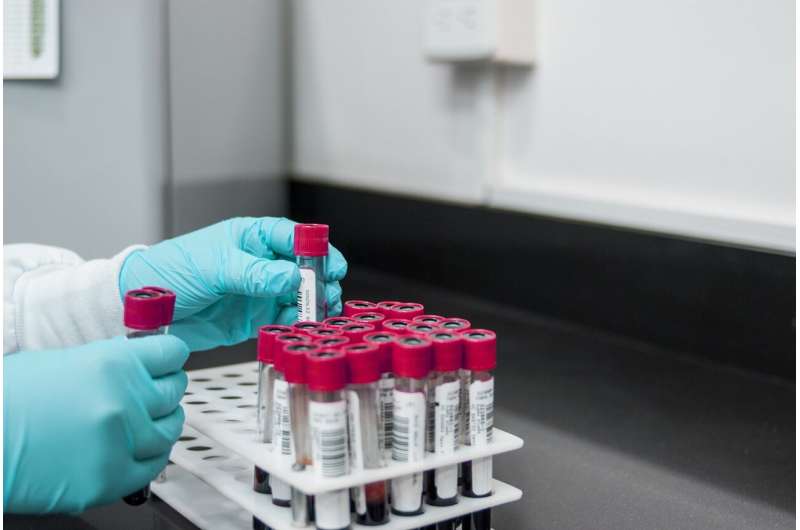
At a hospital in Mainz, Germany, a patient who just received a stem cell transplant for blood cancer also received something the whole medical world had never tried before: immune cells made in just 24 hours from a healthy stranger's blood donation, ready to be injected immediately. The cells worked so well that none of the patients developed the most severe form of a feared complication called graft-versus-host disease.
Here's the problem this solves. For many people with blood cancer, a stem cell transplant is the only real chance of a cure. Doctors take healthy stem cells from a donor and give them to the patient. But those donor cells can turn against the patient's own body, attacking the skin, liver and intestines in a painful, sometimes deadly reaction called graft-versus-host disease, or GvHD.
The immune system actually has natural "brakes" — cells called regulatory T cells — that can stop this attack. But using them in treatment was nearly impossible in practice. They had to be painstakingly pulled out of a genetically matching donor's transplant and grown in a lab for weeks. Most patients simply couldn't wait that long or find that exact match.
A company in Mainz called ActiTrexx invented a clever shortcut. Instead of growing these cells for weeks, they stimulate them for just 16 hours with a patented activator. This "turns on" the brake cells without the slow, expensive process of multiplying them. And here's the game-changer: the cells don't need to come from the original donor at all. They can come from any healthy volunteer's standard blood donation. One donation, 24 hours, and you have a ready-to-use treatment.
The first human trial, called ATreg-001, took place at four German centers — Mainz, Dresden, Münster and Dortmund. Ten patients received the therapy about 10 days after their transplant, alongside their normal treatment. Scientists tested three different dose levels to see which were safe.
For a first safety study, the results were surprisingly good. The infusion itself caused no serious side effects — something that wasn't guaranteed, since the cells came from genetically mismatched strangers. Every patient's transplant took hold successfully. During the 100 days of observation, no one developed severe grade 3–4 GvHD, and there were no transplant-related deaths.
Dr. Helmut Jonuleit, the scientist who invented the technology, explains why this matters so much: if GvHD becomes less dangerous, the search for a matching donor also becomes simpler, because an exact genetic match matters less. That could open the door of transplants to far more patients who today have no good options.
This was only the first step, a safety trial with ten people. But it proved the treatment is safe, fast and easy to make — the three things that would let it reach many hospitals, not just a few. The hope is that a disease once seen as a brutal side effect of a lifesaving treatment could become far less frightening. For patients waiting for a cure, that is a very hopeful thought.