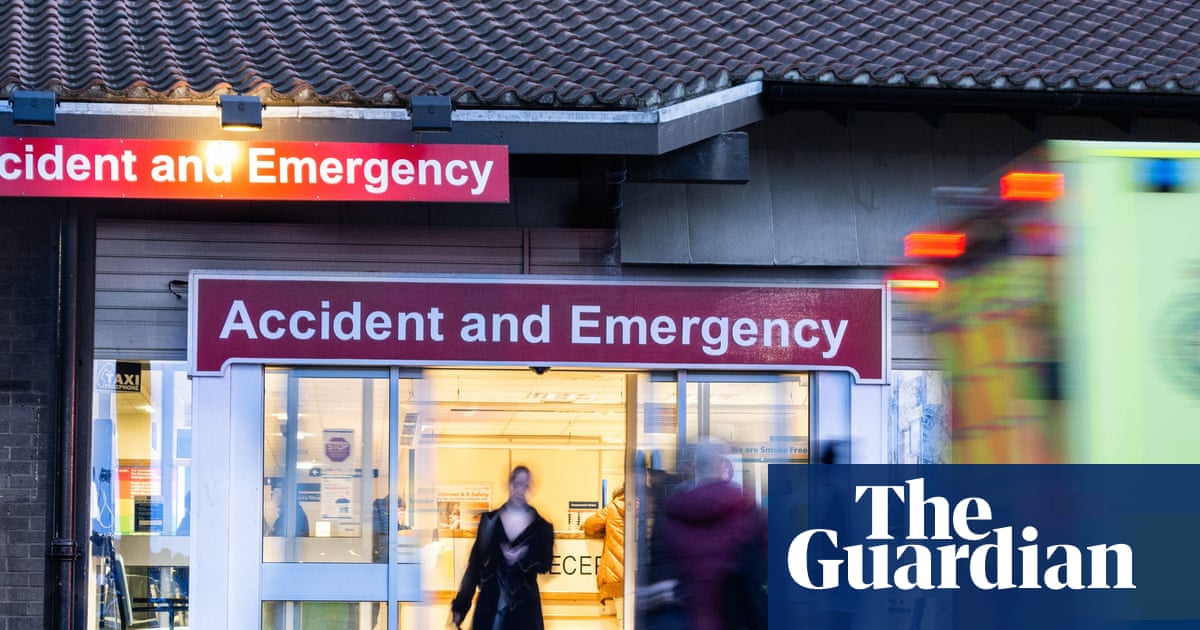
East Lancashire teaching hospitals NHS trust cut average A&E waiting times nearly in half—from 178 minutes to 94 minutes—by asking patients with minor ailments to book return appointments or seek care elsewhere. This shift, part of an NHS-wide push toward "digital triage," represents a fundamental reimagining of how England's emergency departments manage the crush of winter demand that has become as predictable as it is dangerous.
The model works simply but powerfully: when patients arrive at A&E, they enter details of their symptoms into online assessment systems. Staff can then triage their case instantly, ensuring those needing urgent treatment are seen at once while others with minor concerns are offered alternatives. Some are told to return later that day or the next. Others are referred to community services—a GP, pharmacy, physiotherapist, or mental health service—where they may actually get faster, better-suited care. The approach acknowledges a hard truth: not every person in an A&E needs to be in an A&E.
Eighteen hospitals across England are already running digital triage systems, and Jim Mackey, NHS England's chief executive, recently called on all hospital trusts to follow suit. Speaking at the NHS ConfedExpo conference in Manchester, Mackey framed the shift as part of a broader move toward bookable appointments—"a personal obsession of mine," he said—that would bring order to services frequently overwhelmed by demand. He predicted patients would see "really big change ahead from us in the next few months" in how urgent and emergency services operate.
The urgency is not abstract. The Royal College of Emergency Medicine disclosed that more than 1,300 patients die each month as a result of overcrowding in England's A&E units—a stark reminder that winter crisis is not merely an operational headache but a life-or-death issue. Longer waits correlate with worse outcomes. Digital triage and bookable appointments are tools to compress those waits and, by extension, to save lives.
Patients have received the change well, according to NHS England. Having certainty about when they will be seen, rather than facing the demoralizing uncertainty of open-ended queuing, has proven reassuring. The tangible reduction in waiting times speaks for itself: at East Lancashire, the triage tool brought average wait times down by nearly half.
Yet implementation demands care. Rachel Power, chief executive of the Patients Association, sounded a necessary note of caution: digital triage must not become a system that works only for the digitally confident. Older patients, those with disabilities, and people with limited digital access cannot be left behind by kiosks and tablets. Equally critical: any patient redirected to another service or offered a later appointment must receive explicit, easy-to-understand guidance about warning signs, whom to call if their condition worsens, where to go, and how quickly to act. Without that safety-netting, vulnerable patients risk slipping through the cracks.
The ambition is sound—to match patients with the right care, in the right place, at the right time, and to spare A&E doctors the impossible task of managing demand they were never designed to handle. But success hinges on ensuring the system works for everyone, not just those quickest to adapt to it. If NHS trusts roll out digital triage thoughtfully, with genuine accessibility and crystal-clear guidance for those diverted elsewhere, this winter could look different. If they rush the rollout without those safeguards, they risk creating new problems while solving old ones.