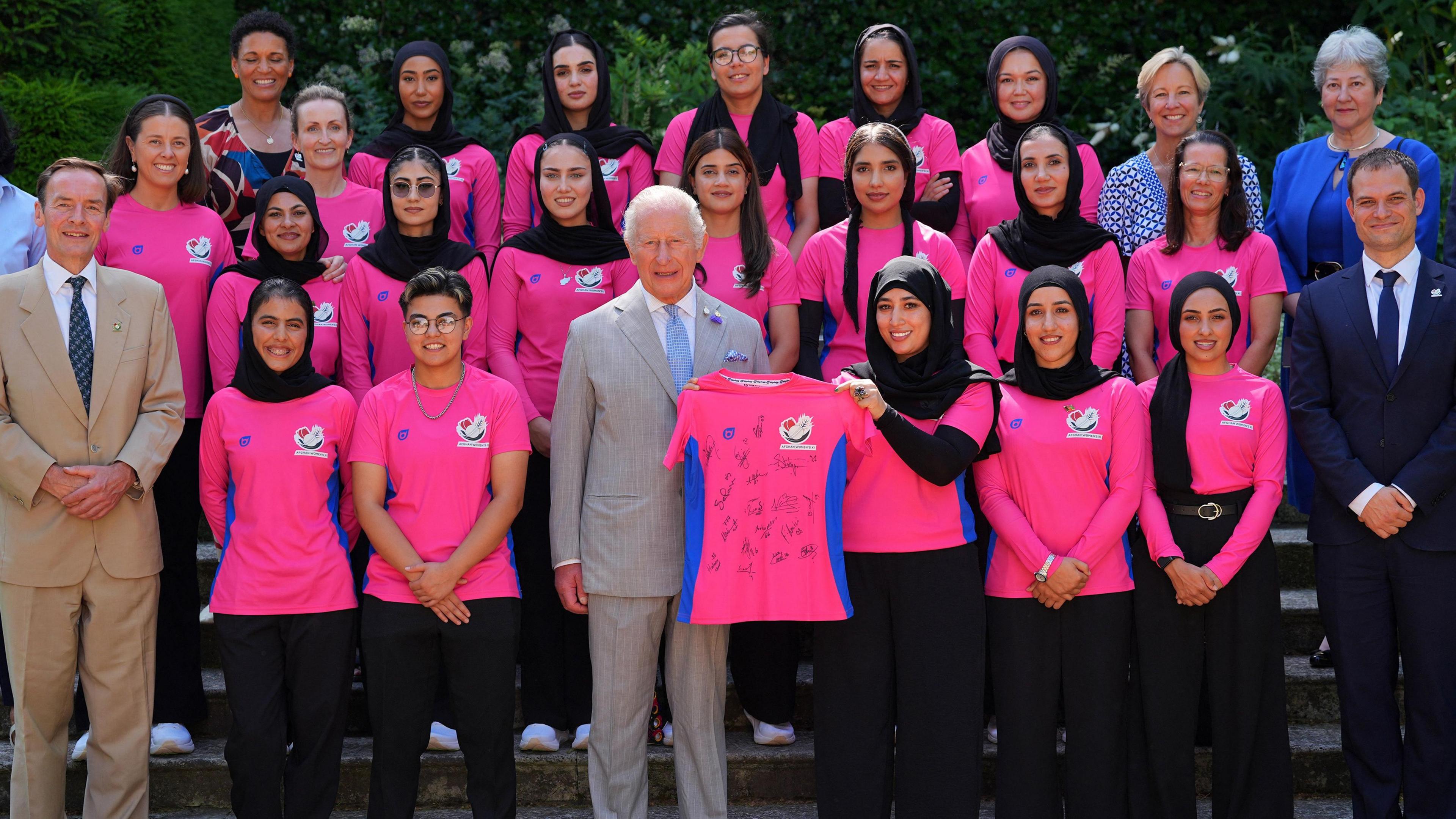
At Worsley Cricket Ground in High Wycombe last week, a team of women who have not set foot in their home country for five years stepped onto the pitch and won. Not just any win — their first as a team since fleeing Afghanistan in 2021, after receiving death threats from the Taliban. The final wicket fell, and the celebrations that followed were equal parts joy and grief, relief and defiance.
"The girls were screaming everywhere and crying as well," said all-rounder Firooza Afghan. "This match gives the girls confidence. When we play cricket, we're not just playing for ourselves. It's for Afghanistan and it's for the women and girls back in our country."
The Afghanistan Women's cricket team now lives and trains in Australia, where they have rebuilt their lives and their game under extraordinary circumstances. Yet despite everything they have overcome, the most fundamental question of all remains unanswered: what comes next?
Since arriving in Australia, the players have repeatedly called on the International Cricket Council to formally recognise them once again as an international team and to commit to long-term funding. Without that recognition, they tour as the "Afghan Refugee Women's Team" and wear a specially designed badge rather than Afghanistan's official crest.
"Where are we going to end up? What is the next step? We need a clear answer," said batter Firooza Amiri. "We are fully committed to this team and we've put everything else aside to play cricket. But we also need the ICC to give us a clear answer. Are they going to support us?"
In April 2025, the ICC, together with the cricket boards of England, Australia, and India, announced a joint programme providing financial support that has allowed the squad to train in an elite environment — two cricket sessions and two strength and conditioning sessions each week, alongside competitive matches. But that programme ends after the England tour, and there is currently no plan in place for what follows.
The tour itself was made possible by the efforts of Clare Connor, Managing Director of England Women's Cricket at the England and Wales Cricket Board. It is a six-match itinerary that will see the side face an MCC Foundation XI twice more before attending the Women's T20 World Cup final at Lord's.
The week brought a remarkable honour: a meeting with King Charles on the eve of the opening match. "He was so nice to all of us," Afghan said. "He asked about our journey and that gave us the inspiration to play and win today."
But the shadow of uncertainty looms large. The Afghanistan men's team retains full ICC membership despite the country failing to meet the membership requirement of supporting a women's national side — a disparity the players have highlighted as a failure of duty. The future funding of the team is due to be discussed at the ICC's annual conference next month.
Connor believes the global game must now act. "It is incumbent on the global community to work that out. It's an answer we've got to find. The global cricket community really needs to come together and develop a sustainable plan for this group of players."
Last month, football's governing body, FIFA, approved the return of the Afghan women's national football team to international competition. The cricketers are watching closely. "They deserve to be playing as Afghanistan's national women's football team, and we deserve the same thing," Amiri said. "We're hoping that after all these matches and all the hard work we've put in, the ICC will see this team, recognise us, and finally give us what we deserve."
Under the Taliban, women in Afghanistan are banned from education, sport, and work. For these players, the fight for recognition on the world stage is more than sporting. It is a message.
"I just want to tell them that every shot and every wicket is for you," Afghan said. "We play for your voice and we play for your freedom."