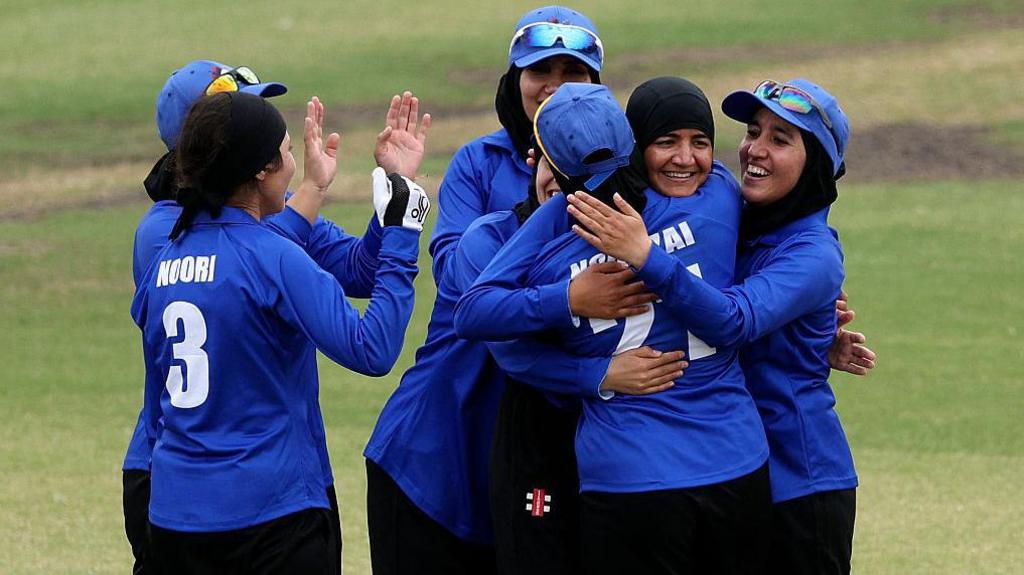
When the Taliban seized power in Afghanistan in 2021, they banned women from playing sports. But for a group of Afghan women who loved cricket, that wasn't the end of the story.
These athletes — who had once played for Afghanistan's national women's cricket team — were forced to flee their country. Most of them settled in Australia, where they now live and train together as a refugee team. And now, they just got some genuinely encouraging news.
The International Cricket Council (ICC), the sport's global governing body, is set to extend its funding for Afghanistan's women's refugee cricket team. A task force made up of cricket boards from England, Australia, and India recommended the funding continue during a meeting at the ICC's annual conference in Edinburgh. ICC deputy chair Imran Khwaja will formally present that recommendation at a board meeting on Saturday.
The three national cricket boards have all backed the proposal, and it would be a major surprise if the full ICC board doesn't approve it. What's more, the funding could stretch all the way to 2032 — giving these players a clear path forward for nearly a decade.
This matters because for years, the team has been asking the ICC to recognize them as an official international team and commit to long-term support. They're currently on a tour of the United Kingdom, and last month they publicly called on the ICC to give them "a clear answer" about what their future looks like.
That future is starting to come into focus. The team met with ICC president Jay Shah at Lord's Cricket Ground in London before the Women's T20 World Cup final on July 5th. A number of speeches were said to be well received by influential figures in attendance.
There's also been progress behind the scenes. Last month, the ICC added a female representative to the task force overseeing the project — a notable change, since the group had been largely made up of men. Additionally, Pitch Our Future, an Australian campaign that raises funds and support for the displaced players, will now be consulted during future task force meetings. That means the athletes themselves will have a direct voice in decisions about their own future.
A proposal is also on the table to allow the team to play official international matches. Clare Connor, chair of the ICC Women's Cricket Committee, prepared a formal paper on the matter that will be submitted to the ICC board for consideration. The issue is complex — the ICC must balance its duty of care with concerns about what this might mean for men's cricket in Afghanistan — but the fact that official matches are being discussed at the board level is being seen as a significant step.
For now, the players have funding, a home in Australia, and a growing sense that the world hasn't forgotten them. The question of official international status remains open. But for the first time in years, the conversation has shifted from survival to something closer to hope.