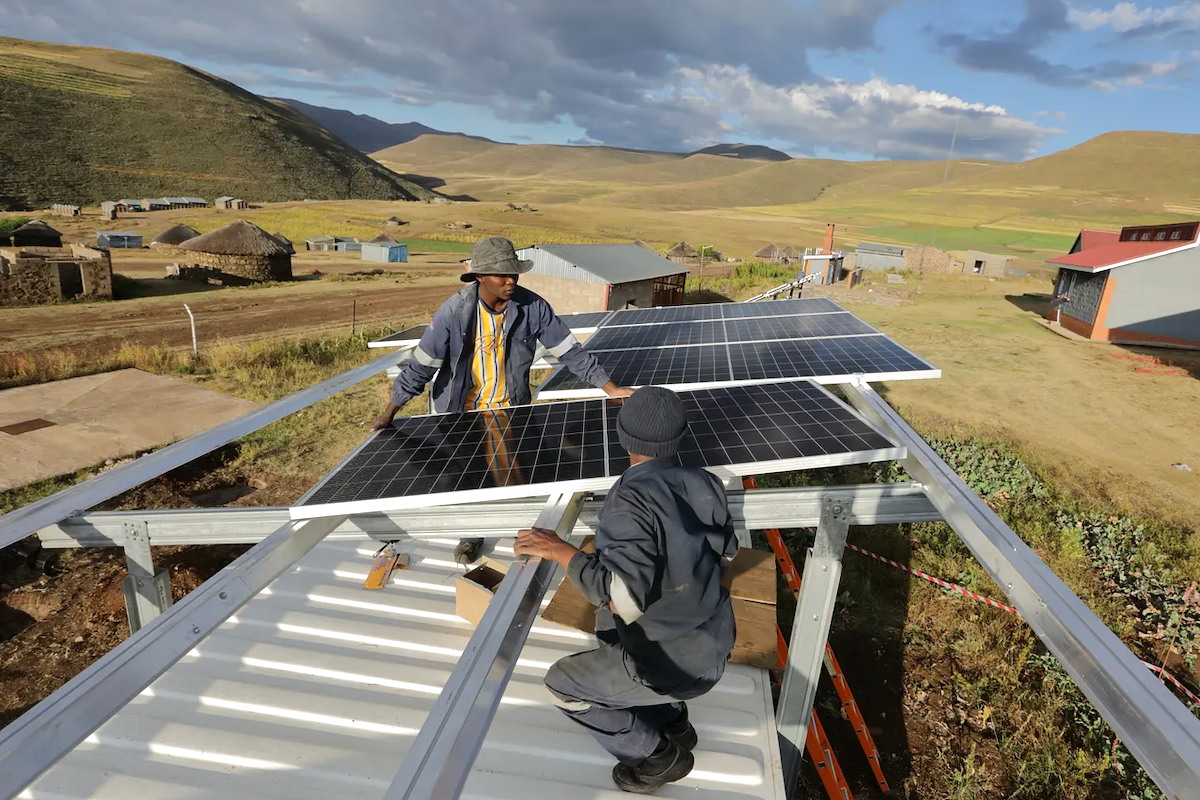
Africa is adding renewable energy at a pace that rivals the world's most ambitious climate commitments. In 2025 alone, African countries installed 11.3 gigawatts of new renewable capacity—nearly triple the 4.2 gigawatts added just one year earlier. This surge reflects a fundamental shift in how the continent powers its future, driven by the simple truth that Africa possesses some of the world's most abundant solar resources and the economics of clean energy have finally tipped decisively in its favor.
The scale of this transition becomes clear when you look at what energy projects are actually being built. Of the 322 energy projects announced across Africa last year, 253 were renewable energy initiatives—with solar dominating at 173 installations. By comparison, just 22 natural gas projects were announced. The message is unmistakable: investors and governments are betting on wind and sun, not fossil fuels.
"Africa is not on the periphery of the global energy transition, it is sitting at its center," says Mugwe Manga, climate finance lead at FSD Kenya. "The continent holds the world's best renewable resources, and the economics have now decisively turned in favor of clean energy." This reframing matters. For decades, Africa was often cast as a passive participant in global energy discussions—a place where development meant importing coal and oil infrastructure from elsewhere. Now the continent is charting its own course, recognizing that renewable energy can meet growing power demand while building genuine energy independence.
Yet significant obstacles remain. The most persistent is financing. African countries pay up to three times higher borrowing costs than wealthy nations when funding renewable projects, a penalty tied to perceived political and economic instability. This creates a paradox: the places with the greatest solar potential often struggle most to raise capital for the infrastructure needed to capture it. Manga points to the real bottleneck: "What remains is not a question of technology or cost. It is a question of finance, political will, and preparing bankable projects that will drive demand for power on the continent."
Even as renewables surge, fossil fuel projects continue to advance. The East African Crude Oil Pipeline—EACOP—remains under construction despite sustained international opposition from banks, insurers, and governments. When completed, the 900-mile pipeline will transport crude oil from Uganda's Great Lakes region to Tanzania's coast. According to satellite imagery analysis from watchdog group Earth Insight, the project is nearing completion, though some critical river crossings remain unfinished. Oil is expected to begin flowing in October, and opponents warn that the window to prevent environmental damage is closing rapidly.
The parallel trajectories—record renewable deployment alongside continued fossil fuel expansion—capture Africa's energy crossroads. But the numbers suggest momentum is shifting. With clean energy capacity tripling year-over-year and three-quarters of new projects turning to renewables, Africa is demonstrating that a different energy future is not just possible, but already under construction. The question now is whether finance will flow swiftly enough to sustain this pace.