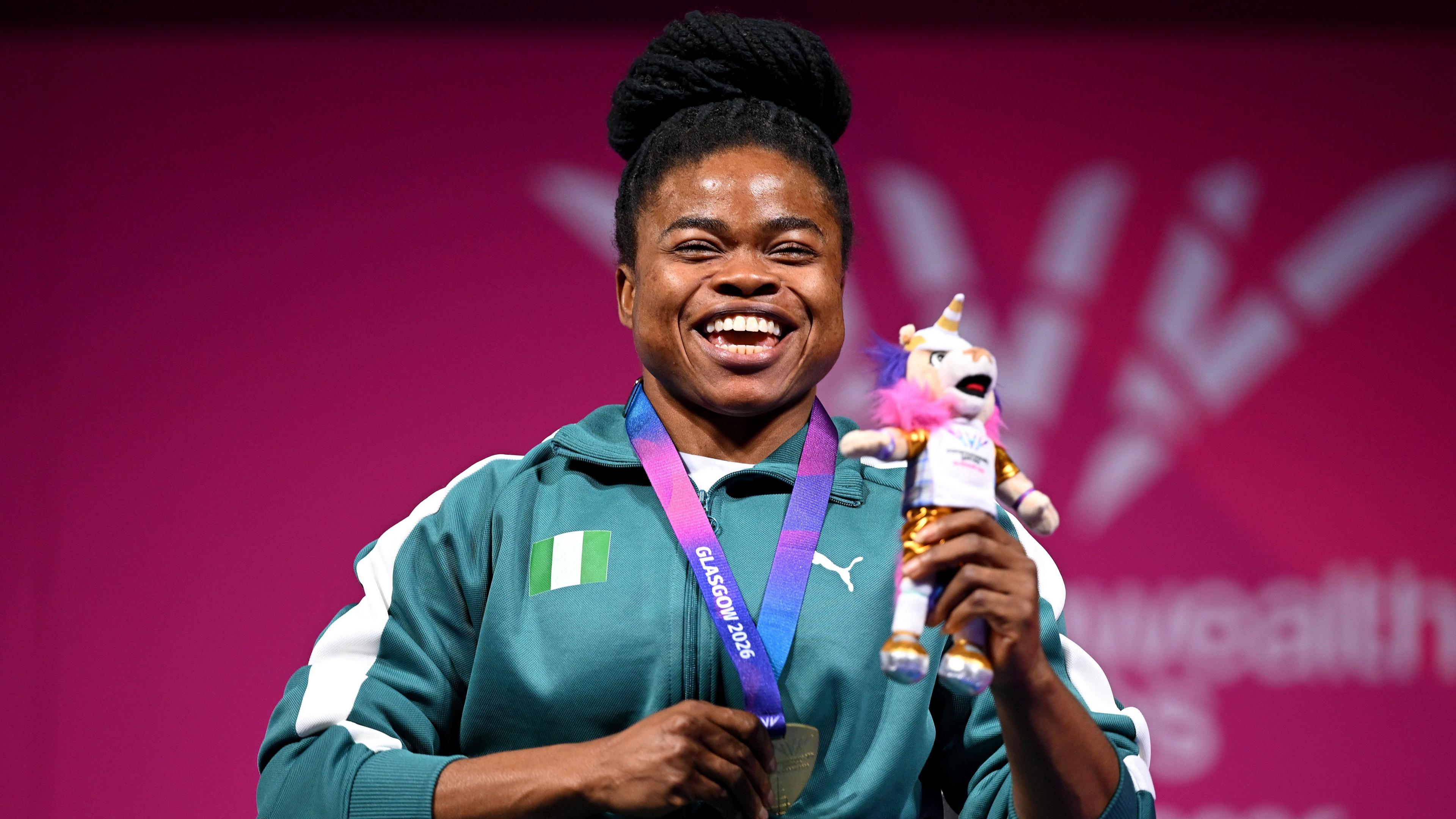
Nineteen-year-old Husnah Kukundakwe has already made history twice. At age 14, she became the youngest athlete at the 2020 Tokyo Paralympics. Now, competing in Glasgow, she is captain of Uganda's para-swimming team and hoping to win her country's first-ever swimming medal.
But Kukundakwe says the Games mean more than personal glory. She believes they are reshaping how Africa sees people with disabilities.
"Sport really is a huge pusher for change," she told BBC World Service. "It shows that para-sport just deserves the same kind of recognition, funding, sponsoring."
Unlike the Paralympics, the Commonwealth Games do not hold separate events for para-athletes. Instead, disabled and non-disabled competitors compete side by side, with medals counting equally toward each nation's total. This integrated approach began in Manchester in 2002, making the Commonwealth Games the first fully inclusive international multi-sport event in the world.
In Glasgow, a record 47 para events are taking place across six sports. The first gold medal handed out at these Games went to a para-athlete — England's Mark Swan in powerlifting — a milestone in itself.
Noemie Alphonse of Mauritius, a wheelchair racer, says the visibility matters enormously. "We are seen as on the same level," she said. "Everyone follows us on TV, sending good comments, good messages and encouraging us. We are really happy that the mindset changed and they are seeing that we are able to contribute to our country."
Alphonse herself is proof of that shift. She won a silver medal at the 2023 World Championships in Paris in the 100m T54. "The mindset completely changed in Mauritius," she explained. "Many youngsters with disability and parents were really inspired through what I did."
The impact extends beyond individual achievements. When Kukundakwe competed in Tokyo, no Ugandan swimmer had ever qualified for either the Olympics or Paralympics. Now Uganda has sent nine swimmers to these Games — five women and four men.
"It was a huge deal when we went back home," Kukundakwe said of her Paralympic debut. "It kind of opened up the world of para-sport to Ugandan people, and it made big changes in terms of the support that para-sport gets from government."
For Kukundakwe, who was born with no lower right arm, swimming changed her life in a personal way too. "Before I was swimming, I would always wear long sleeves or sweaters, even when it's a very, very hot day, to try and hide my hand," she said. "But ever since I started swimming, a sport which requires you to pretty much be open, I started to feel more comfortable with myself. And eventually I found out that it doesn't really matter what I look like. It's all about what I can do."
Tahiru Haruna of Ghana, who competes in para-powerlifting, travels to schools and streets teaching others about disability and sport. "In Ghana, they don't allow physically challenged students to partake in sports in school," he said. "So we try to teach PE teachers to get them involved. Everything is inclusion. We don't need to separate us."
In Glasgow, the message seems to be sinking in.