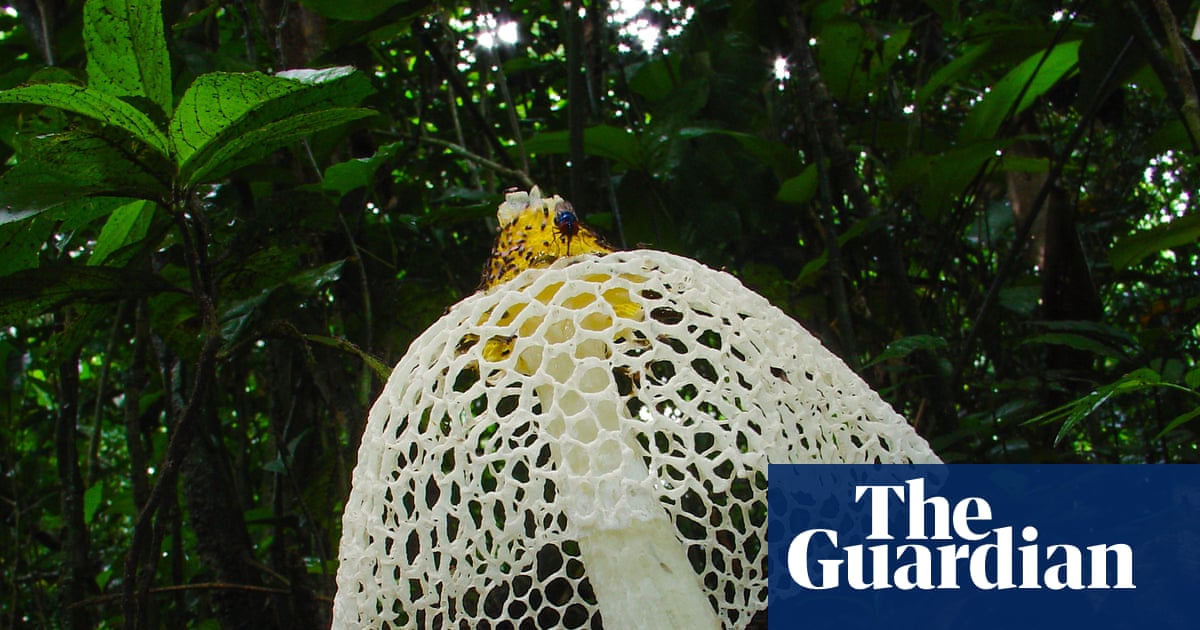
Anna Ralaiveloarisoa does something in Madagascar that has never been done before: she studies fungi as a Malagasy scientist, trained and working in her own country. As the island nation's first homegrown mycologist, she represents a quiet revolution unfolding across Africa—a growing recognition that the kingdom of life most people walk past without a second glance may be the most crucial of all.
"Fungi are some of the most important things in the world," Ralaiveloarisoa explains, her conviction grounded in science rather than sentiment. "They feed 90% of terrestrial plants. Without them, there is no life on the Earth." Yet in Madagascar alone, less than 1% of the estimated 100,000 fungal species have been scientifically described—a staggering gap in human knowledge about an island known for its unparalleled biodiversity. Ralaiveloarisoa has already identified 200 new species and is working to classify each one, but the work happens against formidable odds: no laboratory infrastructure, jungle journeys on roads barely passable, no electricity in remote research sites, and no local colleagues to share the burden.
Her challenges are shared across Africa. In November, mycologists gathered at the International Congress on Fungal Conservation in Cotonou, Benin—many meeting for the first time. Delegates came from 27 countries across four continents, but the standout group was the African scientists, several of them the only mycologist (or one of very few) in their entire nation. Nourou Yorou, now general director of the Benin Agency for Science and Innovation, captured the moment in his opening remarks: "What an exciting time: from almost nothing 20 years ago, fungal conservation has evolved from a little-known field into a dynamic global movement."
This momentum is genuine but hard-won. While bird conservation organisations trace back to the 19th century, fungi had to wait until 2010 for the International Society for Fungal Conservation to form, and until 2012 for the first nonprofit devoted entirely to protecting them—the Fungi Foundation. David Minter, president of the ISFC, recalls the wilderness years: "Fungal conservation up to the early 2000s was really just a few disjointed, separate voices of scientists expressing concern." Since then, legislation has begun to shift. Chile passed the first conservation law explicitly protecting fungi in 2013. The Fungi Foundation championed the phrase "fauna, flora, funga" to secure fungi's place in conservation frameworks worldwide. In 2017, North America got its first fungal conservation nonprofit, Fundis. In 2021, evolutionary biologist Toby Kiers cofounded SPUN (Society for the Protection of Underground Networks) and earned a MacArthur "genius grant" for her work on fungal conservation.
The urgency has crystallized as science reveals fungi's outsized role in planetary health. Ninety percent of plants depend on fungi for nutrient uptake. Recent research suggests that fungal mycelium underground stores as much as 36% of annual CO2 emissions from fossil fuels—a climate function invisible to most people. Minter offers a disarming analogy: fungi are like waste collectors performing unglamorous but essential services. "If [waste collectors] go on strike, we sure know that they're needed," he says. "It's exactly the same with fungi."
This year, a "fungal conservation pledge" first raised at the UN biodiversity meeting in Colombia will be discussed again at the upcoming biodiversity conference in Armenia. For scientists like Ralaiveloarisoa, the timing matters. Her work is no longer a solitary pursuit in the shadows. It is part of a movement finally bringing the invisible kingdom into the conservation mainstream.