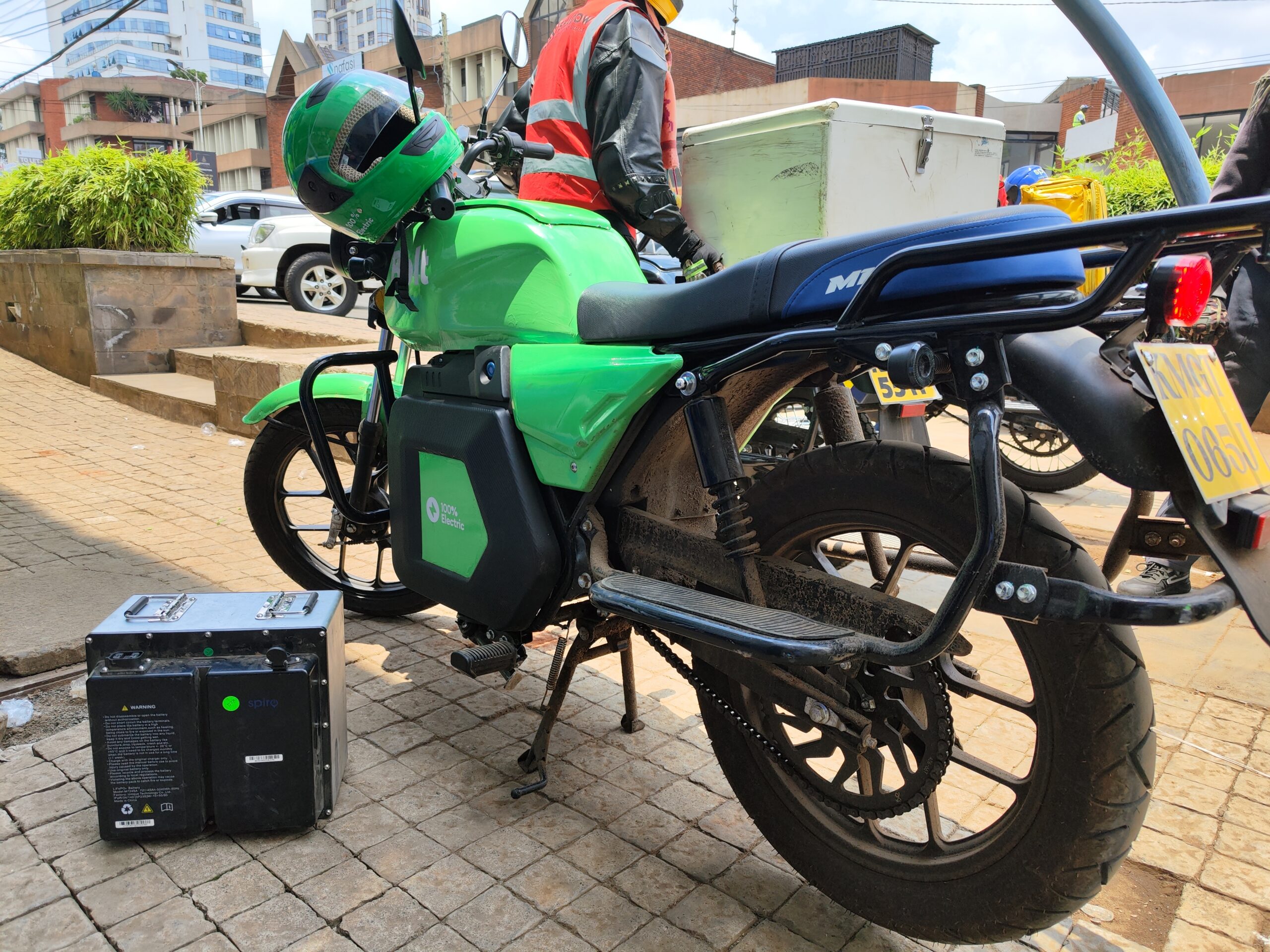
Spiro just acquired Coexlion, a 28-person engineering firm with decades of motorcycle design expertise across the UK, India, and East Africa—a move that signals where Africa's electric motorcycle revolution is headed next. After nearly a decade of proving the market exists, the continent's leading manufacturers are no longer simply selling bikes. They're engineering vehicles purpose-built for African roads, African riders, and African economics.
The numbers tell the story of a sector that has already arrived. Over 30 million traditional motorcycle taxis operate across Africa, many run by drivers earning slim margins through fuel costs and frequent repairs. Tens of thousands of electric motorcycles are now selling annually, with Kenya's market seeing electric bikes capture 16% or more of all motorcycle sales. More than 100 companies have launched into the space, but the leaders are pulling ahead by solving real problems for real riders.
Spiro, the continent's largest player, has deployed more than 100,000 electric motorcycles across several countries, built 2,500 battery-swapping stations, and completed over 30 million battery swaps to date. The Coexlion acquisition strengthens the company's ability to design and manufacture bikes adapted to local conditions—work that requires understanding not just engineering but riding culture. Coexlion's 28-person team has contributed to more than 25 motorcycle programs globally, with expertise spanning chassis development, battery systems, reliability engineering, and industrial design. Spiro's existing operation already employs 150+ engineers and holds 30+ proprietary patents; the acquisition amplifies that capacity with boots-on-the-ground experience from East Africa.
Meanwhile, Roam—one of the sector's pioneers—has launched the Air Gen 3, a new electric motorcycle built explicitly for commercial riders in the boda boda market. The redesigned battery tackles the friction points that mattered most: charging speed (the fastest on the market at 2 kW), durability, and security. The Gen 3 charges from 20% to 80% in under 40 minutes, delivering more than one kilometre of range per minute of charging. That matters enormously for riders living on thin margins; less downtime means more fares, more income.
Roam demonstrated the battery's durability in a way that speaks to real working conditions: they drove an 18-tonne truck over it. The battery was retrieved, reinstalled into a motorcycle, and operated normally. The bike was engineered to survive the everyday chaos of African roads—potholes, overloading, the kinds of stresses that would destroy a consumer gadget but are routine for a commercial vehicle.
These improvements reflect a sector maturing from proof-of-concept to product excellence. The first phase answered the question: Is there a market? The answer was a resounding yes. Riders switching to electric motorcycles save dramatically on fuel and maintenance costs. Financing systems and battery-as-a-service models have lowered barriers to adoption. Battery swapping networks eliminate range anxiety and long charging waits.
Now the focus has shifted. Manufacturers are building bikes designed not for affluent urban commuters but for the boda boda driver working 12-hour days in Nairobi, Lagos, or Kampala. They're localizing production, increasing the share of locally sourced components, and learning from each generation to offer better solutions. The question now is not whether electric motorcycles can work in Africa. It is how quickly they will become the go-to choice for tens of millions of riders across the continent.