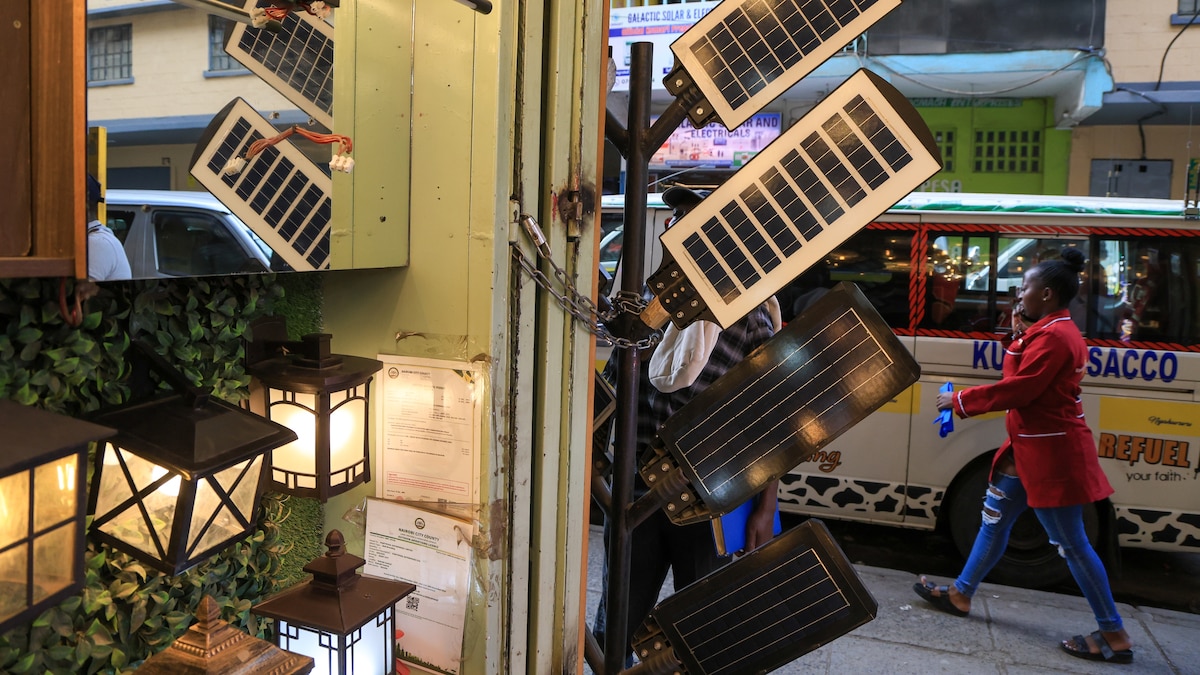
In Nairobi, two companies are quietly rewriting the story of African energy — and investors are finally paying attention.
D.light and Sun King, two of Africa's biggest off-grid solar companies, have raised a combined $336 million through landmark financing deals that are drawing mainstream capital into a sector long supported by donations and aid agencies. D.light issued a $50 million green bond in June, while Sun King secured $286 million in securitized debt in mid-2025. Together, these deals suggest that Africa's clean energy future might not depend on charity after all.
Both companies sell solar home systems to households without reliable electricity, using a pay-as-you-go model. Customers pay small instalments through mobile apps instead of paying the full price upfront. Those future payments — called receivables — get bundled together and used as collateral to raise fresh capital immediately.
Sun King's global chief financial officer, Krishna Swaroop, called the transactions "pathbreaking" for the industry. "They demonstrate the entry of a serious scale of commercial capital, investors and instruments not seen before in this sector," Swaroop said.
Sarah Malm, executive director of GOGLA, the off-grid solar industry association, said the deals prove the business model works. "Today, PAYGo receivables are rated, listed and bought by institutional investors in London and New York," Malm said.
According to GOGLA's 2025 Investment Data Report, local-currency investment in African off-grid companies reached a record 47.2% of total funding. Eighteen new investors joined the sector, including commercial banks in Nigeria, Kenya, Tanzania, and Madagascar. That geographic spread matters — it means African financial institutions are backing African solutions.
Wangari Muchiri, founder of clean energy firm RE.Think Energy, said the transactions represent "an important tipping point." "Every successful transaction reduces perceived risk and makes the next one easier to finance," she explained.
The deals aren't without complications. Investors typically want five to seven years of repayment data before backing similar deals, which smaller companies often lack. The fixed legal and regulatory costs also make these financing methods too expensive for smaller firms. And some analysts note that d.light's bond relied on credit guarantees from the Green Guarantee Company, which reduced investor risk — a safety net not every company can access.
Still, if these financing tools become more common, they could reshape how Africa electrifies homes and businesses. Millions of families currently without power could gain access to clean energy, funded not by endless donations but by investors who see real returns. For a continent too often defined by what it lacks, this moment suggests something different: Africa finding its own financial footing in the race to a cleaner future.