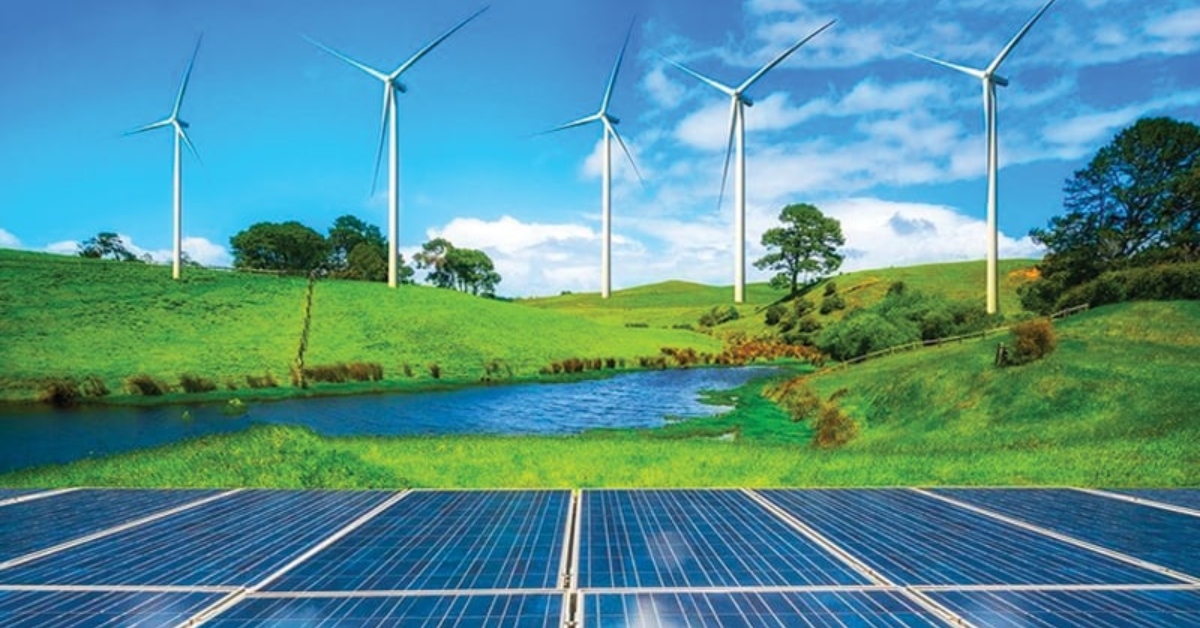
In 2025, Africa's renewable energy investments surged to eight times the level of non-renewable financing—a striking reversal that signals the continent is fundamentally reshaping how it powers homes, factories and cities. Standard Bank, one of Africa's largest renewable energy funders, mobilised R47.1 billion in green finance last year alone, evidence of capital flowing decisively toward solar, wind and hybrid energy systems that can reliably serve the 600 million Africans still without access to electricity.
This shift matters enormously. Energy poverty remains a critical brake on the continent's development, limiting economic opportunity and forcing millions to rely on expensive, unreliable alternatives. At the same time, Africa holds enormous renewable resources—abundant sun in the Sahel, powerful coastal winds, and vast potential for battery storage—that can unlock both energy access and climate progress. The 8:1 financing ratio reveals that investors now see these resources not as a future possibility but as a present opportunity with strong economics and proven project delivery.
The momentum is visible in concrete projects taking shape across the region. Standard Bank is sole mandated lead arranger for the Khauta South and West Solar projects in South Africa's Free State province, a 506-megawatt installation that will generate more than 1,000 gigawatt-hours annually for corporate buyers using wheeling arrangements. The bank is also key financier to Seriti Green's 465-megawatt Ummbila Emoyeni wind portfolio in Mpumalanga, now South Africa's largest privately owned wind platform, and to the 400-megawatt Overberg Wind Farm, which will power major industrial users including Richards Bay Minerals. In the Northern Cape, the 75-megawatt Du Plessis Dam Solar project demonstrates how innovative financing structures are accelerating deployment.
According to Boitumelo Sethlatswe, Standard Bank's Head of Sustainability, this represents "a structural change in how energy systems are being built across the continent. Renewables are no longer a marginal addition; they are becoming critical to capacity." The shift is being driven by a convergence of forces: policy alignment in favour of clean energy, sharply declining technology costs, growing investor appetite for sustainable returns, and the mounting imperative to address climate risk while expanding access to affordable power.
Yet the transition raises important questions about fairness and inclusion. A "just transition" in Africa must balance decarbonisation with development realities—creating jobs, supporting communities and building resilient economies. Non-renewable energy sources continue to play significant roles in many African economies, and the challenge is sequencing a shift that doesn't leave workers or regions behind while accelerating the deployment of cleaner alternatives.
Standard Bank has committed to mobilising R100 billion in green finance by 2028, with 62 percent of its broader R450 billion sustainable finance target already mobilised by the end of 2025. This capital is flowing toward not only generation but also the broader energy ecosystem: grid stability, battery storage and decentralised solutions that transform renewable capacity into reliable, consistent supply.
Regulatory complexity, financing constraints and infrastructure gaps still slow deployment in some markets. Coordinated action across governments, financial institutions and the private sector will be essential to sustain this momentum. Yet the scale of capital reallocation toward renewables—and the strength of project economics driving it—suggests that Africa's energy future is being written now, one solar farm and wind platform at a time.