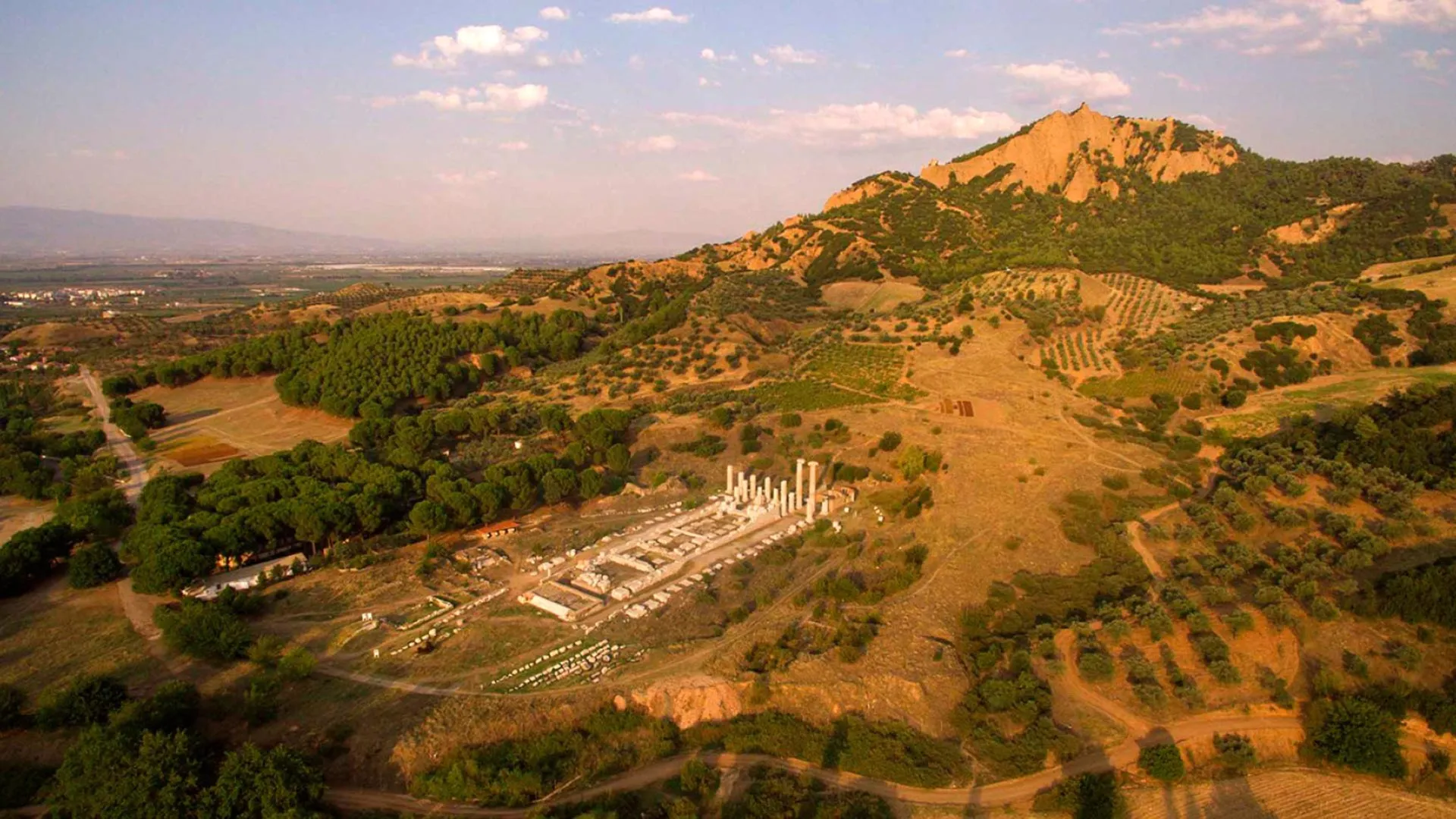
Perched on a windswept hill in western Turkey, the stone foundations of Sardis’ acropolis have stood silent for centuries—until now. After 65 years of meticulous excavation by a team anchored by Harvard and Cornell, this ancient crossroads of empires has earned its place among the world’s most treasured cultural sites, inscribed on the UNESCO World Heritage List in 2023. Once the glittering capital of the Lydian kingdom, famed for King Croesus’s fabled wealth and the invention of coinage, Sardis has long lived in the pages of history. But thanks to one of the longest-running archaeological projects in the world, its stones are finally telling their own story.
Sardis’s significance stretches far beyond its ruins. Located at the hinge between the Aegean coast and Anatolian interior, it was a cultural melting pot where Greek, Roman, Byzantine, and Ottoman influences layered over millennia. Unlike many ancient cities buried beneath modern sprawl, Sardis escaped heavy redevelopment, preserving a rare, continuous timeline from the Bronze Age—over 4,000 years ago—into the Ottoman era. "This is a city that shows up in lots of ancient historical sources," says Benjamin Anderson, associate professor at Cornell, "but now, just in the last 75 years or so, we have the possibility of telling that story, also, through what the project has found archaeologically."
Since 1958, the Harvard-Cornell Exploration of Ancient Sardis has returned every summer, a continuity that has allowed researchers to build an unparalleled archive of data. Early work by Harvard’s George M. A. Hanfmann and Cornell architect Henry Detweiler transformed a landscape of buried rubble into a readable cityscape. Architects were among the first team members, tasked with reconstructing the city’s lost structures from fragments. Today, that legacy continues under Anderson and Annetta Alexandridis, who leads a new survey of Sardis’ long-neglected cemeteries—contrasting with the famed Bin Tepe burial mounds nearby, which hold some of the largest tumuli in the ancient world.
But Sardis’s journey to UNESCO recognition is not just about archaeology—it’s also about accountability. Early 20th-century excavations by the American Society for the Excavation of Sardis removed artifacts under contested circumstances, including a massive Ionic column now at the Metropolitan Museum of Art. The project’s later years have been marked by efforts to address those legacies, with some artifacts gradually repatriated to Turkey. "It’s one of the first cases where we can see the whole discussion about restitution of antiquities," Alexandridis notes.
Today, the site stands as a model of collaboration, scholarship, and stewardship. With UNESCO’s designation, Sardis is not just preserved—it is being reconnected to the local community and global audiences. The decades-long commitment to public engagement, from published findings to accessible site tours, has helped turn excavation into education. As new generations of archaeologists return each summer, Sardis continues to reveal its layers—not only of stone and soil, but of shared human history.