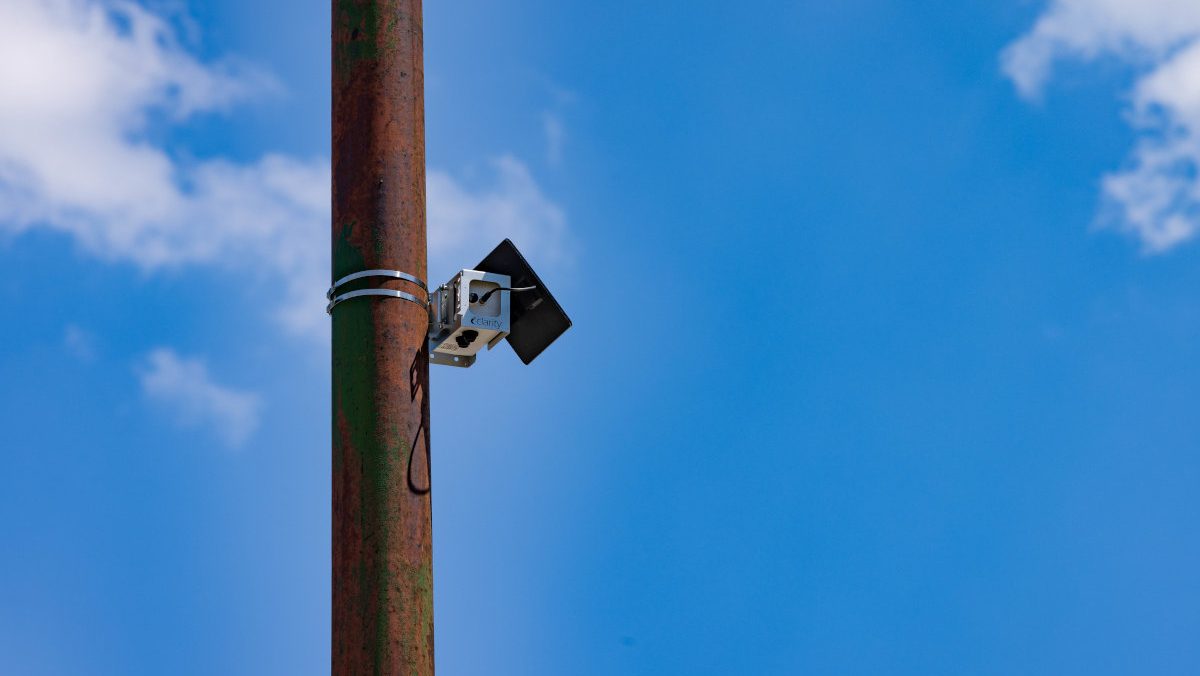
Serap Erdal stood beneath a solar-powered sensor in Grant Park, her phone lighting up with a bright green dot—air quality index 31, safely in the “good” range. Around her, Chicago buzzed with midday energy, but her focus was on the invisible: the air that millions breathe every day. Above her, fastened to a light pole, was one of 277 new air monitors quietly gathering data in what is now the largest urban air monitoring network in the United States. This is Open Air Chicago—a project born not from a policy whim, but from a civil rights fight for environmental justice.
For years, residents on the South and West Sides, particularly in Black and Latino neighborhoods like the Southeast Side, have lived near legacy industrial zones and heavy freight corridors, reporting higher rates of asthma and respiratory illness. Yet they lacked the hard data to prove their air was worse—until now. The network emerged from a 2021 civil rights complaint filed by community groups, including the Southeast Environmental Task Force, against the city’s decision to relocate General Iron’s scrap-metal shredder from affluent, predominantly white Lincoln Park to an already overburdened industrial corridor. The 2023 settlement mandated the creation of this citywide monitoring system, backed by over $4 million in funding and a partnership with the University of Illinois Chicago.
Each monitor, spaced less than a mile apart, tracks nitrogen dioxide and PM2.5—tiny, dangerous particles linked to childhood asthma, heart disease, and premature death. PM2.5, just one-twentieth the width of a human hair, can enter the bloodstream and is now recognized as the world’s leading environmental health risk. On June 1, one monitor in the South Side’s Avalon Park registered the city’s highest air quality index, a quiet testament to the uneven burden Chicagoans carry. The data is publicly accessible in real time, empowering residents with facts, not just feelings.
“This is Chicago working in good faith,” said Oscar Sanchez, director of the Southeast Environmental Task Force. “We’re here to ensure that there’s publicly available information so people are not gaslit about their experience.” That transparency is critical as climate change intensifies summer heat, increasing ground-level ozone and smog formation. This summer marks the network’s first full test under peak pollution conditions.
Open Air Chicago is more than a technical achievement—it’s a model of community-driven accountability. With data flowing through all 77 community areas, city planners and regulators now have the tools to make equitable decisions on permitting, zoning, and pollution control. For residents who’ve long said their air was unsafe, the monitors are proof they were right all along. And for the rest of the country watching, Chicago offers a blueprint: when communities demand justice, the air itself can become a witness.