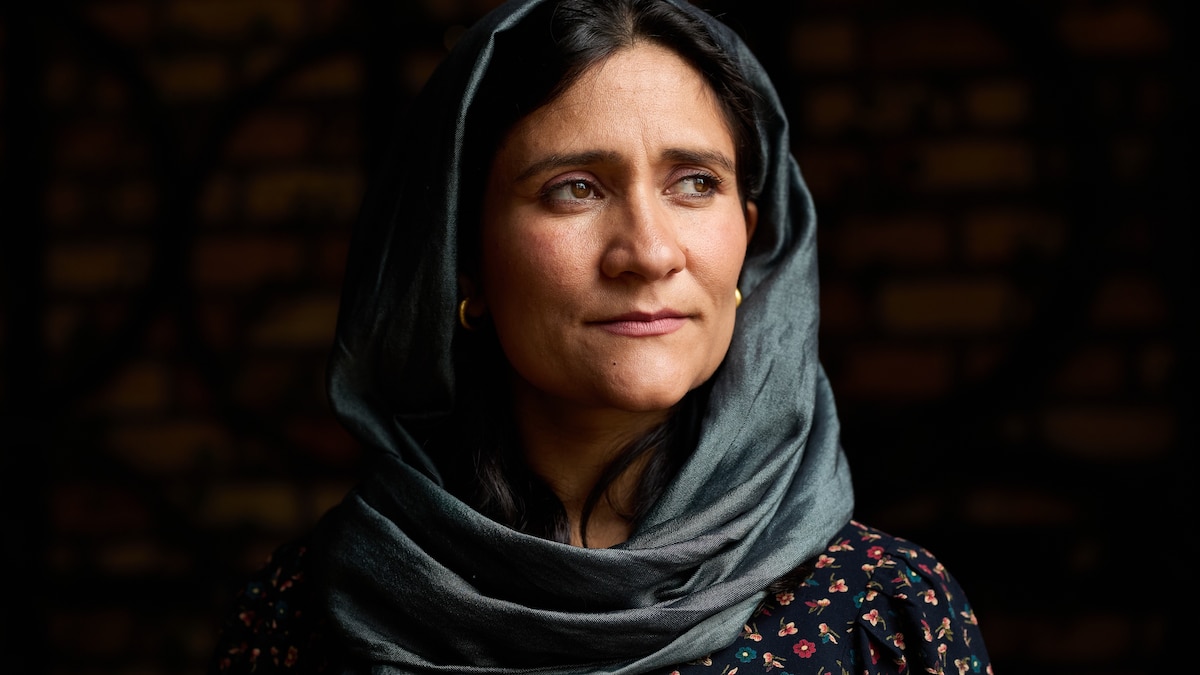
Standing in the middle of a brand-new campus, Shabana Basij-Rasikh points to a sign only her students will ever see. It reads “School of Leadership of Afghanistan” — SOLA by its initials — and it marks the first permanent home her school has had since the Taliban took control of her country.
For safety reasons, no one outside can find the campus. Its location in Rwanda is kept secret, and even the sign is hidden from view. “That's exactly what this place represents for us — a permanent home for our girls,” says Basij-Rasikh. “I'm so grateful for the welcome we have received.”
Five years ago, when U.S. troops left Afghanistan and Kabul fell to the Taliban, Basij-Rasikh fled to the East African nation of Rwanda, which had invited the school to move there. About 100 recent graduates and the school's faculty joined her, a group of 250 people in all. Just four days after arriving, classes resumed at a hotel that became their temporary school.
Today SOLA serves 122 girls — double its previous enrollment — who now celebrate their chance to learn while knowing that girls back home face what Basij-Rasikh calls “very different futures,” including child marriage. A United Nations report from August found that about 2.4 million Afghan girls are shut out of secondary education. In 2021, the Taliban barred girls from schooling beyond sixth grade, a restriction that stands today.
“One of the things that really deeply inspires all of us is that these girls — they will never give up,” Basij-Rasikh says. “It's just not part of their vocabulary or thinking.”
Because even a new campus can't reach every girl, Basij-Rasikh and her husband, Mati Amin, built SOLAx — an online learning platform that runs through WhatsApp, the one app most Afghan girls already use. Students often borrow phones from fathers and brothers and squeeze lessons around household chores. The platform includes a built-in safety feature that lets girls erase their chats instantly and resume later with a secret PIN code. Early lessons are taught in Afghanistan's official languages, Dari and Pashto, before moving to English.
SOLAx launched in 2024 and now teaches 41,000 students, most inside Afghanistan and thousands more across 76 other countries. It is free, funded by donors from around the world.
Basij-Rasikh still carries the memory of burning SOLA's records before she fled, so the Taliban could never learn which families had educated their daughters. “I carry that fire and the flames of that with me to this day,” she says. “I remember feeling so much anger… And it felt like one of the moments where you have no idea the kind of fire you have started.”
Even with the new campus doubling enrollment, more than 99% of applications are still turned away — a haunting number for a school that has always had to say no to thousands of hopeful girls. But Basij-Rasikh's fire is not one of fear. It is a fire of refusal, passed to a new generation of Afghan girls who now have a permanent home to learn in, and millions more who can reach their studies from a phone.