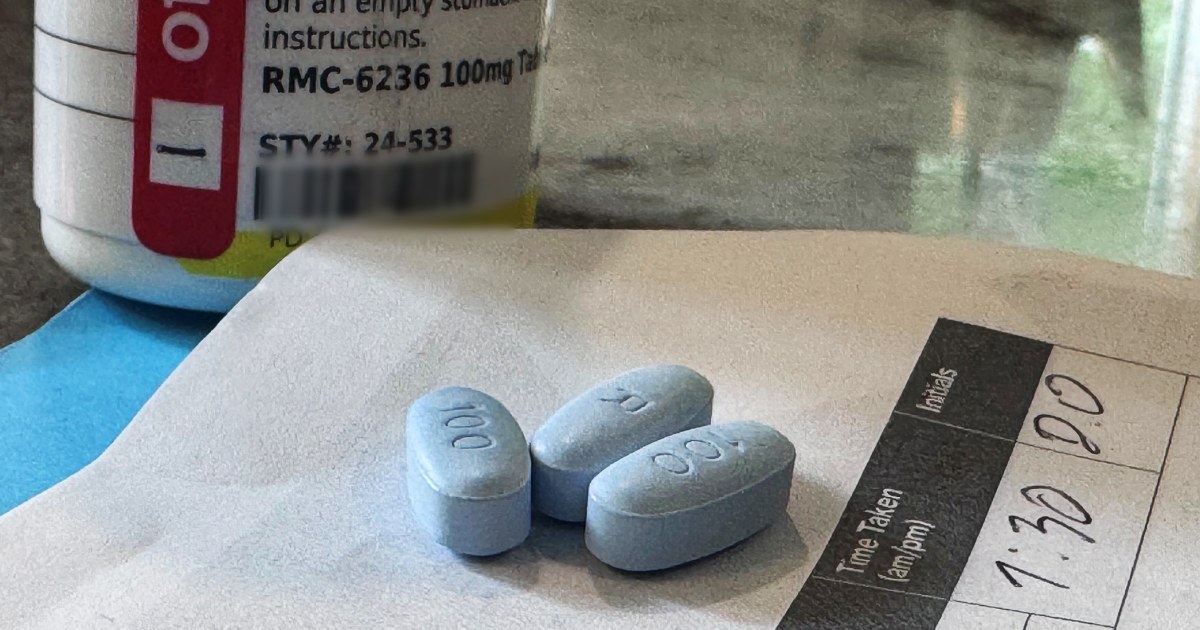
When Dr. Zev Wainberg, co-director of UCLA Health's GI Oncology Program, told his pancreatic cancer patients they had a fifty-fifty chance of receiving an experimental drug called daraxonrasib instead of chemotherapy, every single one of them wanted to take those odds. The choice was telling. Wainberg had watched patients on the standard chemotherapy arm of his clinical trial die — all of them. "It's one of the most emotional studies I've ever been a part of," he said.
Pancreatic cancer has long been one of medicine's cruelest diagnoses. Most cases are detected only after the disease has spread, when surgery is no longer possible. Even with the best available chemotherapies, survival averages around six months. Only 3% of people diagnosed with metastatic pancreatic cancer live five years. The disease offers little time for families to absorb the reality of what's coming.
Then came daraxonrasib. In a Phase 3 trial of 500 patients presented this month at the American Society of Clinical Oncology's annual meeting in Chicago — and simultaneously published in the New England Journal of Medicine — the drug doubled survival time. Patients taking daraxonrasib lived an average of 13.2 months compared to 6.7 months for those receiving chemotherapy. The results were dramatic enough to move Dr. Rachna Shroff, chief of hematology and oncology at the University of Arizona Cancer Center, to tears. "It's unprecedented," she said. "It's that big of a game-changer for those of us who treat pancreatic cancer."
The drug works by targeting a mutation in the KRAS gene, found in more than 90% of pancreatic cancers. This mutation acts like a stuck switch, leaving cancer cells in a permanent "on" position, allowing them to multiply uncontrollably. Scientists have understood the problem for years but struggled to solve it — the mutated protein's round shape made it difficult for drugs to attach and block its effects. Daraxonrasib finally succeeded where others had failed, offering patients a simple regimen: three pills taken once a day.
Real people began experiencing real remissions. Debby Orcutt, 71, of Spencer, Massachusetts, was diagnosed with Stage 4 pancreatic cancer in April 2024, the disease already spread to her liver. After chemotherapy began failing her, she enrolled in the daraxonrasib trial and was among those who received the actual drug. Since starting the pills in January 2025, the spot on her liver has disappeared and the pancreatic tumor has shrunk by 80%. "I feel great every single day," Orcutt said. "I do not dwell on the fact that I have pancreatic cancer."
The excitement is already spilling beyond pancreatic cancer. Because the KRAS mutation appears across many cancer types — lung, colorectal, ovarian, endometrial, and bile duct cancers — researchers now see broader potential. "Pancreas cancer may be the first for this drug, but there will be others," said Dr. Brian Wolpin, who directed the research and heads the Hale Family Center for Pancreatic Cancer Research at Dana-Farber Cancer Institute. "Now the floodgates open."
The FDA has already placed daraxonrasib on a fast track toward approval and recently authorized an expanded access program allowing Revolution Medicines, the drug's manufacturer, to provide it to patients outside of clinical trials. While the company has not announced a formal approval timeline, executives say their teams are working around the clock to prepare the necessary materials. Oncologists at major cancer centers are already preparing — drawing up lists of patients who will be among the first to access this potential lifeline when it becomes available.