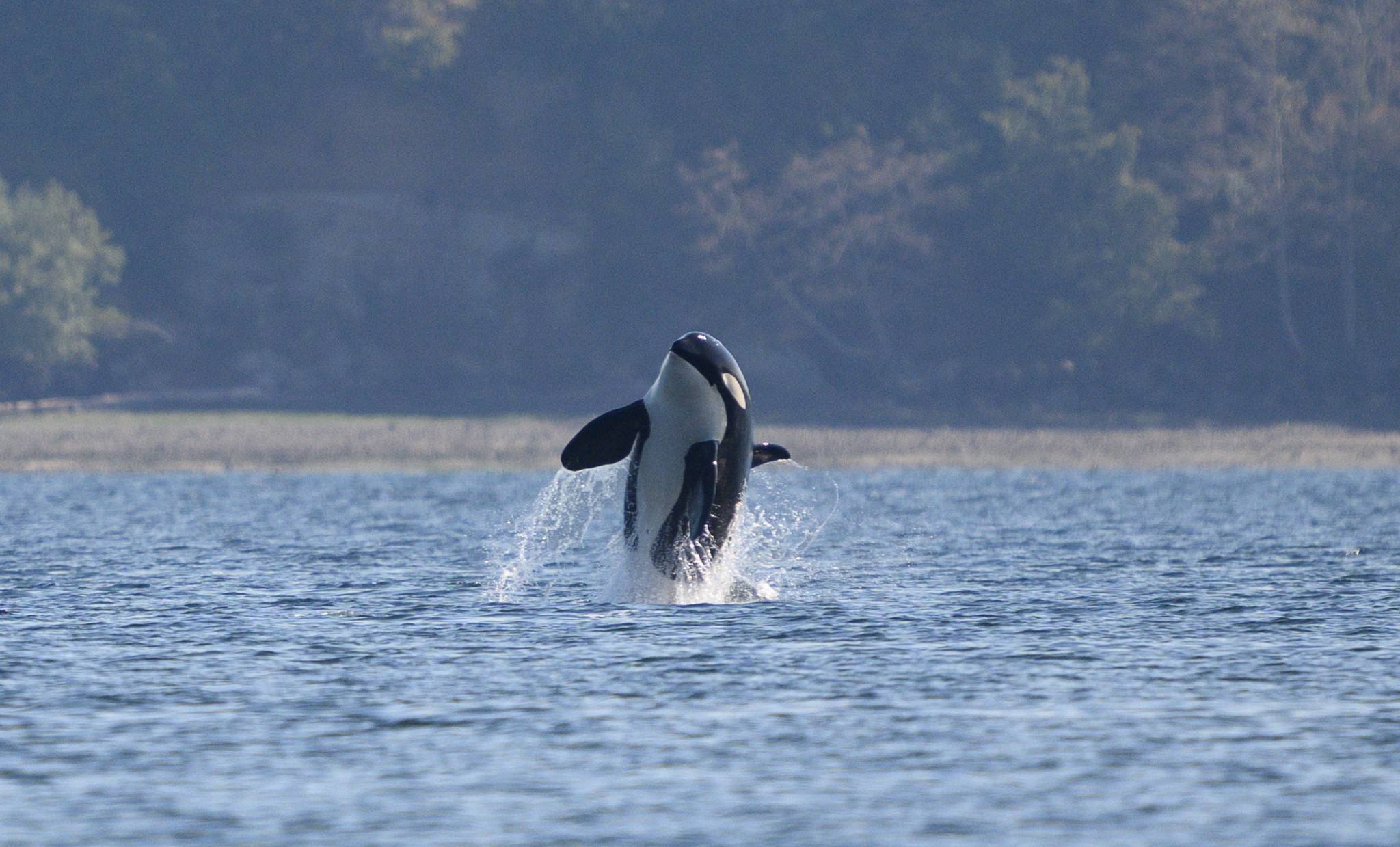
In the waters of the Salish Sea, an artificial intelligence system is listening—24/7, with ears tuned to the precise clicks and whistles of one of the world's most critically endangered marine mammals. When OrcaHello detects the calls of a southern resident orca pod approaching busy shipping lanes or construction sites, it triggers an alert that sets an entire coordination network in motion: vessel crews slow down, pile-drivers fall silent, and the underwater soundscape quiets for some of the ocean's most vulnerable hunters.
The southern resident orcas, a subspecies of just 76 individuals remaining in the wild as of December 2025, face a threat as relentless as it is invisible. Spread across three pods in the Salish Sea off the coasts of northwestern Washington and western Canada, these orcas depend on echolocation and clicks to hunt salmon and navigate their ocean home. But the constant roar of modern ship engines—which can raise underwater noise levels by 12 to 17 decibels—drowns out their communication and disrupts their most basic survival functions. Because sound travels faster and farther underwater than in air, and because the decibel scale is exponential rather than linear, a modest-sounding increase in noise translates to crushing acoustic pressure. The math is bleak: for every additional decibel of maximum noise exposure, orcas' odds of successfully catching prey drop by 12.5 percent.
OrcaHello emerged from an unlikely origin in 2019 at a hackathon event. The team—including co-developers Akash Mahajan and Prakruti Gogia—trained a machine-learning model to recognize the specific acoustic signatures of southern resident orca calls. The system monitors underwater audio livestreams continuously, listening for those distinctive vocalizations that signal the presence of an endangered pod. When a call is detected, the system doesn't just record data; it triggers real-world action.
The Port of Seattle, Washington State Ferries, and the Quiet Sound program have integrated OrcaHello into their operations, using its alerts to coordinate rapid responses. When an orca is detected near active pile-driving—the loud, disruptive underwater construction that occurs during port maintenance and expansion—Quiet Sound experts notify port managers to pause work until the whales move away. "It's a real-time AI alert system that's listening 24/7 for orca calls," Mahajan explained. Prakruti Gogia added that when construction noise is the issue, "one of our experts tells the port to pause the construction while the whales are in the area."
The system is working. In 2026 alone, southern resident orca calls have been detected on 19 distinct days—evidence that the pods are still moving through these waters and that the technology is successfully catching their presence.
What makes OrcaHello remarkable is its simplicity in execution and its elegant marriage of cutting-edge technology with on-the-ground action. It's not a solution that ends the threat of underwater noise—shipping and port activity remain essential to human commerce—but it's a circuit-breaker that carves out moments of acoustic relief for creatures that urgently need them. In the race to save a population on the knife's edge of extinction, every quiet hour matters.