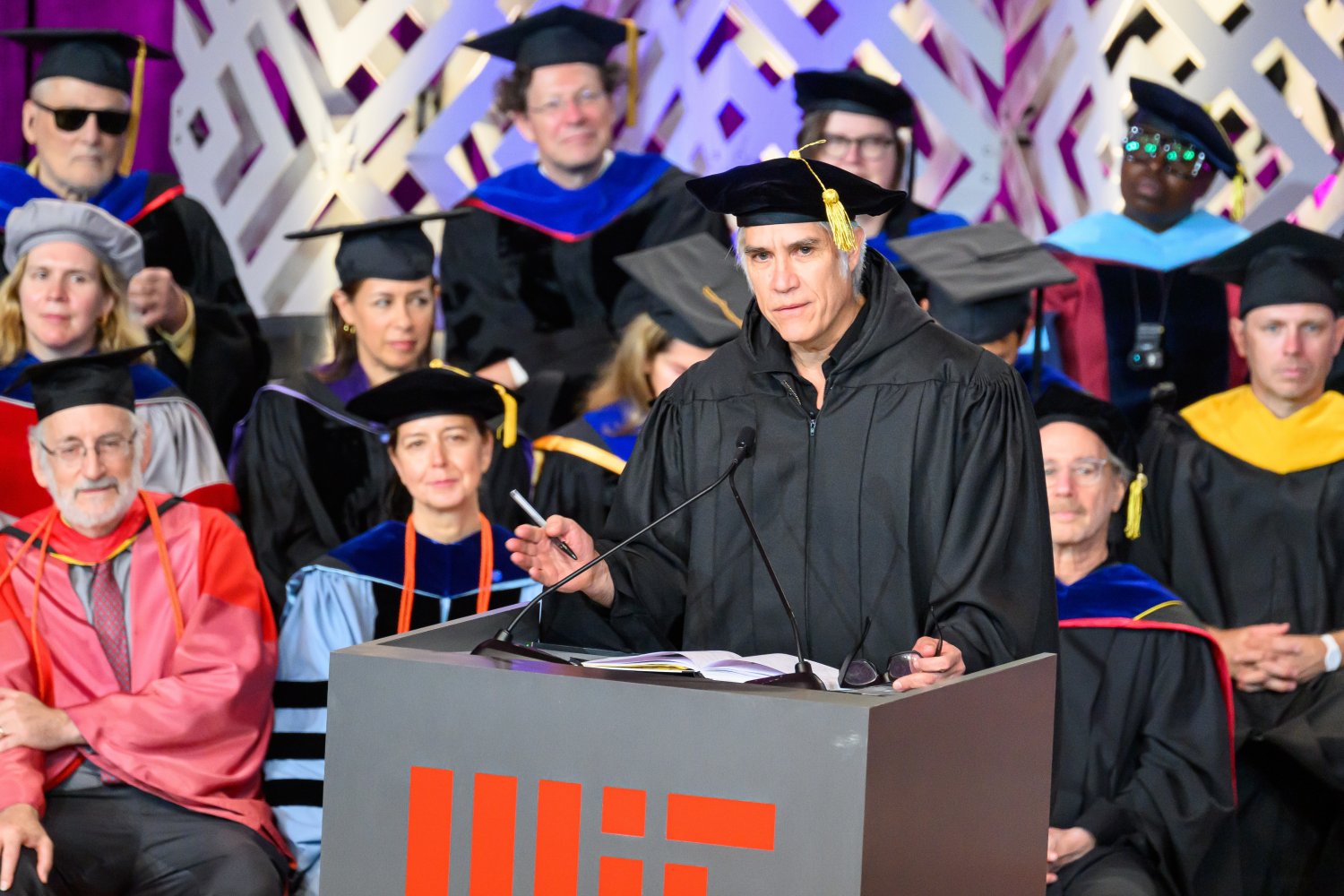
In a hall filled with the energy of possibility, 206 graduates of MIT's School of Architecture and Planning walked away with an unusual charge: to bring back kindness, to honor the truth, and to use their skills not for themselves, but for others. Their commencement speaker, Alejandro Aravena—the Chilean architect who curated the 2016 Venice Architecture Biennale and won the Pritzker Prize, architecture's highest honor—framed their graduation not as an ending, but as a choice point for the world itself.
Dean Hashim Sarkis opened the Advanced Degree Ceremony by describing the Class of 2026 in three words: big-hearted. "They're big-hearted in the way they deal with each other, with their work, and with the world," he said. It was a characterization that moved beyond the typical commencement compliment. To honor that generosity, Sarkis announced the creation of the Class of 2026 Scholarship fund, a concrete commitment to the school's ambition of becoming tuition-free. "Education is a right, not a privilege," Sarkis said, words that were met with sustained applause—a room affirming what its newest graduates already seemed to believe.
The class itself reflects the global reach of the school's mission. Fifty-seven percent of the 206 graduates came from the United States, with 10 percent from China and 5 percent from India, representing nearly every corner of the globe. They came from each of the school's departments: Architecture, Urban Studies and Planning, Media Arts and Sciences at MIT Media Lab, and the Center for Real Estate. Six held dual degrees—evidence of minds unwilling to see the world through a single lens.
Aravena's message cut to something deeper than professional aspiration. He spoke of a world at a "tipping point," asking whether it would land on the side of civilization or barbarism. He offered two stories from his firm's work: one from a slum-upgrading project in Chile where social workers were threatened with death by hired killers if they returned to interfere with organized crime's territorial control, and another from a hospital for victims of sexual violence in Colombia, built in response to armed conflict. These weren't abstract challenges—they were the lived reality of communities his architects had worked to serve.
But Aravena's response was neither despair nor resignation. He pointed to the human prefrontal cortex, the brain's command center for emotions, complex decision-making, and executive function. Humans, he noted, have the largest capacity for these capacities within the animal kingdom. Yet somehow, he suggested, we're turning backward. The remedy, he told the graduates, was to use their knowledge and training in common interests, not just their own. "Leveling the playing field, having more people behaving and coexisting in a more even playground, is very bad news for predators," he said. The graduates' task, then, was clear: to join forces to "bring back decency, bring back kindness, bring back honoring the truth."
As Aravena concluded, he offered the Class of 2026 a closing rallying cry: "Let's make the prefrontal cortex great again." It was an invitation not to retreat into individual success, but to step forward into the harder, more meaningful work of building a world that reflects the best of what humans are capable of becoming.