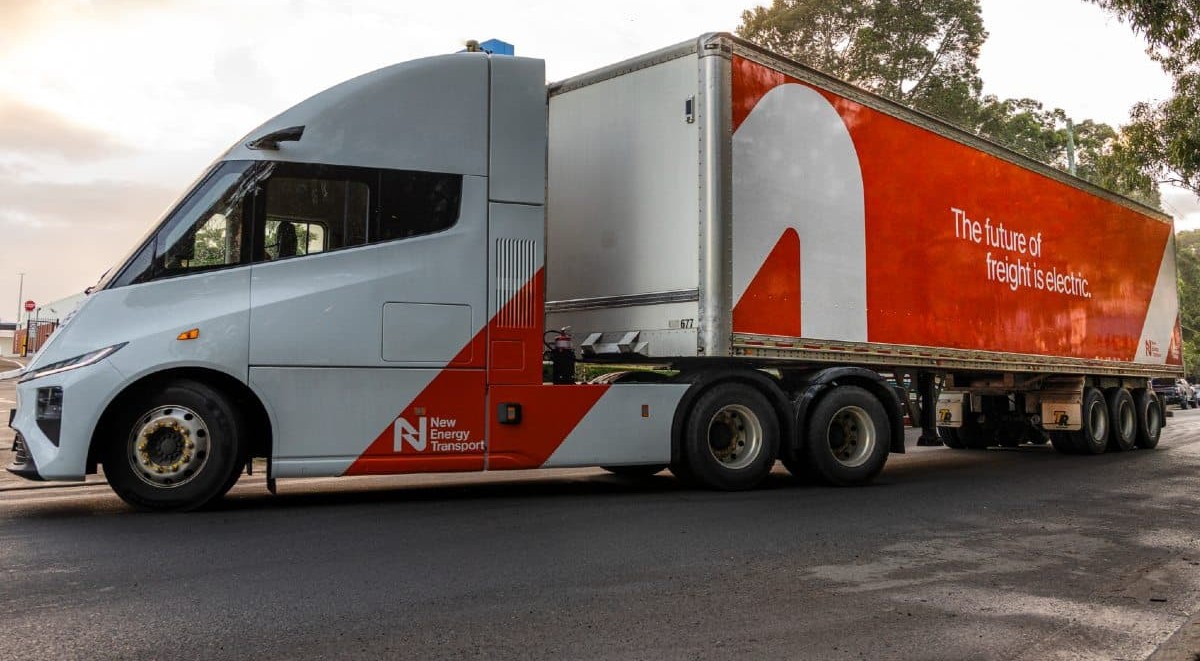
In November, an all-electric semi-trailer truck called the Windrose rolled out of the workshops of New Energy Transport and set a world record. Now, that same truck has just completed a 186-mile haul from Canberra to Sydney on a single charge—and it did so while carrying tons of toilet paper destined for city shelves, completing the final-mile deliveries with electric vehicles too.
This matters because Australia, like most developed nations, runs almost entirely on road freight. Every diesel-powered truck that crosses the country burns through precious fuel and tightens Australia's dependence on volatile global oil markets. When supply chains rely on a single energy source, they fracture easily. But what happened on this corridor between the capital and the harbor city suggests a steadier, greener future is possible—and cheaper.
The Windrose, built by New Energy Transport, is no lightweight experiment. It carries 49 combined tons and generates 1,400 horsepower, with a maximum range of 416 miles on a single charge. During this specific Sydney run, the truck didn't just move freight; it slashed fuel costs by 84 percent compared to traditional diesel rigs. It also completed the 186-mile journey 25 minutes faster than a conventional truck would have, thanks to the electric motor's instant torque during the inclined sections of the route. The truck recharged in just one hour—fast enough to make intercity logistics genuinely viable.
Daniel Bleakley, co-CEO of New Energy Transport, framed the achievement in terms that go well beyond logistics: "This delivery ushers in a new era for Australian road freight where electric heavy trucks are not just cheaper and faster, they unshackle Australia from volatile global oil markets, dramatically strengthening our supply chain resilience." It's a claim grounded in real economics. An 84-percent cut in fuel costs doesn't just benefit one company—it cascades through the entire supply chain, from warehouses to retailers to families buying the goods that trucks deliver.
John Grimes, CEO of the Smart Energy Council, offered a different angle on the same truth. "Every liter of diesel the nation saves on highways by electrifying trucks is one we keep for farmers," he said. Australia's agricultural sector—which feeds the country and exports to the world—depends on diesel for machinery, transport, and rural operations. By electrifying long-haul trucking, the nation preserves fuel for uses where electric alternatives don't yet exist, buying time for rural electrification to catch up.
Grimes also highlighted something that sometimes gets overlooked in discussions of electric vehicles: Australia already has the infrastructure and clean energy to make this work. "We already build electric trucks and charging infrastructure, and can power it all with sun and wind," he said. This isn't a fantasy dependent on technology that doesn't exist. The pieces are here.
New Energy Transport plans to complete a pilot fleet of Windrose trucks by mid-2026. If that timeline holds, and if other companies follow, Australia could begin reshaping its freight network in the next three years. It won't happen overnight, but the path is clearer now—and the economics are on the side of change.