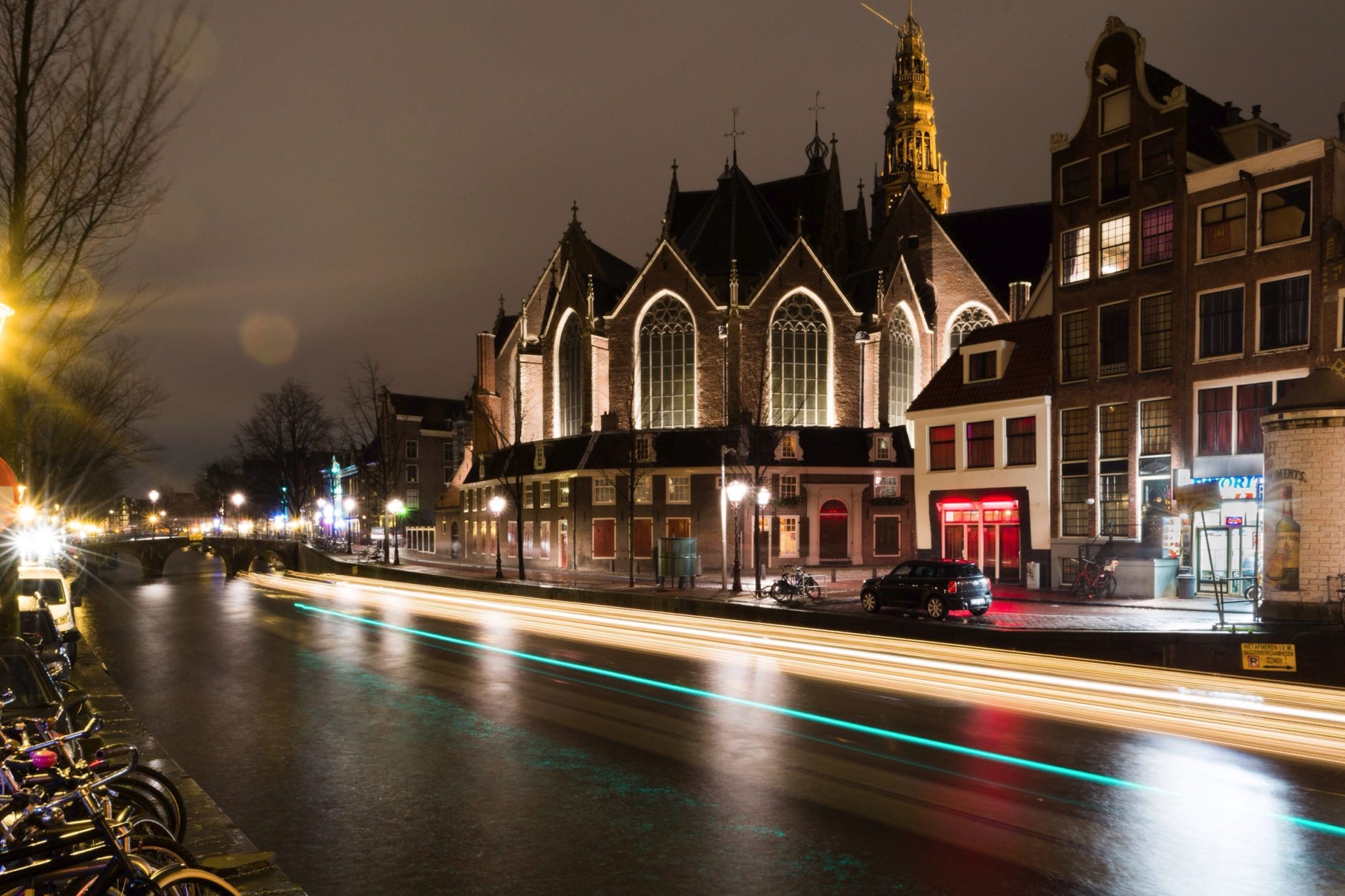
On May 1, Amsterdam's public spaces underwent a quiet transformation. The billboards above tram stops that once hawked burgers and SUVs now feature the Rijksmuseum. The chicken nugget ads vanished. So did the fossil fuel promotions. Amsterdam became the first city in the world to ban advertising for both meat and fossil fuel products on billboards and public transport—a move that reframes what's possible when a capital city decides what its walls will say.
The restrictions emerged from councils led by the GreenLeft Party and Party for the Animals, who saw climate urgency as justification for stepping into the ad industry's territory. "The climate crisis is very urgent," says Anneke Veenhoff from GreenLeft. "If you want to be leading in climate policies and you rent out your walls to exactly the opposite, then what are you doing?" Amsterdam's targets are clear: carbon neutrality by 2050, and meat consumption halved over the same period. These ads, the city decided, undermine both goals.
The numbers are modest on their surface. Meat ads made up an estimated 0.1 percent of Amsterdam's outdoor advertising market before the ban. But the politics run deeper. By grouping hamburgers alongside diesel cars and discount flights in the same restricted category, Amsterdam frames eating meat as a climate issue—a deliberate move that shifts the conversation. Anke Bakker, the Party for the Animals politician who drove the ban forward, pushes back against accusations of paternalism. "We are trying to get the big companies not to tell us all the time what we need to eat and buy," she says. "In a way, we're giving people more freedom because they can make their own choice."
The Dutch Meat Association has called the move "an undesirable way to influence consumer behaviour," while travel agents describe it as a disproportionate curb on commercial freedom. But Amsterdam is not the first city to act. Haarlem, just 18 kilometers to the west, announced a broad meat advertising ban in 2022, which came into force in 2024 alongside fossil fuel restrictions. Utrecht and Nijmegen have followed. Edinburgh, Sheffield, Stockholm, and Florence have restricted fossil fuel ads. France has a nationwide ban. When a capital city moves, other governments notice.
Activists like lawyer Hannah Prins, who worked with campaign group Fossil-Free Advertising, frame this as a "tobacco moment" for high-carbon food. "Johan Cruyff would be in advertisements for tobacco," Prins notes. "That used to be normal. He died of lung cancer. What we see in our public space is what we find normal in our society."
The harder question is whether it works. Researchers don't yet have direct evidence that removing meat ads from bus shelters changes eating habits. But Prof Joreintje Mackenbach, an epidemiologist from Amsterdam University Medical Center, sees the city as running a useful natural experiment. "If we see advertisements for fast food everywhere, it normalizes the consumption of fast consumption," she explains. "So if we take away those types of cues in our public living environments, then that is also going to have an impact on those social norms." A 2019 London Underground ban on junk food advertising did show fewer people buying those products across the capital—a glimmer of evidence that removing cues matters.
The bigger gap remains digital. The 19-euro flight to Berlin that disappeared from the tram shelter keeps appearing in social media feeds. Prins acknowledges the restriction doesn't reach that far. But for her, that's beside the point. Cities decide what their walls say. Amsterdam has finally spoken.