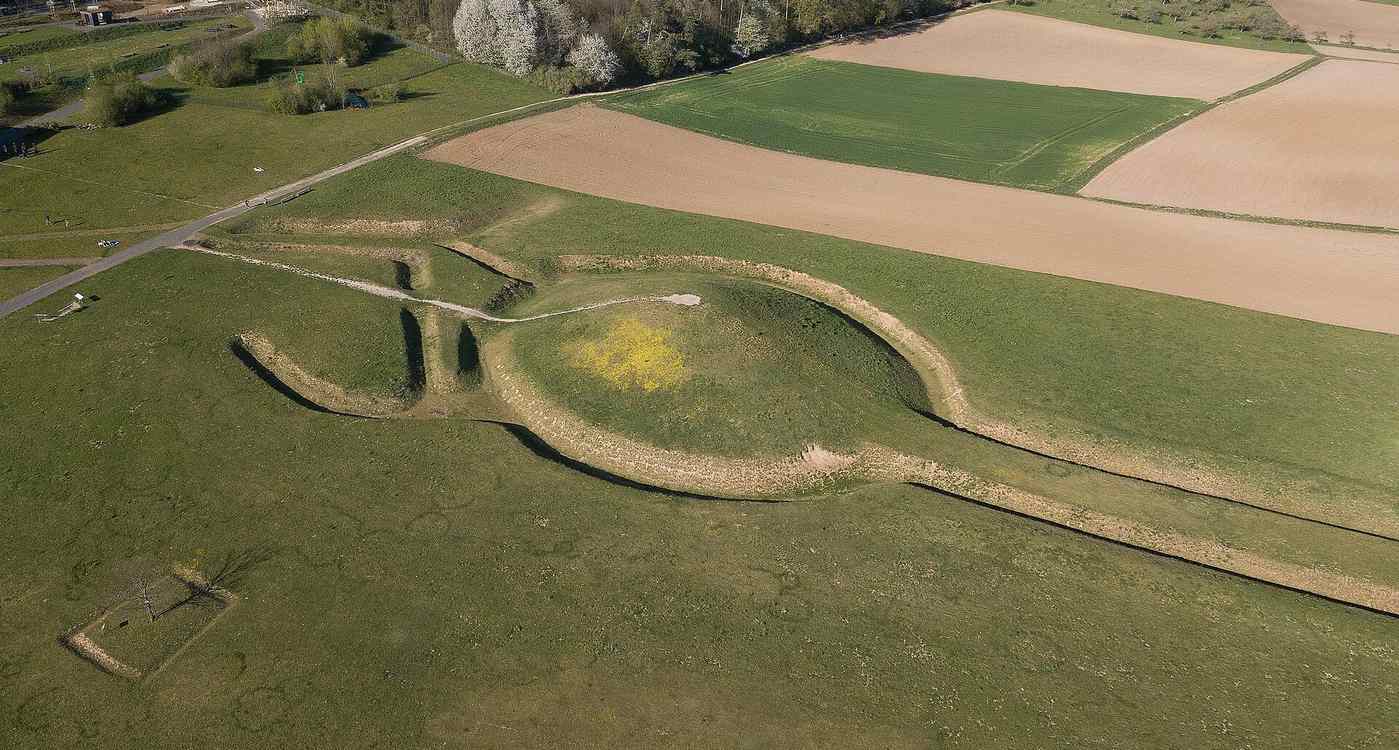
A 5th-century Celtic noble's grave, unearthed during preparations for a solar panel installation near Bad Camburg in Germany's Hesse state, is forcing archaeologists to rewrite the story of ancient wealth and continental trade in Europe.
District archaeologist Kai Mückenberger had ordered a routine geomagnetic survey ahead of the construction work, expecting to find little of note. The survey revealed only the faint outline of a rectangle within a circle—shapes that meant almost nothing until excavation crews called with urgent news: they had found metal. An iron spearhead surfaced first, then a torrent of riches that would reshape understanding of Celtic-period burials in the region.
The assemblage that emerged tells the story of a person of extraordinary status. Heavy gold jewelry emerged from the soil—three golden rings, one weighing 5 ounces, with pieces designed for both finger and arm wear. Amber beads, bronze and glass beads, and a small iron knife accompanied the precious metals. But the most striking artifacts were the iron fittings of a chariot or wagon: hubcaps, axles, and iron bands that once encircled wooden wheels like modern tire tread. This wasn't a grave marked merely by status symbols; it was a vehicle for the afterlife itself.
To preserve these fragile treasures, archaeologists made the unusual decision to excavate them not item by item but as a single massive block of earth, transporting the entire deposit to controlled laboratory conditions. That careful approach yielded an astonishing surprise: a beaked bronze jug, determined by experts to be Etruscan in origin—crafted by a central-Italian people who were flourishing at the same moment in a distant land.
The Etruscan vessel represents something far more significant than a curiosity. It speaks to networks of exchange and prestige that connected Mediterranean civilizations with northern Europe in ways archaeologists are still working to map. A person of such status that they could commission or acquire an Etruscan vessel, dress in gold from multiple sources, and merit burial with a full wagon was integrated into the wider world of the ancient continent.
Experts at the State Office for Monument Preservation in Wiesbaden estimate the grave dates to the first half of the 5th century BCE, placing it within the Hallstatt-La Tène cultural sphere, though the artifacts suggest affiliation with the Hunsrück-Eifel Celtic culture, named for two low mountain ranges. Yet what makes this find exceptional is rarity: only two other "wagon burials" of comparable stature have ever been discovered anywhere in Germany. The archaeologists in Wiesbaden were unequivocal in their assessment—no other gravesite from this period comes close in quality or completeness.
"You only make such a find once in your archaeological career," Mückenberger said, a sentiment that captures both the luck and the weight of discovering a window into a world that vanished nearly 2,500 years ago. The solar panel project that sparked this excavation will proceed, but it will do so under the watchful eye of history, carrying forward knowledge that only a buried Celtic noble could have provided.