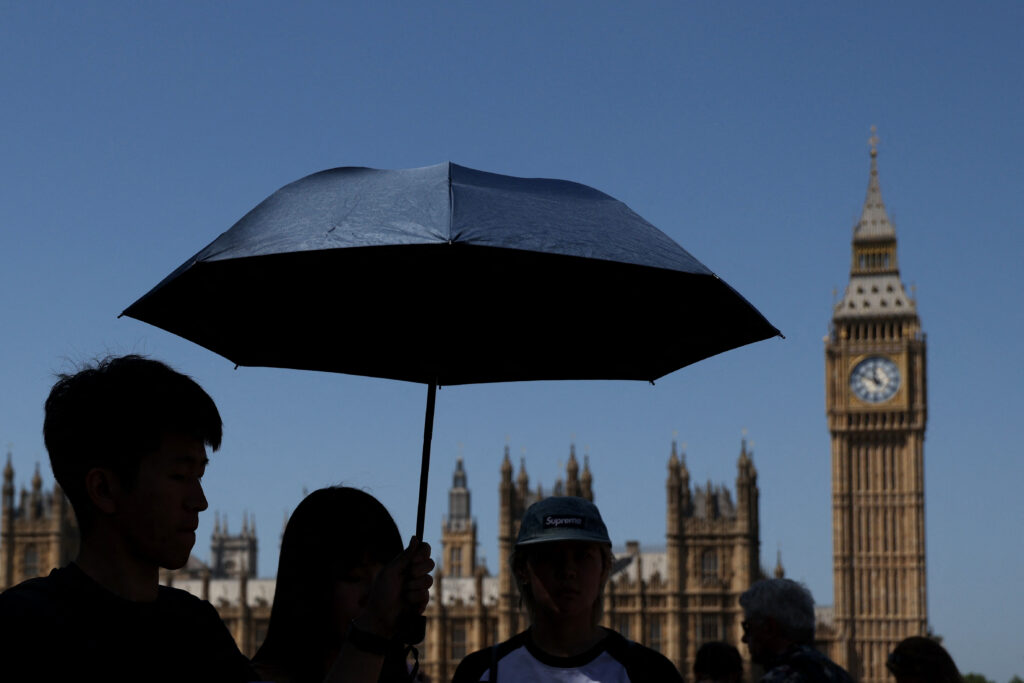
When Kew Gardens in London hit 95 degrees Fahrenheit last Monday—more than 30 degrees above normal for late May—it marked the hottest day ever recorded in the United Kingdom for that time of year. By Tuesday, the record had been broken again, climbing to 95.2°F. But even as temperatures soared across Western Europe, scientists and policymakers pointed to something else rising alongside the heat: awareness, preparation, and a growing determination to protect people from the hottest temperatures yet to come.
France, Spain, and the United Kingdom are grappling with an unusually early heat wave driven by a weather phenomenon known as a heat dome, which is trapping warm air from northern Africa over the region. The event has been linked to several deaths in France, including five drownings as people sought relief at beaches before lifeguard season typically begins. Climate scientists say human-caused climate change likely played a role in the extreme temperatures. Christophe Cassou, a climate researcher, described the event as having "a one in 1,000 chance of happening at this time of year based on the climate from 1979 to 2025 and virtually impossible in the preindustrial era."
Yet even amid the urgency, the response reveals a nation taking honest stock of its vulnerabilities. A newly released government-backed report, required every five years under the Climate Change Act of 2008, offered a blunt assessment: the United Kingdom is "built for a climate that no longer exists." Many British homes were constructed to trap heat during bitter winters, a design that now puts residents at risk during sweltering summers. Last year—England's warmest on record—saw an estimated 1,504 heat-associated deaths during five separate heat episodes.
The report projects that without action, overheating could affect more than 90 percent of homes in the U.K. by 2050. But it also charts a path forward. "Extreme heat is certainly the most deadly of the climate impacts on the U.K., so we need to see cooling rolled out at scale," said Julia King, co-author of the report and chair of adaptation for the U.K. Climate Change Committee. "Sometimes this will mean shading, but sometimes it will mean air conditioning."
That recognition marks real progress. By naming the threat clearly and committing to systematic adaptation—better infrastructure, targeted cooling for vulnerable communities, and honest planning for a hotter future—the U.K. is moving from reacting to heat emergencies to preventing them. The heat dome may be a warning, but the response is already taking shape.