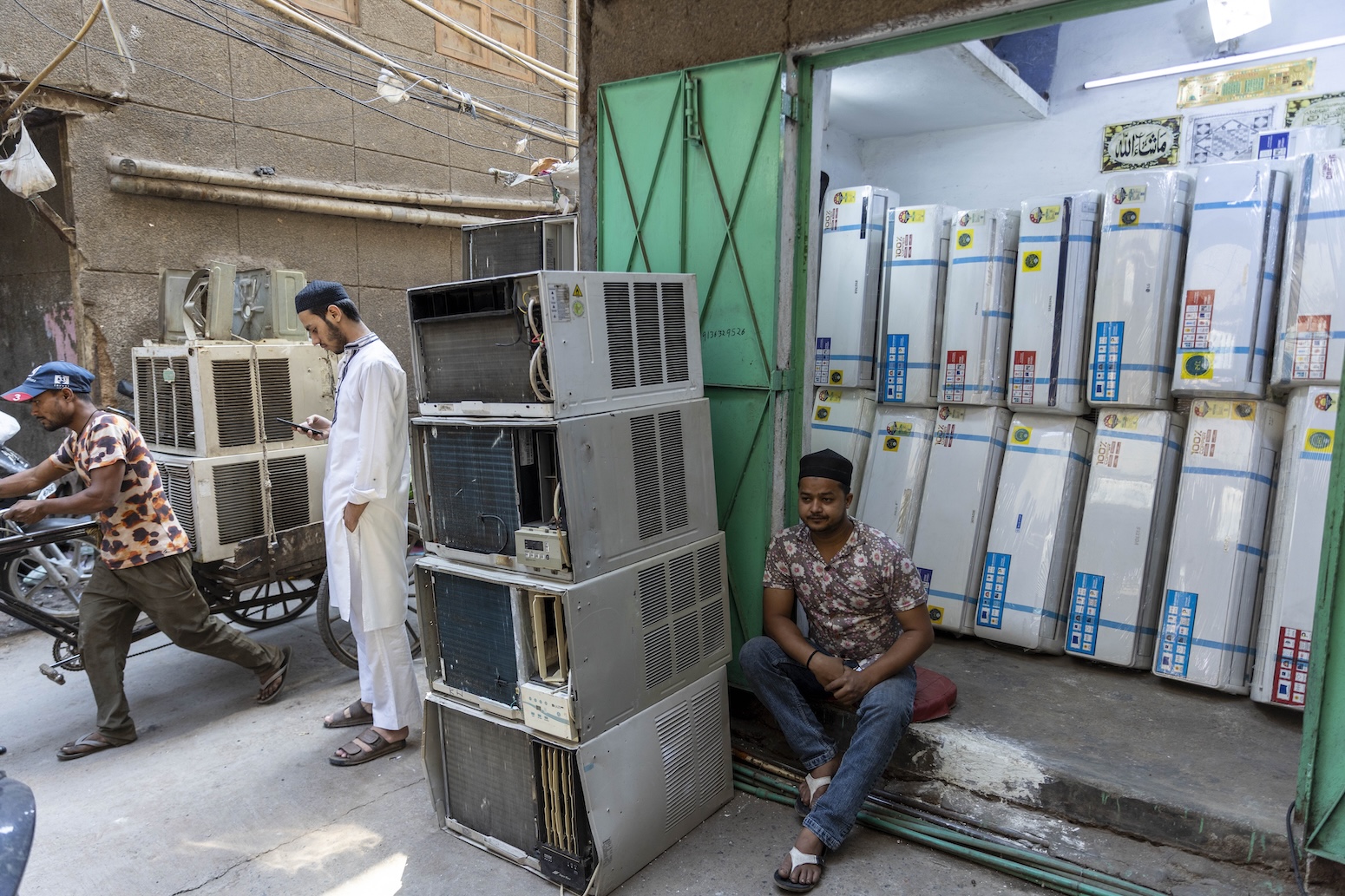
When 18-year-old Priya Sharma’s family in Nagpur bought their first air conditioner last summer, they chose a five-star rated model—just as Dr Nikit Abhyankar once advised: make the first AC the most efficient one, because it’s likely staying for decades. Across India, where only 8% of households had ACs as of 2024, millions are making that same choice for the first time, driven by rising incomes and record-breaking heat. This moment—when demand is surging but most units haven’t yet been purchased—represents a rare turning point. According to Carbon Brief’s analysis, if the 15 million Indian households expected to buy an AC this year chose a five-star model instead of a two-star, they would collectively save ₹69 billion annually and cut CO₂ emissions by nearly 5 million tonnes. That’s equivalent to shutting down a coal plant the size of NTPC’s Vindhyachal facility for nearly two months.
India’s cooling revolution is accelerating. In 2024 alone, nearly 14 million air conditioners were sold—up from 10 million the year before—and sales have grown more than 25% year-on-year since 2021. The country hit a record 270 gigawatts of power demand on May 21, 2026, as heatwaves swept across states from Rajasthan to Bihar. While daytime cooling is increasingly powered by solar, coal still lights up the night, meaning every inefficient AC adds to both electricity strain and emissions. The government’s India Cooling Action Plan projects that by 2037, space-cooling demand could grow 11-fold compared to 2017 levels. A World Bank study warns a new AC will be bought every 15 seconds in India by then, with greenhouse gas emissions from cooling set to rise 435% over the next two decades.
Yet most Indian homes still don’t have ACs. The 2020–21 national survey showed just 4.9% ownership, mostly among urban elites. Even now, at 8%, access remains uneven. But Dr Abhyankar, associate adjunct professor at UC Berkeley’s Goldman School of Public Policy, sees a historic opportunity: 90% of the ACs that will be in use by 2040 haven’t been bought yet. “The moment you cross a specific income threshold, the first appliance you buy is an air conditioner, no matter whether it’s hot or not,” he tells Carbon Brief. “And the moment there are extreme temperatures, the next summer, you see a huge wave of new ACs being purchased.”
India’s Bureau of Energy Efficiency mandates star ratings based on the Indian Seasonal Energy Efficiency Ratio (ISEER), with five stars being the most efficient. Though three-star units dominate the market, shifting to five-star models could save enough electricity to power a city the size of Pune for a year. The environmental and economic case is clear. As families like Priya’s make their first cooling purchase, the ripple effect could shape India’s energy future for generations. With the right policies and incentives, this quiet shift could become one of the country’s most powerful climate wins.