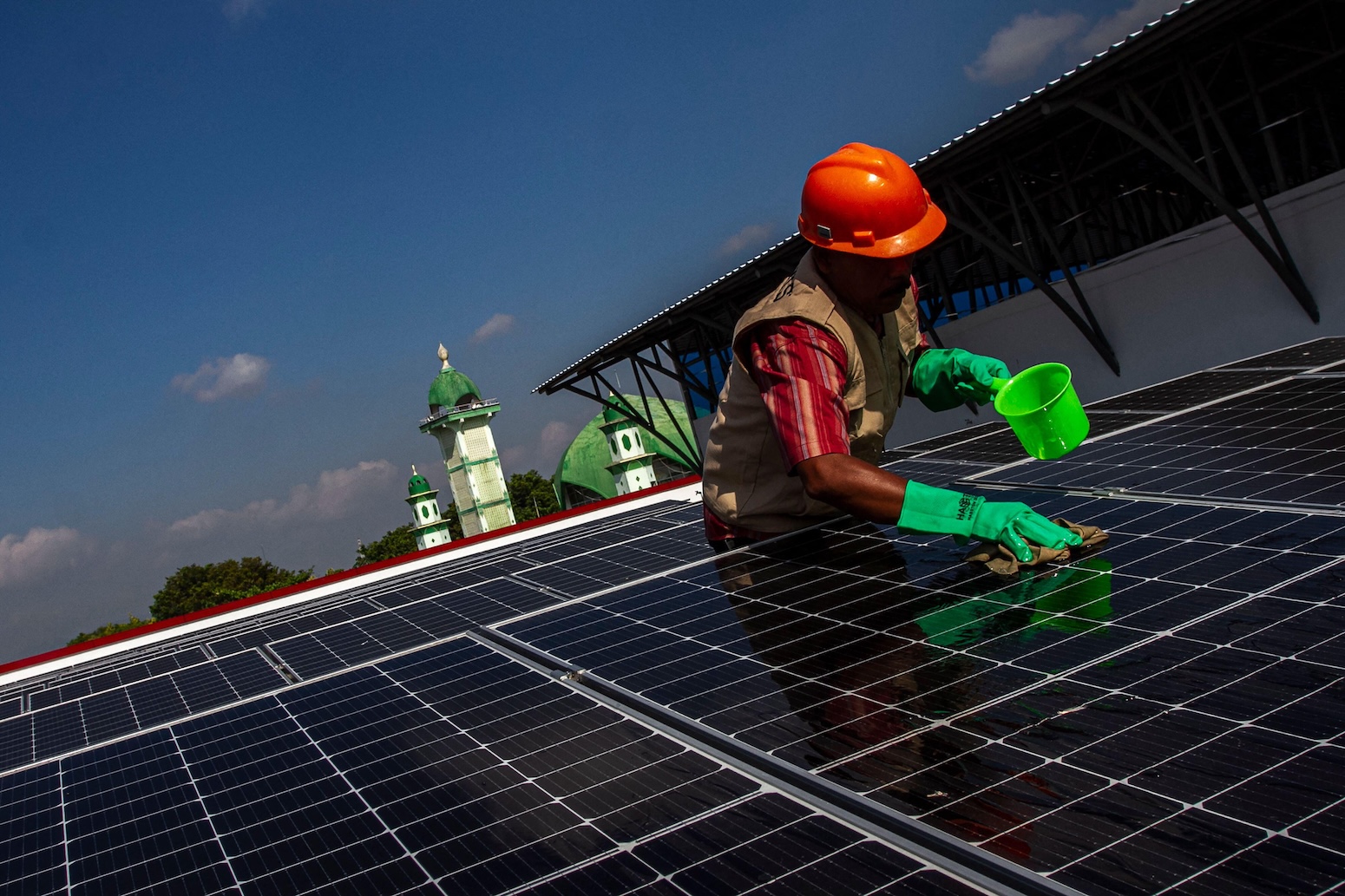
For the first time in history, solar power has become Asia's third-largest source of electricity—surpassed only by coal and hydropower—marking a stunning shift in how the world's most populous continent powers itself. According to new analysis by Carbon Brief, solar output has nearly quadrupled since 2020, generating 1,727 terawatt hours of electricity in the 12 months to April 2026, just edging out gas power's 1,711 terawatt hours. The milestone matters because it reveals how quickly clean energy can reshape an entire continent's energy landscape when scale and momentum align.
Asia's solar boom reflects an extraordinary global phenomenon. The continent now accounts for roughly 60% of all new solar capacity added worldwide during this period, making it the true epicenter of the world's renewable energy revolution. China has been the engine of this transformation, claiming nearly three-quarters of Asia's solar growth since 2020. By the end of 2025, record installations pushed China's cumulative solar capacity to 1.2 terawatts—a figure that alone dwarfs most countries' total electricity systems. But China's influence extends far beyond its own borders. The country hosts more than 80% of global solar manufacturing capacity, which has allowed it to export affordable panels across Asia at crucial moments. In March 2026 alone, amid energy pressures from the Iran war, Chinese solar exports to Asia doubled to reach 39 gigawatts—a lifeline for countries racing to build renewable capacity.
What makes this story even more striking is not just solar's rise, but gas power's unexpected stagnation. Despite widespread predictions that gas would undergo "explosive growth" across Asia, output has flatlined for years. The reasons are revealing. Many Asian nations depend heavily on imported liquified natural gas, leaving them vulnerable to supply shocks. When Russia invaded Ukraine, LNG prices spiked and supplies tightened. Between 2022 and 2023, roughly 81 gigawatts of planned gas capacity across Asia was simply cancelled. Import terminals and pipelines faced delays or were scrapped in South Korea and South Asia as construction and fuel costs climbed. Global shortages of gas turbines further delayed new plants in Vietnam and the Philippines. The result: while gas capacity did grow by 22% between 2019 and 2024, actual generation limped ahead by only 6%—many plants sitting half-empty as cheaper alternatives proved more attractive.
Countries like Pakistan have emerged as vivid examples of this shift. The nation's widely reported rooftop solar boom has reduced dependence on gas-fired power, letting households and businesses generate their own clean electricity. India and China have similarly leveraged renewables to offset gas needs. The transformation, however, is not uniform across the region. China and Taiwan have expanded gas generation significantly, while Japan and India have seen declines—reflecting how energy transitions play out differently depending on geography, resources, and policy choices.
The broader significance is unmistakable. In April 2026, wind and solar combined surpassed gas generation globally for the first time ever. Asia's experience suggests this crossover point is not a temporary fluctuation but a structural shift. As the International Energy Agency has noted, recent energy crises have sharpened concerns among Asian gas importers about reliability and affordability. For a continent housing over half the world's population, the message is clear: the future belongs not to the fuels of yesterday's energy wars, but to the abundant sun overhead.