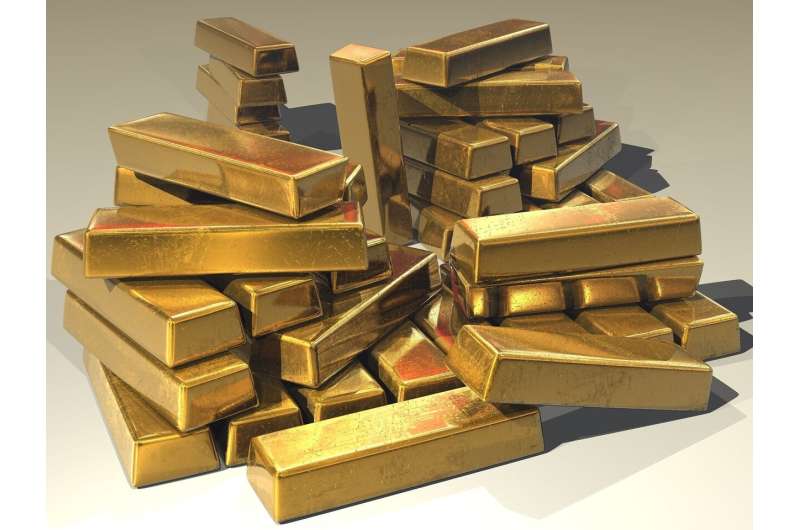
Deep beneath the red dust of Western Australia, where the sun beats down on ancient rock older than trees, mountains, or even oxygen-breathing life, gold lies waiting—not by chance, but by design. This is the story of a continent forged in fire and time, where geological forces billions of years ago set the stage for one of Earth’s richest concentrations of gold. Today, Australia ranks among the world’s top gold producers, its economy still shaped by the same precious metal that sparked gold rushes in the 1850s. But the real discovery wasn’t just the gold—it was understanding why it’s there at all.
The answer lies in the Yilgarn and Pilbara cratons, some of the most ancient and stable parts of Earth’s crust, formed over 2.5 billion years ago when our planet was a volatile, oxygen-poor world. Here, heat, pressure, and metal-rich fluids moved through fractures in the crust, depositing gold in concentrated veins. "The gold fertility in parts of Australia is extraordinarily high compared to other parts of the world," says Dr. Sandi Occhipinti, Research Director at CSIRO. Unlike surface-level luck, modern exploration reveals a deep science: gold doesn’t appear randomly. It follows patterns written in mineralogy and preserved in stone.
Australia’s gold isn’t just old—it’s exceptionally well-preserved. In the Yilgarn Craton alone, more than 170 million ounces of gold have been discovered, with much of it concentrated in zones where ancient tectonic activity created ideal trapping conditions. While global demand for gold surges—driven by geopolitical uncertainty and its enduring role as a safe-haven asset—Australia’s supply is being found not with pickaxes, but with scanning electron microscopes and laser-induced breakdown spectroscopy (LIBS). These tools detect subtle mineral changes around deposits, even when buried under hundreds of meters of cover, allowing explorers to target resources with precision and reduce environmental impact.
One breakthrough, the UltraFine+-based geochemical method, can identify gold particles as small as 10 microns—smaller than a human red blood cell—giving geologists a powerful new lens into hidden systems. This shift from chemistry to mineralogy means companies can now follow the invisible footprints of gold, guided by how surrounding minerals reorganize under heat and pressure.
"Sometimes the geochemistry doesn't change much around a deposit. It's the mineralogy that alters," Occhipinti explains. That insight is transforming exploration, making it faster, smarter, and more sustainable. As easily accessible deposits dwindle, this science-led approach ensures Australia’s gold story isn’t ending—it’s evolving. And beneath the silent, sunbaked earth, the next discovery may already be calling.