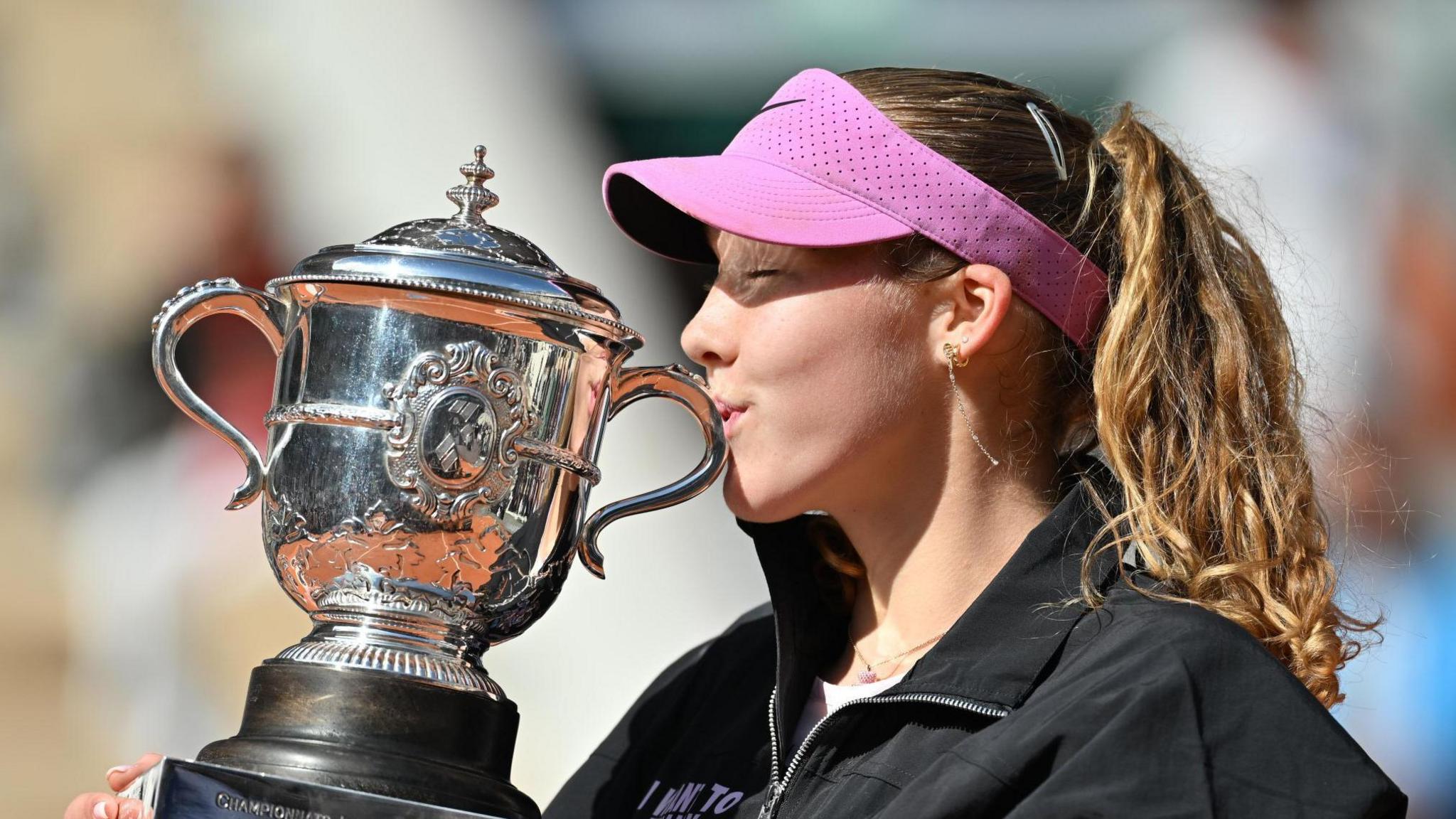
On a sun-soaked afternoon at Roland Garros, 19-year-old Mirra Andreeva fell to the court in pure elation, her first Grand Slam trophy finally in her grasp. The Russian eighth seed had just dispatched Polish qualifier Maja Chwalinska 6-3, 6-2 in just one hour and 22 minutes, becoming the youngest woman to win the French Open since Monica Seles claimed the title in 1992. For Andreeva, who has dreamed of this moment since childhood, the victory represented not just a championship, but confirmation of the extraordinary potential that has shadowed her rise through professional tennis.
The path to this triumph has been anything but straightforward. Expectations have followed Andreeva relentlessly since her breakthrough at the 2023 Madrid Open, where her fearless tennis caught the attention of Andy Murray himself. But Grand Slams demand more than raw talent—they require maturity, composure, and the ability to handle suffocating pressure. Under the guidance of her coach Conchita Martinez, a former Wimbledon champion herself, Andreeva has grown into a player capable of delivering when the stakes are highest. She reached the French Open semi-finals in 2024 and has now claimed two WTA 1000 titles in 2025 while cracking the world's top five.
The final itself told a story of two very different journeys converging. Andreeva came in as the ranking favorite, seeded eighth in a tournament where she was born to excel—a player groomed, supported, expected to win. Chwalinska, by contrast, was a 500-1 outsider, a qualifier who had crashed through nine consecutive matches just to reach the final. The Polish player had spent most of her career grinding on lower professional circuits, struggling to make ends meet. So uncertain of her financial situation was Chwalinska during the tournament that after her second-round victory, she feared she could not even afford another night in her hotel. Yet there she stood on Saturday, one match away from history—no qualifier had ever won the French Open before.
The nerves showed early. Four successive breaks of serve opened the final as tension and swirling wind unsettled both players. Chwalinska held serve first, delighting the 15,000-strong crowd that championed her underdog run throughout the fortnight. But Andreeva, displaying the composure that has marked her growth, found her footing. She reeled off the next nine games, building a commanding 6-3, 5-0 lead that made the outcome inevitable. When Andreeva converted her first championship point on Chwalinska's serve with a backhand winner, the fairytale had ended—but not before Chwalinska had already transformed her life beyond recognition.
"I've been watching Roland Garros since I was very young and it has always been a dream to win this trophy," Andreeva said on court, her voice trembling with emotion. After embracing Martinez in the stands, she had already begun reflecting on the journey—one that included navigating the political backdrop of her semi-final victory over Ukrainian 15th seed Marta Kostyuk with remarkable poise.
For Chwalinska, the consolation is profound. She will climb to a career-high ranking of 21st in the world and take home 1.4 million euros in prize money—triple what she had earned in her entire career to date. As she leaves Paris, she remains the only qualifier besides Emma Raducanu to reach a Grand Slam final in the modern era. Though Andreeva's class proved too great on the day, Chwalinska's three weeks in Paris have rewritten her future.