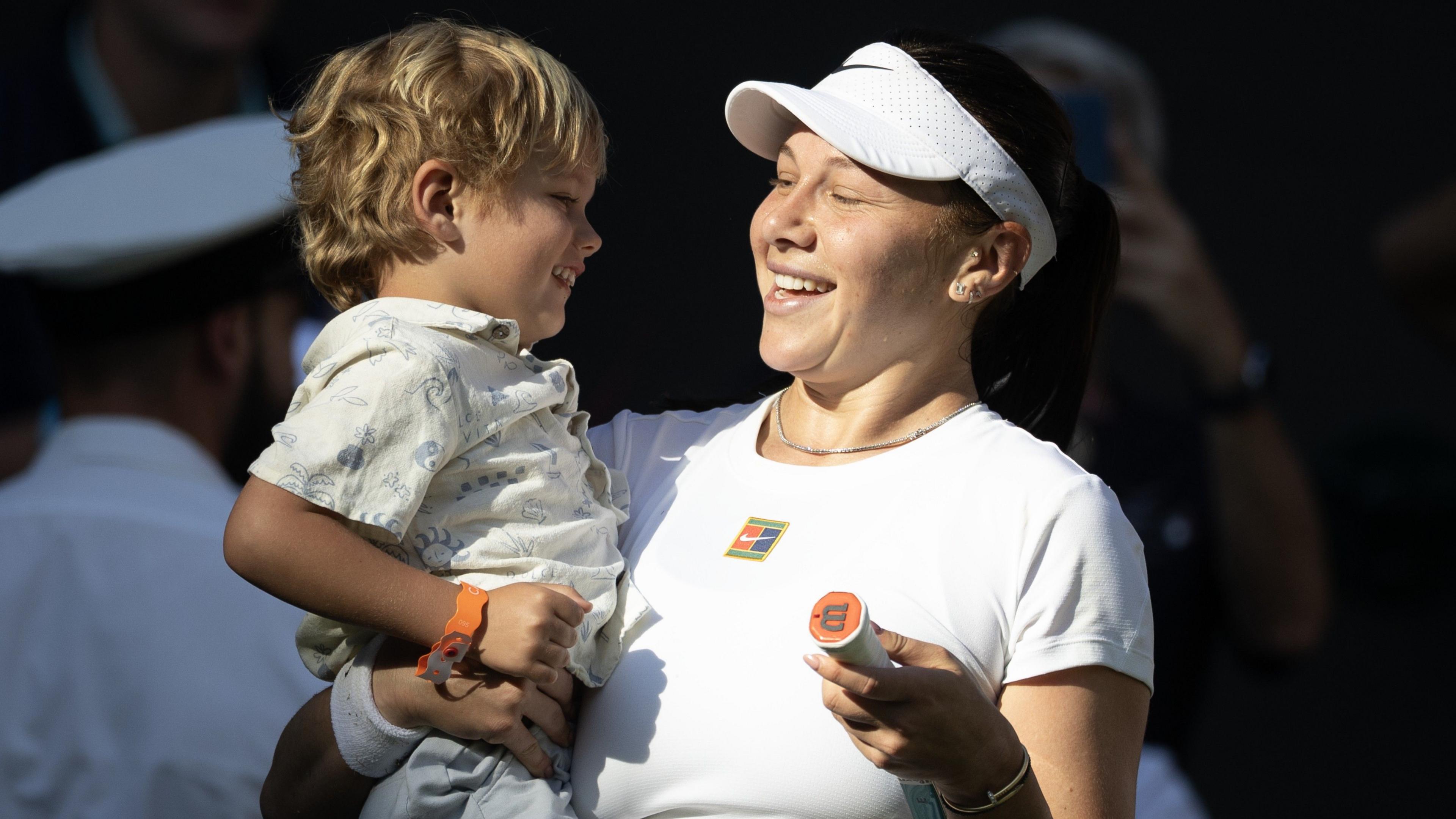
Six weeks. That's all it took for Amanda Anisimova to rewrite her story.
Twelve months ago, the American tennis star walked off Centre Court in tears after one of the most devastating defeats in Wimbledon history — a 6-0, 6-0 loss to Iga Swiatek in just 57 minutes, a scoreline not seen in a women's final since 1911. "I got a bit frozen with my nerves," she admitted afterward.
But rather than let that crushing moment define her, Anisimova turned pain into fuel. Just six weeks later, at the US Open, she exacted her revenge on Swiatek in the quarter-finals, then fought past two-time winner Naomi Osaka to reach her second consecutive Grand Slam final.
"Being able to manage my nerves and go out there and try to forget the past — that was the biggest mental challenge I had to overcome," Anisimova, now 24, told BBC Sport at Indian Wells. "I was also enjoying it out there. I felt like once I went out there I didn't have the stress or any weight on my shoulders — maybe because I had a lot of people supporting me."
That transformation didn't happen by accident. Former coach Rick Vleeshouwers, who worked with Anisimova for two years including her run to the Wimbledon final, described that day as "the worst off day we have ever experienced." But he also saw something in her — a resilience that would surface again and again.
"The way she has been competing for the past year, even when things don't go her way, made a big difference," said fellow American Emma Raducanu. "Everybody knew she was dangerous and could take the racquet out of anyone's hand, but I think her focus and competitiveness has made a big difference."
Anisimova has faced steep challenges before. She started playing tennis at five, turned professional at 15 in 2016, and at 17 reached the French Open semi-finals, ousting defending champion Simona Halep to become the first woman born in the 21st century to reach a major singles semi-final. Then, fewer than three months later, she lost her father and coach Konstantin to a heart attack.
"A lot of life experiences have made me grow up very quickly," she said. "I feel like I'm not my current age — I feel I'm a lot older than I am, although I do like acting like a kid and having my inner child come out sometimes."
Now, returning to Wimbledon after a difficult year that included parting ways with her coach and a two-month injury layoff, Anisimova is focused on something simple: playing free. "I'm going into this just excited to play and be healthy again," she said at Queen's Club.
For a player who has learned to find joy amid adversity, that may be the only ending that matters.