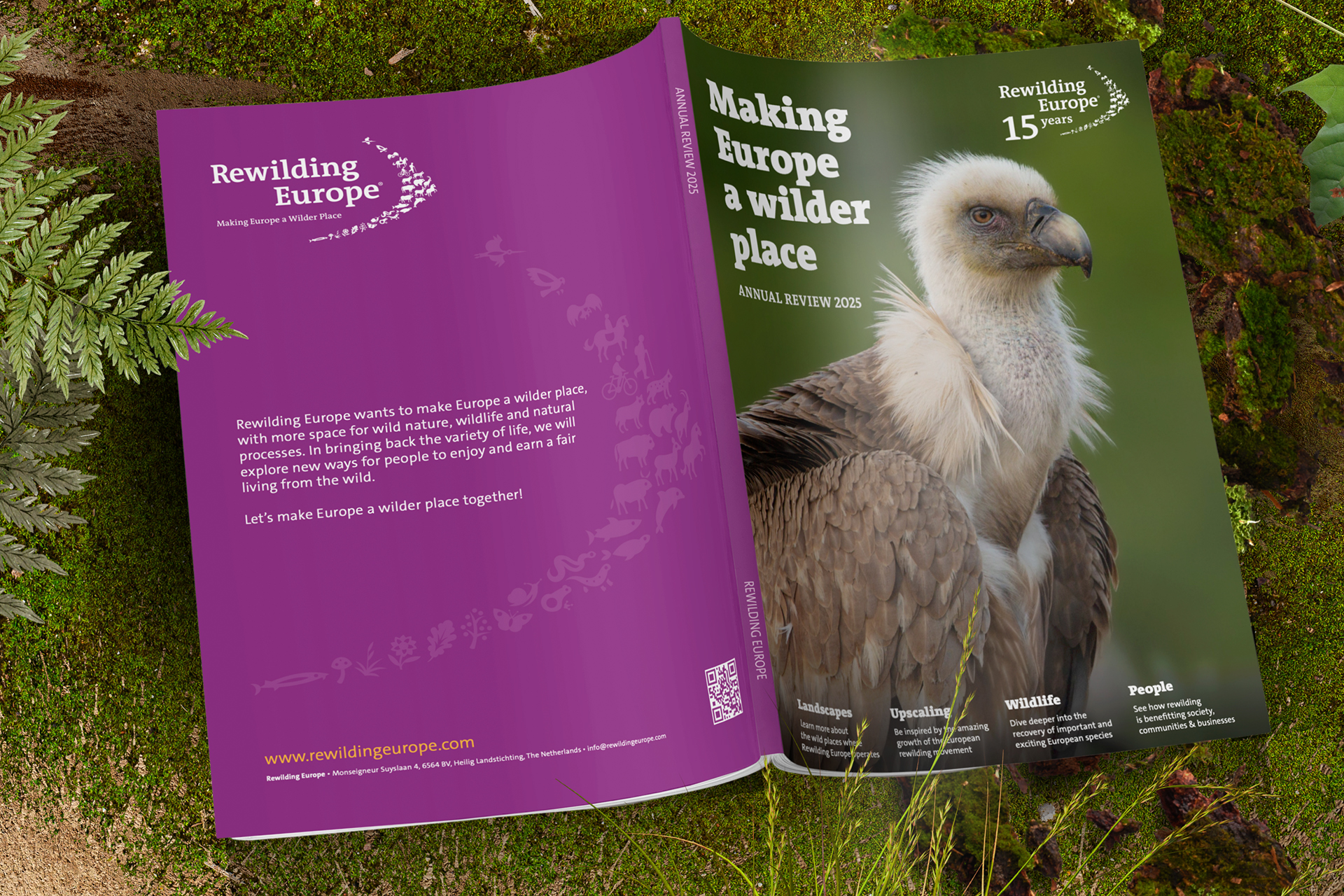
When Rewilding Europe was founded in 2011, the word "rewilding" barely registered in conservation circles. Fifteen years later, it has become a cornerstone of how Europeans think about restoring nature — and one group has been quietly driving that shift from the very beginning.
Rewilding Europe is celebrating its 15th anniversary this year, and the milestone comes with a milestone of another kind: 2025 marks the halfway point of the organization's 10-year Strategy 2030, which sets goals for expanding wild spaces and restoring ecosystems across the continent.
"Our distinct and progressive approach to nature recovery has helped rewilding move from the margins towards the mainstream of European conservation," said Frans Schepers, Rewilding Europe's Executive Director. "At a time when Europe is spending billions responding to floods, droughts, wildfires, and health impacts, we must realise that nature recovery is basic risk management. Restoring ecosystems through rewilding is among the smartest preventive investments we can make."
The organization traces its roots to 2008, when the idea first took shape, before formally launching three years later. Today, it works with partners across Europe to show that nature can bounce back when given space to lead. The approach goes beyond simply protecting land — it focuses on restoring entire ecosystems, supporting wildlife populations to return, and helping rural communities benefit from wild nature.
This year's annual review highlights several concrete achievements. The European Rewilding Network has expanded, bringing together more practitioners and landscapes. The European Young Rewilders community has grown, building a new generation of conservation leaders. New initiatives launched include the Wilder Parks and Rewilding Land Facility programs, alongside a free Open Online Rewilding Course available to anyone curious about the field.
The review also offers a look back at how far the movement has come — from a fringe idea to a credible, widely recognized approach to tackling biodiversity loss, climate challenges, and struggling rural economies.
Looking ahead, Rewilding Europe has already begun shaping its next chapter. With 2030 approaching, leaders are pointing toward 2040 as the next horizon — a time frame for an even bolder vision where people and nature can thrive together at scale across the continent.
"We remain convinced that the most important chapters of Europe's rewilding story are still to come," the organization stated. The Annual Review 2025 is available to read online or order as a free print copy.