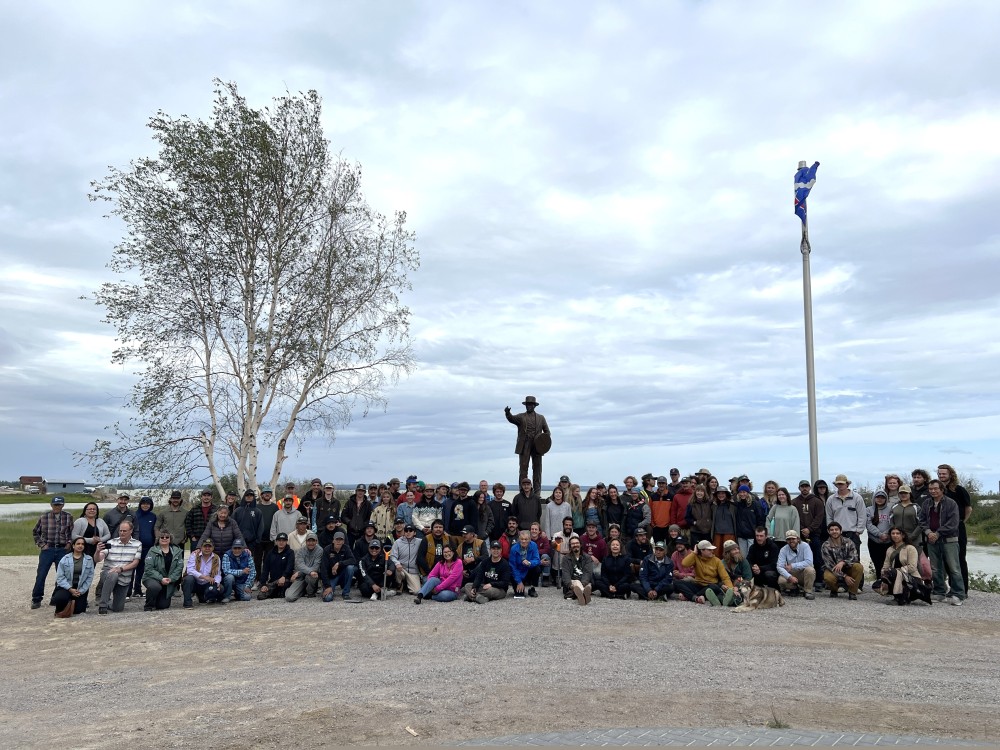
This summer, 1.5 million trees will take root along a stretch of Highway 3 and near the communities of Behchokǫ̀ and Wekweètì, continuing one of the most ambitious reforestation projects in Canadian history. A planting ceremony will kick off the season at the Behchokǫ̀ Culture Centre from 10am on Friday.
The Tłı̨chǫ Government's multi-year reforestation initiative, launched in 2025, has quietly become the largest ecological restoration effort the Northwest Territories has ever seen. What began with a pledge to plant 12 million trees over seven years has since accelerated: the current target stands at 13 million trees planted within just six years. That's roughly 2.2 million trees per year—every single year, on Tłı̨chǫ land.
The project carries a purpose that runs deeper than numbers. "An effort to push back against the effects of climate change," the Tłı̨chǫ Government stated in a recent release, the work is designed to regenerate the land and restore critical caribou habitat. The trees being planted this season will stretch along Highway 3 within Tłı̨chǫ territory, around Behchokǫ̀ itself, and on the south shore of Snare Lake, across from the community of Wekweètì.
The funding partnership making this possible includes Tree Canada, the Tłı̨chǫ Government, and the federal Two Billion Trees program—a program that was recently cancelled in the most recent federal budget. While the precise impact of that cancellation on future planting seasons remains unclear, this summer's work will proceed as planned.
Last year, the program had a target of approximately 1.7 million trees. This year's slightly lower target of 1.5 million still represents a remarkable scale of hands-in-the-soil work, carried out by crews on the ground in some of the most remote terrain in Canada.
The Tłı̨chǫ Government's vision is patient and long-term: by the time the project concludes in 2031, the landscape will look meaningfully different—more forested, more resilient, more alive with the species that depend on it. For the communities whose land this is, the trees are more than an environmental metric. They are a statement about what the future can hold.