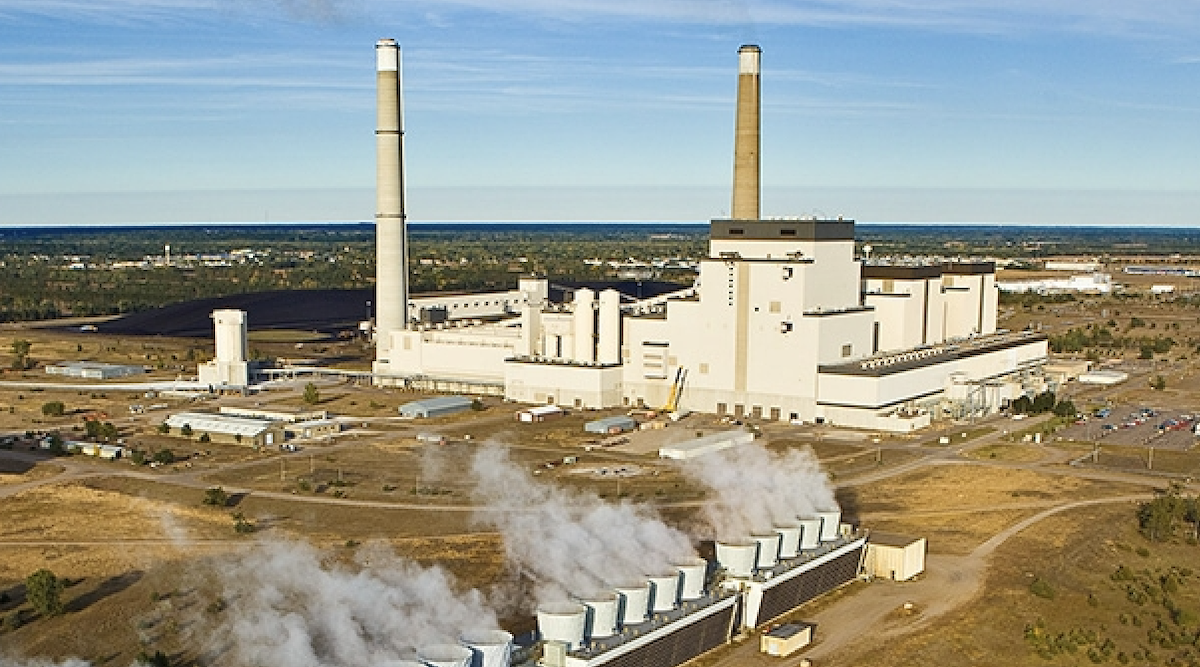
In Sherburne County, Minnesota, a giant coal power plant that once consumed 9 million tons of coal every year is transforming into something entirely new. The Sherco Energy Hub is rising where the Sherco plant once stood, and it shows just how quickly the energy landscape is shifting — no matter what happens in Washington.
Sherco was the biggest power plant in Minnesota, with three massive coal-burning units that together produced 2.2 gigawatts of electricity. That is enough power to run millions of homes. The plant was built in the 1970s and 1980s, with its newest unit costing roughly $1 billion to construct. But coal is on its way out, and the numbers are making the case loud and clear.
Xcel Energy, the company that owns Sherco, has already shut down Unit 2. Unit 1 will close soon, and Unit 3 is scheduled to stop burning coal by 2030. In their place, a vast solar farm is already up and running. Three phases of a new solar array have been completed, producing 710 megawatts of clean electricity. Xcel plans to add a fourth phase by 2029, which would bring the total solar capacity to 910 megawatts — enough to power more than 190,000 homes.
The transformation goes beyond solar panels. The Energy Hub will also include two large lithium-ion battery systems capable of storing up to 600 megawatts of electricity. Lithium-ion batteries are the same kind used in electric cars and phones, just much, much bigger. They can store solar power generated during the day and release it when the sun goes down or on cloudy days.
There is also an experimental iron-air battery project at the site, developed by a U.S. company called Form Energy. Iron-air batteries are a newer technology that can store energy for much longer periods than typical lithium-ion batteries — sometimes for days rather than hours. This matters because it could help Minnesota rely on solar and wind power even when the weather does not cooperate. The project originally received $70 million in funding from the U.S. Department of Energy, though that federal support was pulled back under the Trump administration last year. Despite the uncertainty, the technology is still moving forward. Earlier this year, Google announced plans to build a 300-megawatt iron-air facility in Minnesota for a planned data center.
A new transmission line called the Minnesota Energy Connection will help carry all this clean power to homes and businesses across the Upper Midwest. The line is designed to handle up to 4,000 megawatts of renewable energy, with a smaller 420-megawatt natural gas plant as backup for times when solar and wind cannot keep up.
Coal once seemed permanent. Sherco was built to run for decades, burning a fuel that powered the 20th century. But the economics have flipped. Solar and wind are now cheaper to build and run than coal ever was. Big companies like Xcel are finding that retiring old coal plants and replacing them with clean energy makes financial sense — and that is a story playing out in states across the country, regardless of what happens at the federal level.