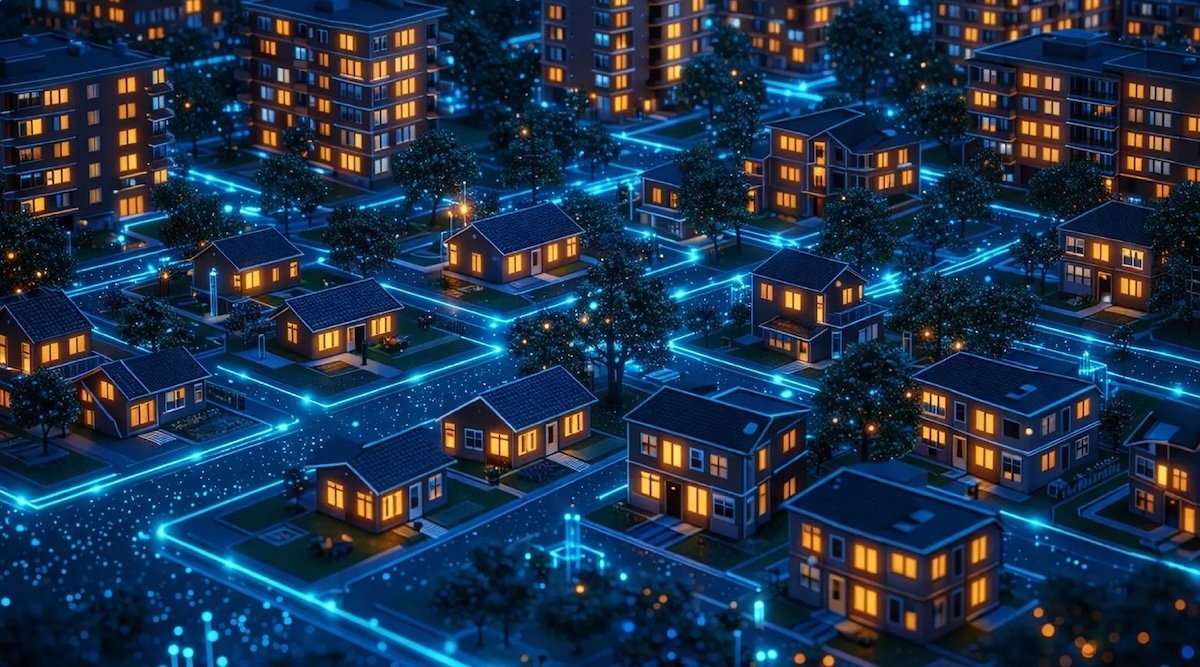
Ann Arbor, Michigan just made rooftop solar affordable for renters, homeowners, and institutions alike—with a simple $600 annual subscription that includes battery storage. The city's new Sustainable Energy Utility, or A2SEU, launched the program after voters authorized it in November 2024, offering a lifeline to homeowners at a moment when the rooftop solar industry is reeling from the elimination of federal tax credits.
The stakes for solar adoption have rarely been higher. Small-scale solar arrays now contribute an estimated 58 gigawatts to the U.S. electricity grid, but that growth has stalled since President Trump and Republican allies in Congress eliminated the generous federal tax credit for residential solar installations. The impact has been swift and severe. SunRun, the leading U.S. solar installer, reported a 25% drop in subscriber additions in the first quarter of 2026 compared to the same period in 2025. Enphase, which sells batteries and inverters for rooftop systems, saw U.S. sales plummet 23% year over year—a direct consequence of losing a tax break that previously saved homeowners $6,000 on a standard $20,000 solar panel system.
Into this turbulent landscape steps Ann Arbor with an ingenious pivot: solar leasing with integrated battery storage. Rather than requiring upfront equipment costs, property owners simply pay a flat $600 per year through 2030, with payments adjusted seasonally to match solar output. From April through September, when the sun shines strongest, homeowners pay $75 monthly. From October to March, that drops to just $25 per month. The model sidesteps the tax credit problem entirely by spreading costs over time, much like a utility bill.
"The Sustainable Energy Utility is an innovative new form of municipal energy utility. It's optional, supplemental, community-owned, and provides 100% local, renewable and clean energy solutions," the A2SEU explains. This supplemental approach is crucial: the rooftop solar and battery system works alongside the existing grid connection through local utility DTE, ensuring reliable electricity regardless of weather or time of day. No household can rely entirely on sun and stored energy year-round.
The program extends well beyond homeowners. A2SEU serves all residents, businesses, and institutions within Ann Arbor—including landlords, renters, nonprofits, schools, and houses of worship. This inclusivity matters. Renters have long been locked out of solar benefits, and the Ann Arbor model opens the door for them too. The utility also plans to offer geothermal heating and cooling systems and manage energy-sharing microgrids, creating a comprehensive renewable energy ecosystem.
One realistic caveat worth noting: homeowners may experience what efficiency experts call "usage creep." With cheaper solar electricity flowing in, families might not notice how new appliances, an electric vehicle charger, or lifestyle changes can steadily push household electricity demand higher. Savings on solar power may plateau as grid consumption rises. But by bundling geothermal options and microgrids into the mandate, Ann Arbor is building guardrails against that trap.
What makes Ann Arbor's solution notable isn't just the dollar amount—it's the strategy. As legacy solar companies scramble to reinvent themselves in a post-tax-credit world, the city has shown that municipal utilities, not federal incentives, might be the next frontier for solar democracy. A2SEU proves that when homeowners, renters, and institutions all pay the same flat rate for renewable energy, affordability stops being a privilege.