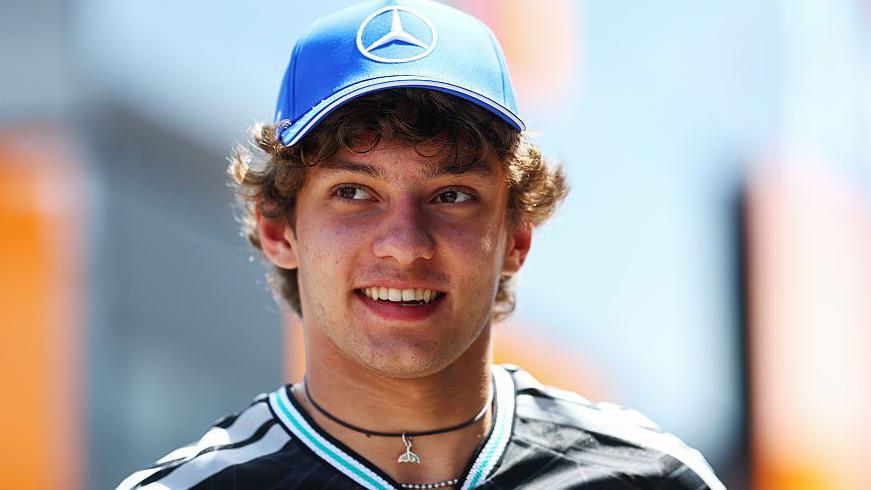
Kimi Antonelli has learned to silence the inner voice that once plagued him—the doubt that whispered during that grueling European stretch in his debut season, when everything felt impossible. Now, in his second year in Formula 1, the Italian driver carries a different weight: not the crushing pressure of uncertainty, but the clarifying focus that comes from hard-won experience.
"This year it's a different story and you mature a lot after one year in F1 not only as a driver but also as a person," Antonelli reflected, describing the profound shift between his first and second seasons. Last year he finished seventh in the championship, 169 points adrift of his teammate George Russell, who claimed two race victories while Antonelli managed just one podium—a third-place finish at the Canadian Grand Prix. Russell outqualified him five times all season, establishing an average advantage of 0.24 seconds. It was, by the numbers, a humbling apprenticeship. But Antonelli's breakthrough this year tells a different story: he now leads Russell 5-4 in qualifying, with an average advantage of 0.110 seconds—a remarkable reversal that suggests the gap has narrowed significantly.
The transformation speaks less to a sudden talent surge than to the compounding power of repetition and self-awareness. "Last year during the difficult period, I got to know myself better," Antonelli said. "Considering how bad it was in the moment, I am very grateful it happened because it made me grow a lot and taught me a lot about myself." That gratitude, earned through adversity rather than bestowed by circumstance, hints at the emotional maturity that now frames his approach to racing.
What changed is deceptively simple: he learned what works. "The year of experience itself played a massive role—making your own experiences, understanding what is good and not good for you during the weekend and outside the weekend," he explained. He now reads track evolution with greater precision, balances his physical and mental energy more efficiently, and understands not just his own potential but how to extract it within his team's systems. These are the unglamorous gains that separate a competitive driver from one who is finally in control.
Remarkably, this progress has unfolded while Antonelli finds himself leading the championship—a position that might have paralyzed him a year earlier. Instead, he has approached it with refreshing clarity, declining to let the weight of opportunity distort his focus. "I am not really worrying about it," he said of the championship pressure. "I want to really focus on the process and what I have to do and enjoy as much as possible the weekend and drive as fast as possible and then we will see where we end up at the end of the year." It is the statement of someone who has learned that the surest path to a title runs through the perfection of individual weekends, not through dreaming of outcomes.
Even Fernando Alonso, the two-time champion whose own F1 debut predated Antonelli's birth by more than five years, has recognized something special emerging. "Now he has a car that is dominating and he is adapting to that car and winning races without making mistakes and feeling the pressure of leading the championship," Alonso said. But he offered a reminder too: "This is F1 and you need to perform at the highest level always." Antonelli has answered the first question—whether he could grow beyond his doubt. The season ahead will reveal whether he can answer the next one.