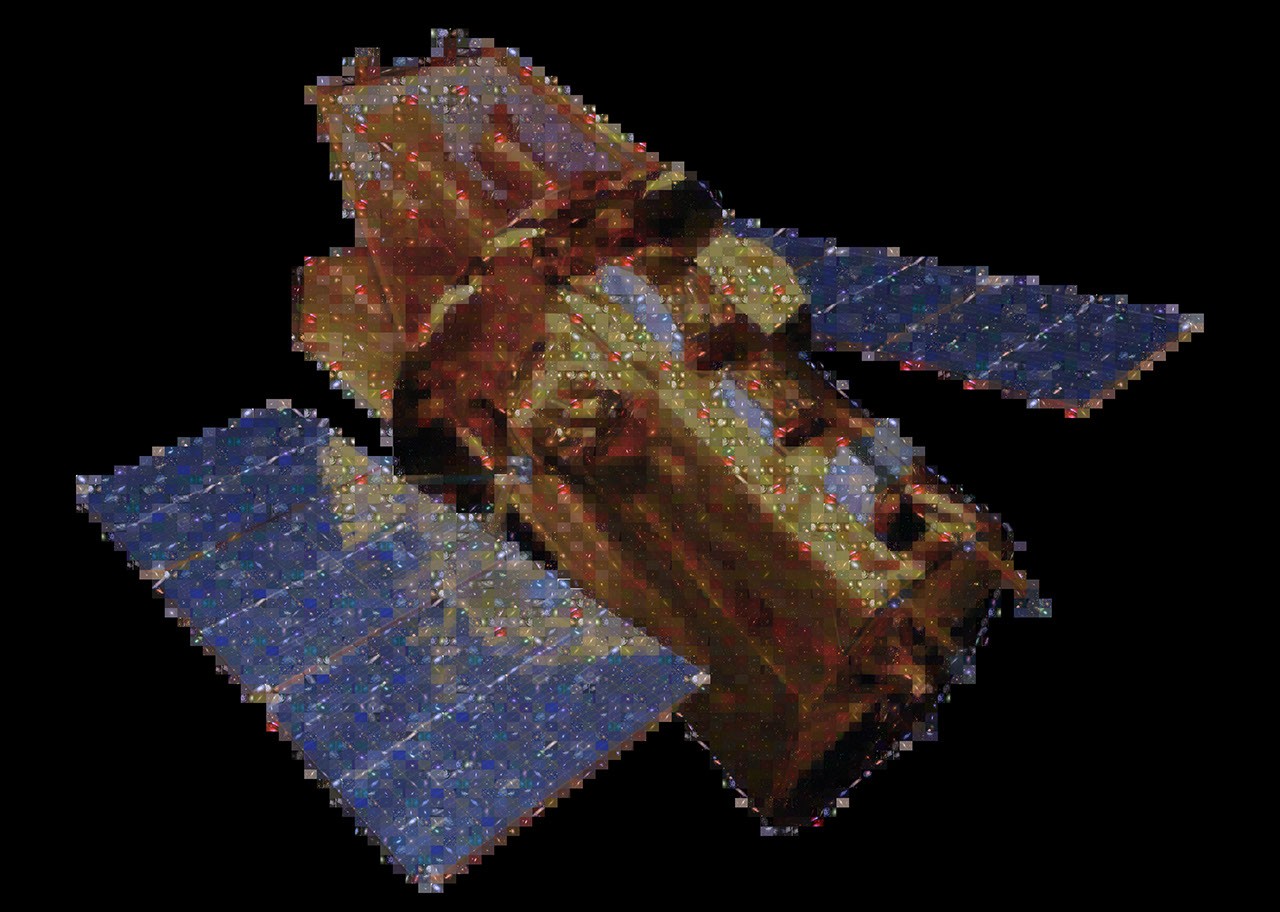
Nearly 22 years after it began its work in space, NASA’s Neil Gehrels Swift Observatory has made its final return: the satellite re-entered Earth’s atmosphere, bringing its mission to a close. The end of Swift marks the finish of a long-running effort to observe the cosmos from orbit.
The news appears in the November 6, 2026, edition of Astronomy Picture of the Day, or APOD, a NASA-supported service that features a different space image each day with an explanation written by a professional astronomer. The entry is titled “A Farewell to Swift.” Its brief description gives a clear outline of the milestone: Swift’s mission lasted nearly 22 years, and the satellite has now re-entered the atmosphere.
That span matters because a space observatory can keep gathering views of the universe over many years. Swift’s nearly 22-year run gave it a lasting place in NASA’s program of cosmic observations. The description does not list the discoveries made by the observatory, the number of observations it collected, or the precise date and circumstances of its re-entry. Those details should not be guessed at; what is clear is that a long mission has ended and the satellite is no longer in orbit.
Swift’s full name honors Neil Gehrels, an astronomer whose name is now part of the observatory’s legacy. The APOD entry credits NASA/Swift and AndreaMosaic. Cecilia Chirenti, Robert Nemiroff, Jerry Bonnell, and Keighley Rockcliffe are listed as authors and editors. The page is a service of ASD at NASA’s Goddard Space Flight Center, NASA Science Activation, and Michigan Technological University.
A re-entry is a physical ending, but not an erasure of the work a spacecraft has already done. Swift’s years in space are the central measure offered in this account: nearly 22 years of observations before the satellite returned through Earth’s atmosphere. The source gives no further account of what its final moments looked like, so the farewell is a simple one rather than a detailed scene.
The APOD entry also places Swift’s departure in a familiar cycle of science: instruments have a finite time in space, while the information they gather can continue to matter after the mission stops. The page does not spell out what comes next for any particular Swift data or for a successor observatory. For now, the milestone is both specific and significant: one satellite’s long watch of the cosmos has ended, after almost two decades and two years among the stars.