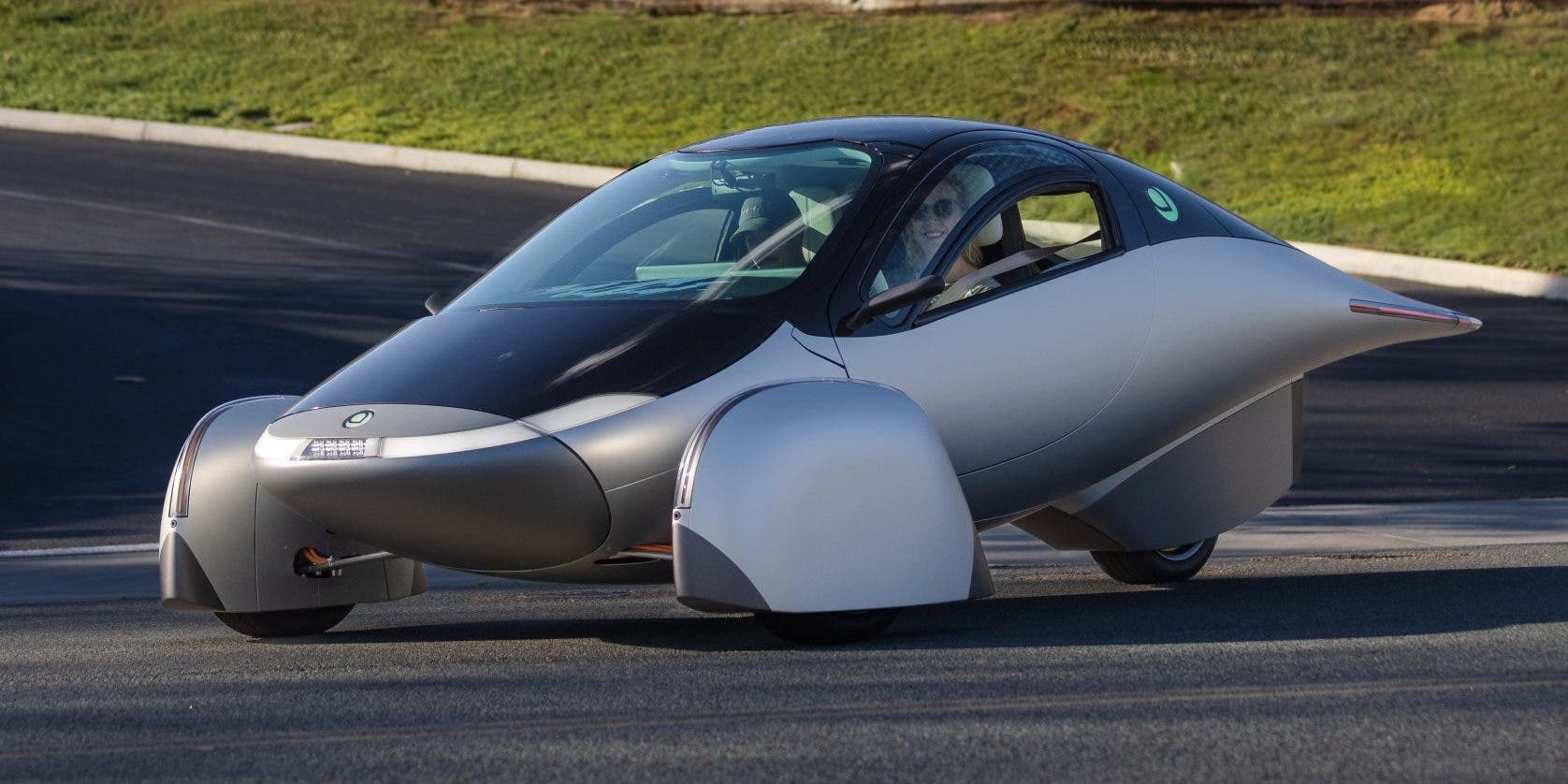
When Christopher Boucaud parked his Aptera electric car in the Arizona sun last month, something unexpected happened — it quietly charged itself. No plugging in, no hunting for a station. Just sunlight doing its thing. The car's built-in solar panels pulled in a peak of 4.6 kilowatt-hours in a single day. That number matters more than it might sound.
The test, conducted by Aptera Motors in their validation vehicle nicknamed Atlas, proved that curved solar panels and a custom charge controller can actually work in the real world — not just in computer models. For most drivers, that would be the whole story. But for Aptera, this is just the opening chapter.
Here is the tricky part: pulling energy from the sun is only half the battle. To deliver the promised 40 miles of daily solar range, the car needs to run on just 4 kilowatt-hours — the same amount of electricity a typical microwave uses in about four hours. That means the Aptera must travel 10 miles on a single kilowatt-hour. Most electric cars on the road today only get 3 to 4.5 miles per kilowatt-hour. Aptera needs to be more than twice as efficient.
Is that even possible? Physicists say yes. The secret lies in a teardrop-shaped body that lets air slide over it like water over a stone, plus a lightweight frame and just three wheels instead of four. In recent coastdown testing, the Aptera took over three full minutes to slow from 60 miles per hour to a complete stop. A typical car does it in under a minute. That shows how little air resistance and friction the Aptera faces.
The company plans to put the car through its paces this summer. Independent testers will run their own validation in July. Then Aptera's engineers will take the next step: driving the car from 100% battery all the way down to empty to measure real-world efficiency across the full range.
If the numbers hold up, Aptera could prove something bigger than a single car's range. It would show that electric vehicles can work for people who cannot charge at home — apartment dwellers, street-parkers, anyone without a garage. For millions of people around the world, the hassle of finding a charging station is a dealbreaker. A car that tops itself off in a parking lot all day changes that equation entirely.
Zach McGaughey, who writes for CleanTechnica and plans to own an Aptera in New Mexico, says he hopes the real-world tests beat the target. "I probably will not get 40 miles in North Carolina," he noted, "but even getting 20 to 30 would be a big plus." That kind of honest optimism captures why this matters. Solar cars will not work everywhere equally — clouds, shade, and winter sun all cut into generation. But even partial solar range could reshape how people think about plugging in.
The road ahead is still long. Numbers on paper and numbers on the road rarely match perfectly. But by this fall, we may finally know if a car that drinks sunlight is ready for the real world — or still stuck in a promising prototype.