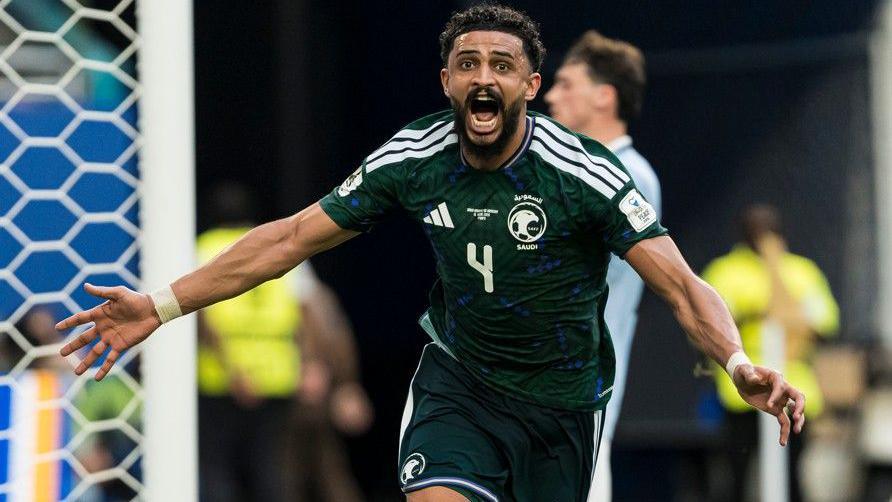
Abdulelah al Amri rose to meet the corner, head firm and eyes locked, sending the ball crashing into the net—not just leveling the score against Uruguay, but etching his name into Saudi football history. His goal in Miami wasn’t just a moment of pride; it was a symbol of transformation. The Green Falcons, once synonymous with heavy defeats like the infamous 8-0 loss to Germany in 2002, are now holding their own against elite international sides. Their 1-1 draw with Uruguay marked Saudi Arabia’s first opening goal in a World Cup since 1994, breaking a 28-year drought and signaling a new era shaped not just by passion, but by investment and vision.
The shift began in earnest in 2023, when the Saudi Pro League became a global football phenomenon, splashing over £700 million on stars like Cristiano Ronaldo, Karim Benzema, Neymar, and Sadio Mané. While critics questioned the motives, the impact on the national team has been tangible. With the exception of defender Saud Abdulhamid, who plays for Lens in France, every starter in Saudi Arabia’s World Cup opener plies their trade domestically—proof that the league is no longer just a retirement destination, but a competitive hub nurturing homegrown talent.
Veteran captain Salem al Dawsari, 34, remains a talisman, having scored the winning goals against Egypt in 2018 and Argentina in 2022. But the future is being built around younger stars like 22-year-old Musab al Juwayr, who led qualifying with three assists, and al Amri and Abdullah al Khaibari—both teammates of Ronaldo at Al-Nassr. Al Amri’s goal was historic in two ways: the first ever by a Saudi defender at the World Cup and the nation’s first goal from a corner in tournament history.
The influence of global stars extends beyond the pitch. Benzema, after joining Al-Ittihad, emphasized the developmental mission: “We have to teach the young players here what it takes so they can move to other clubs.” Ronaldo, who recently scored his 100th goal in the Saudi Pro League, has called it “better than MLS,” while Mané praised its global reach and personal fulfillment. The league’s strategy is evolving too—less focused on aging icons, more on younger players with resale potential, though the door remains open for a calculated splash, such as a potential move for Mohamed Salah.
As Saudi Arabia prepares to host the 2034 World Cup, the message is clear: the investment isn’t just about spectacle. It’s about building a footballing culture, one that empowers local talent through world-class competition at home. The days of 8-0 defeats may not be forgotten, but they are no longer defining. The Green Falcons are learning to soar.