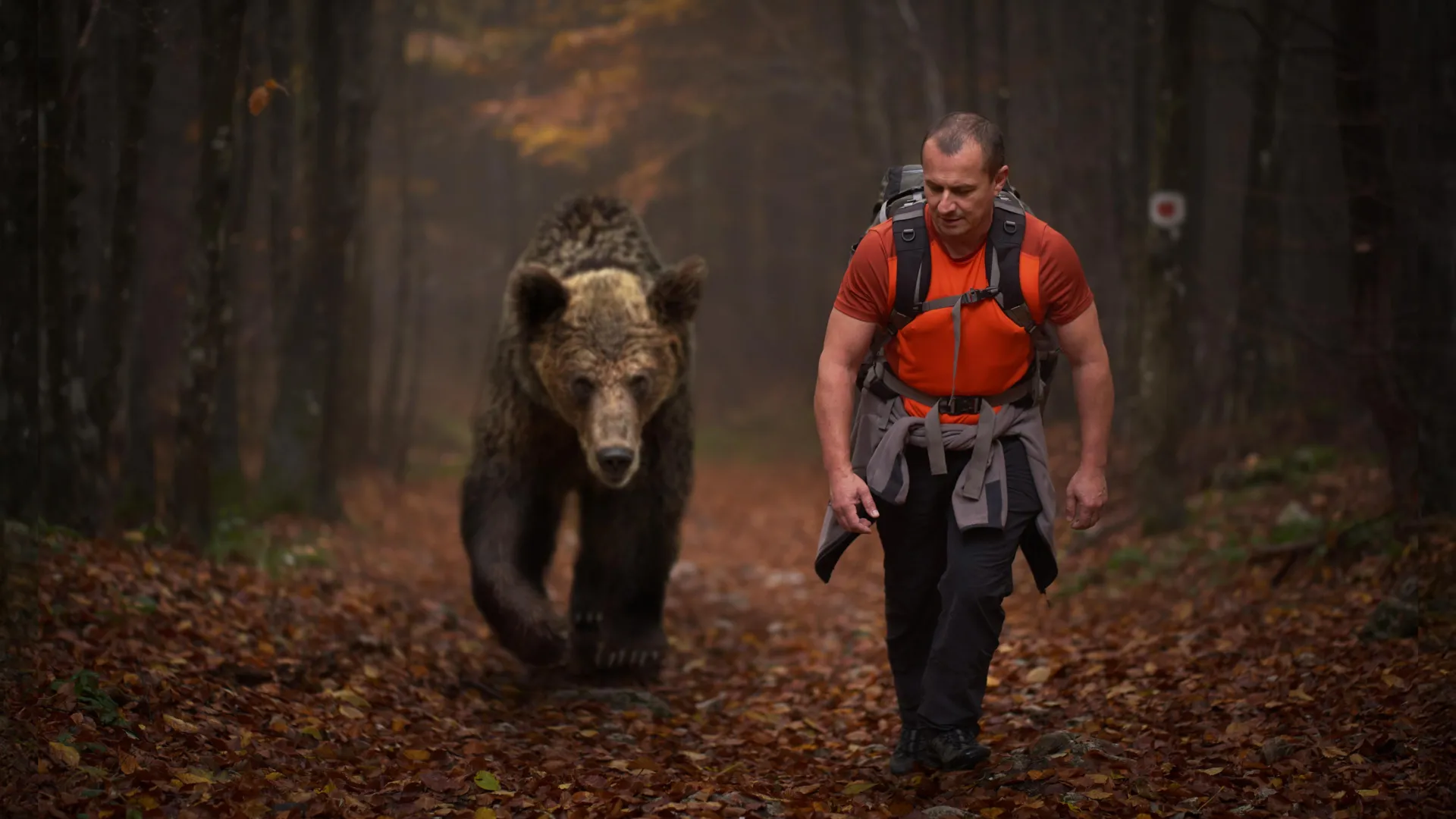
For three decades, scientists have called humans the "ultimate super-predator" because we hunt and fish on a scale no other animal matches. But new research from India suggests the story is more complicated — and actually more hopeful — than that label implies. A team at the Centre for Ecological Sciences, Indian Institute of Science in Bangalore studied how wild animals react to different kinds of human contact. Their findings, published in the journal Ecology Letters, show that wildlife does not fear every person it encounters. "The short answer is: no, not always," said Shawn D'Souza, a PhD student who led the study. "We found strong evidence that lethal humans such as hunters and fishers are indeed perceived as threatening. Animals in areas exposed to lethal humans tend to be more vigilant and spend less time foraging. In contrast, responses to non-lethal humans such as tourists or researchers are weaker and more variable." The researchers analyzed how animals in many different places changed three key behaviors: feeding, watching for danger, and moving around. Each of these choices reflects a difficult trade-off. Every second spent scanning for threats is a second not spent eating. Moving more can drain an animal's energy, making it harder to survive. But the team discovered something surprising. In some cases, places where humans live and build — like roads and settlements — actually became safer for certain animals. "In certain cases, these areas can function as perceived refuges," D'Souza explained. The reason? The predators that hunt animals tend to avoid humans too, so prey sometimes feel more relaxed near people. One surprising finding challenges the idea that all human presence is terrifying to animals. "We found strong evidence that lethal humans such as hunters and fishers are indeed perceived as threatening," D'Souza said. "But responses to non-lethal humans such as tourists or researchers are weaker and more variable." The research supports something called the risk allocation hypothesis — the idea that animals judge threats based on how severe and how predictable they are. When danger is rare and comes in a pattern animals can expect, wildlife may relax and go back to their normal lives. Professor Maria Thaker, another co-author, noted that open areas near roads can also offer good feeding spots for smaller animals, though eating there carries the risk of being hit by vehicles. Professor Kartik Shanker said the findings could help reduce conflicts between people and wildlife. If culling — carefully removing some animals — discourages the rest from entering human areas, that might work better than other current methods. The team says more long-term research is needed to understand whether animals are simply getting used to human activity or actually changing evolutionarily over time. Either way, the message is clear: not all human contact spells danger for wild animals. The way we share space with wildlife matters — and that gives us room to do better.
← News
Science Breakthroughs Science Breakthroughs Knowledge
Are humans really the ultimate super-predator?
30 Years of research
Bangalore, India Study location
Shawn D'Souza, PhD Student Lead researcher
Ecology Letters Journal
3 (Feeding, Vigilance, Movement) Behavioral factors measured