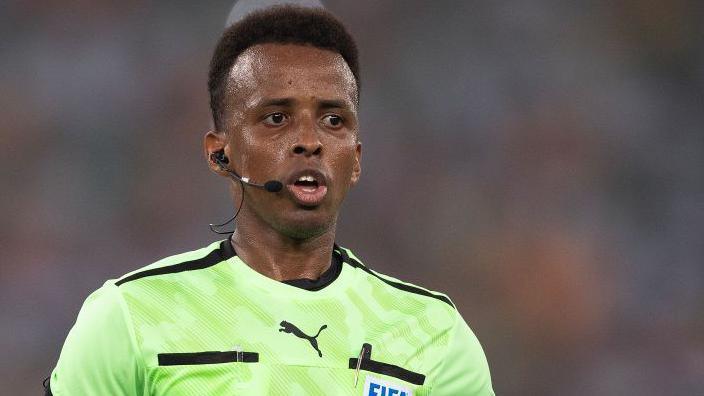
Omar Artan will take charge of the UEFA Super Cup final between Paris St-Germain and Aston Villa in Salzburg on August 12, a prestigious appointment that reframes a moment of exclusion into one of recognition for the Somali referee. Earlier this year, Artan was denied entry to the United States despite holding a diplomatic passport and a valid visa—turned away at Miami airport just before he was set to become the first Somali referee to officiate a World Cup final. Now, in a move coordinated between UEFA and the Confederation of African Football, he has been given one of European football's most high-profile matches to oversee.
The appointment matters because it signals something larger than football alone. Artan, who was named the 2025 CAF men's referee of the year and has been on FIFA's international list since 2018, represents a generation of African officials breaking through at the game's highest levels. His journey—and the sudden blockade he encountered—exposed a vulnerability in international sport: the degree to which geopolitical restrictions can disrupt the movement of officials and athletes, regardless of their credentials or qualifications. When he was stopped at Miami airport, a US government official cited his "association with suspected members of terror organisations," a claim that drew immediate scrutiny given Somalia's placement on travel restrictions introduced by President Donald Trump.
The match itself is a showcase for top-level talent. PSG, winners of last season's Champions League, will face Aston Villa, who claimed the Europa League crown. These are teams accustomed to the global stage, and they will have one of Africa's finest referees managing the encounter. UEFA president Aleksander Ceferin framed the decision as a statement of principle. "Football is made to connect people, and UEFA wants to show its respect to Omar and his outstanding officiating skills, which had earned him such a prestigious nomination," Ceferin said in a statement, adding that he was grateful to CAF president Patrice Motsepe for "supporting enthusiastically our initiative."
What makes this appointment significant is how it acknowledges both the wrong done and the talent that was never in question. Artan had already proven himself at the highest competition levels within African football. His skills were never disputed—the obstruction was administrative and geopolitical, not professional. By awarding him the Super Cup, UEFA is not erasing what happened in Miami, but it is refusing to let it have the final word on his career or capabilities.
The match in Salzburg on August 12 will draw millions of viewers across Europe and beyond. Artan will officiate it not as a consolation, but as a world-class referee doing what he has been trained and proven capable of doing. For a young official already recognized as the finest in his confederation, the appointment restores what should have been his path all along—recognition at the very top of the game. It is a reminder that despite political barriers and bureaucratic walls, excellence has a way of claiming its place.