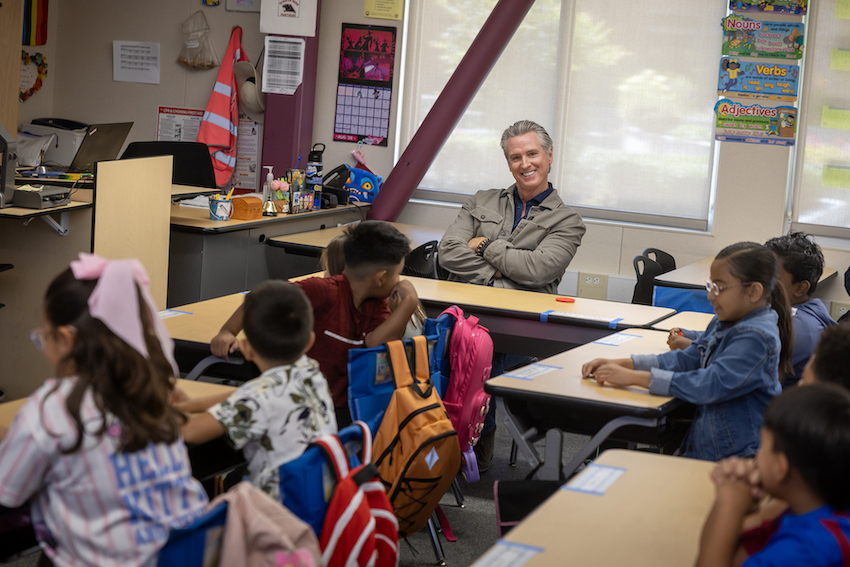
In Hayward, California, the school bell rang for millions of students this year — and for the first time, every single 4-year-old in the state got a free seat of their own. Governor Gavin Newsom and First Partner Jennifer Siebel Newsom kicked off the school year by celebrating a quiet revolution: Universal Transitional Kindergarten, now fully rolled out across all of California.
That one program is the centerpiece of something much bigger. California has decided, plainly, that a child's future shouldn't depend on a family's wallet. So the state now hands every 4-year-old a spot in free transitional kindergarten, saving parents an average of nearly $14,000 per child. And every public school student — every single one — gets two free meals a day. That's breakfast and lunch, paid for, no questions asked.
The numbers are staggering. During the 2024–25 school year, California enrolled 213,313 children in transitional kindergarten, making it the largest pre-K system in the entire nation. Since 2019, the state has poured $12.5 billion into making this happen. And it's working: kids who went through transitional kindergarten arrived at kindergarten roughly six months ahead in letter-word skills and three months ahead in applied math.
"We made a big investment in our kids, and it's paying off," Newsom said. The proof, he argues, is in the test results — students across the state are making gains in English, math, and science.
But the investment goes far beyond the classroom. California knows that a hungry or stressed child can't learn well, so it has taken a "whole child" approach. Through the Expanded Learning Opportunities Program, the state funds before- and after-school and summer programming for elementary students, backed by $4.6 billion in ongoing funding for 2025–26. Working parents get more than a break — they get 3,800 grants to child-care providers to expand facilities and capacity. There are also expanded literacy supports, school-based mental health services, programs for students with disabilities, and community schools that connect families to the help they need.
State Board of Education President Linda Darling-Hammond put it simply: California is building "the conditions that allow students to learn and succeed." The job now, she says, is making sure those conditions reach every community — through strong teaching, engaged families, and attention to student well-being.
It's a bet on the next generation, and the early returns are encouraging. As the First Partner put it, opportunity should start early and build "a strong foundation for California children and families to thrive for years to come." With free pre-K for every 4-year-old and free meals for every student, California is betting that when you invest in kids, everyone wins — and the kids are already proving them right.