Louisiana's shoreline has shifted dramatically over 20,000 years, yet in just a few centuries, humans have tried to pin it down with cities, roads and levees—a strategy that may no longer work. A new study in Nature Sustainability argues that coastal Louisiana faces an unprecedented reckoning: the region could experience three to seven meters of sea-level rise and lose as much as three-quarters of its remaining coastal wetlands, forcing a choice between planned relocation or crisis-driven displacement.
The stakes are rooted in geology and human history alike. When Indigenous populations first arrived in North America roughly 20,000 years ago, the continent was already in motion, its coastlines responding to climate shifts and sea-level changes. Jesse Keenan, a professor of sustainable real estate and urban planning at Tulane University and co-author of the study, calls this ancient rhythm a guide: "We've got to get it out of our heads that this is terra firma." By examining the last interglacial period 125,000 years ago—when temperatures and sea levels resembled projections for today's warming trajectory—researchers conclude that Louisiana is ground zero for coastal climate adaptation.
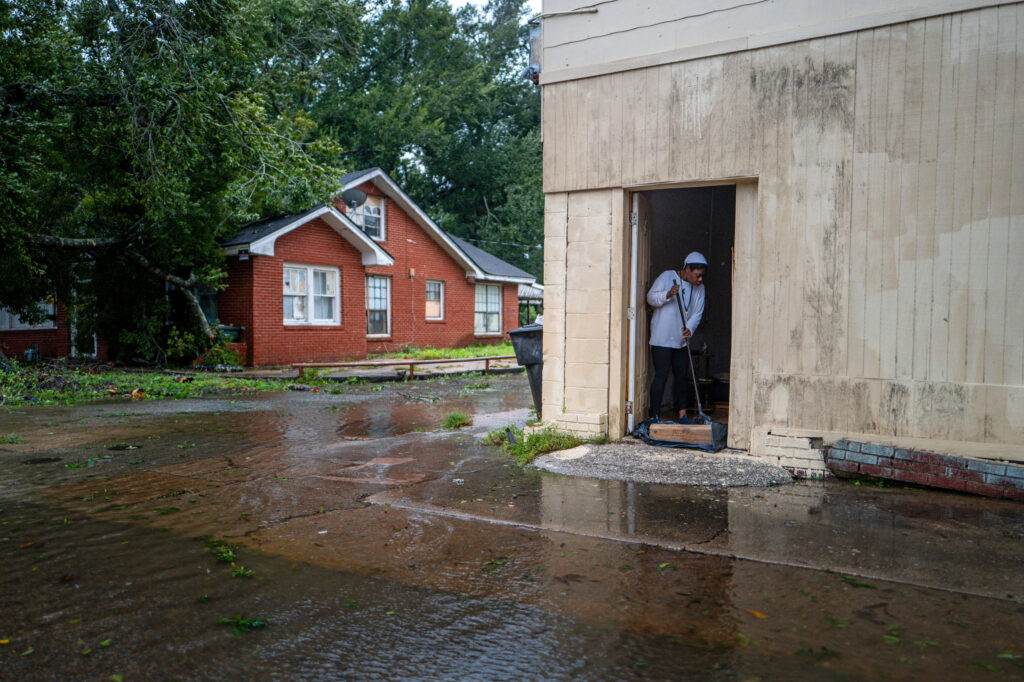
The physical crisis is already unfolding. Southern Louisiana sits at the convergence of rising seas, wetland erosion, stronger storms, and land subsidence, compounded by decades of oil and gas canals that have carved through the coast. The state contains what the IPCC identifies as the world's most exposed coastal zone, where the shoreline is projected to move more than 30 miles inland of New Orleans. Since 2000, nearly all of Louisiana's coastal zone has lost residents. After Hurricane Katrina in 2005, about a quarter of Orleans Parish's population left, while more than half of rural Cameron Parish relocated.
But the study's authors reframe this as an opportunity rather than a foregone tragedy. Brianna Castro, a professor of urban sustainability at Yale University's School of the Environment and co-author, argues that Louisiana can control the terms of movement rather than waiting for crisis to force families onto harsher ground. "If you build jobs and you build homes, specifically affordable homes, on safer ground, people will come," Castro said. The key insight is that outmigration is already happening—the question is whether it happens by design or by disaster.
Planned relocation, however, must differ fundamentally from typical managed-retreat approaches that simply buy out flood-prone properties and return land to open space. True adaptation requires moving opportunity alongside people: jobs, industries, schools, and affordable housing. Financial mobility must accompany geographic mobility, ensuring that relocation offers agency rather than abandonment. Castro emphasizes that New Orleans's future is not confined to its current footprint. The city's culture, institutions, and economic vitality can migrate to safer ground while remaining intact. "We're not going to 'lose' New Orleans," she said. "New Orleans has an incredibly rich local culture, and that will carry across the lake."
The implications extend far beyond Louisiana's coast. Vivek Shandas, a professor at Portland State University, calls Louisiana a "bellwether" for the nation—a place where planners and policymakers can study what works before similar pressures arrive elsewhere. The message challenges a modern assumption that settlement is permanent, that infrastructure once built must remain unchanged. The Earth, Shandas notes, is "a very dynamic and incredibly fluid system." Louisiana's choice to plan rather than be overtaken by crisis could reshape how America responds to climate disruption.