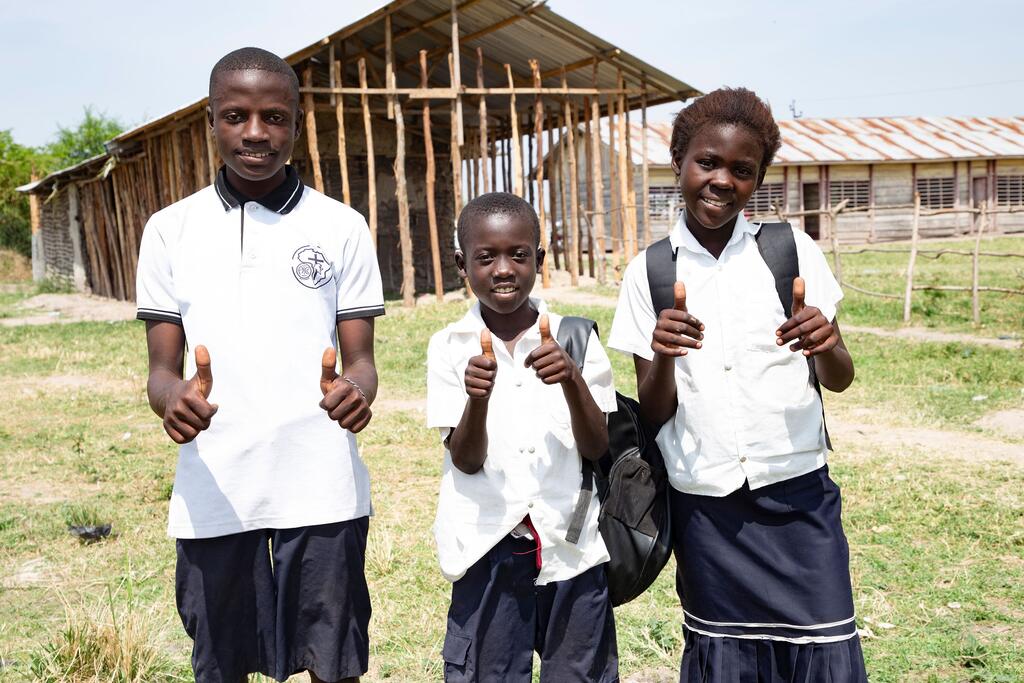
Eight-year-old Kennedy squints at construction happening outside his classroom at Mabanga Primary School in Goma, imagining a future where he can learn without the hum of two other classes competing for the same space. For years, his school squeezed multiple classes into single rooms, making concentration almost impossible. That reality is about to change, thanks to a US$10 million programme funded by the UN's Education Cannot Wait fund that is rebuilding schools across Ituri Province in the Democratic Republic of the Congo.
The scale of need is staggering. Eastern DRC has been ravaged by decades of conflict, but violence escalated sharply in 2025, forcing tens of thousands of families to flee. An estimated 5.3 million people are now internally displaced across the country, and schools have become casualties of war—destroyed by fighting or occupied by armed groups. Nationwide, 6.4 million children remain out of school. Girls and children with disabilities face particular dangers in a landscape where schools are either unsafe or nonexistent, exposing them to recruitment by armed groups, gender-based violence, kidnapping and severe psychological trauma.
Yet the crisis has also sparked urgent action. The new two-year initiative will reach more than 62,000 crisis-affected children in Ituri Province, with priority given to girls, internally displaced children and the most vulnerable. It builds on other programmes from which over 125,000 children have already benefited, but this expansion represents a significant scaling of what works: not just new buildings, but comprehensive support designed to heal as much as educate.
The approach is holistic. Alongside constructing and rehabilitating safe classrooms, the programme strengthens teacher capacity, expands mental health and psychosocial services, reinforces child protection systems and addresses gender-based violence risks. Schools in displacement-affected areas have been forced to run double shifts or pack multiple grades into one classroom. New and rehabilitated structures reduce that suffocating overcrowding and create gender-responsive spaces that signal stability to communities still reeling from violence. Catch-up programmes ensure children who lost years of schooling are not left behind. Support for children with disabilities is woven throughout.
The story of Jérémie illuminates why this matters. Displaced by conflict and grieving family members killed in the fighting, he carries ambitions that could seem naive in a war zone: "I want to be a general so that I can advocate for peace in the country." Kennedy simply wants to hear his teacher. These are not luxuries. As education transforms from a development metric into a lifeline, these children represent something larger than their own futures. When children are excluded from school, cycles of poverty and conflict deepen, undermining economic growth and regional security. Education delivers measurable long-term returns: higher lifetime earnings, improved health outcomes, stronger civic participation and reduced risk of recruitment into armed groups.
Eastern DRC's future is already sitting in its classrooms, or waiting for them to be rebuilt. One room at a time, one safe space after another, the country is working to ensure that children like Kennedy, Jérémie and their peers have the chance to grow into the leaders their nation desperately needs.