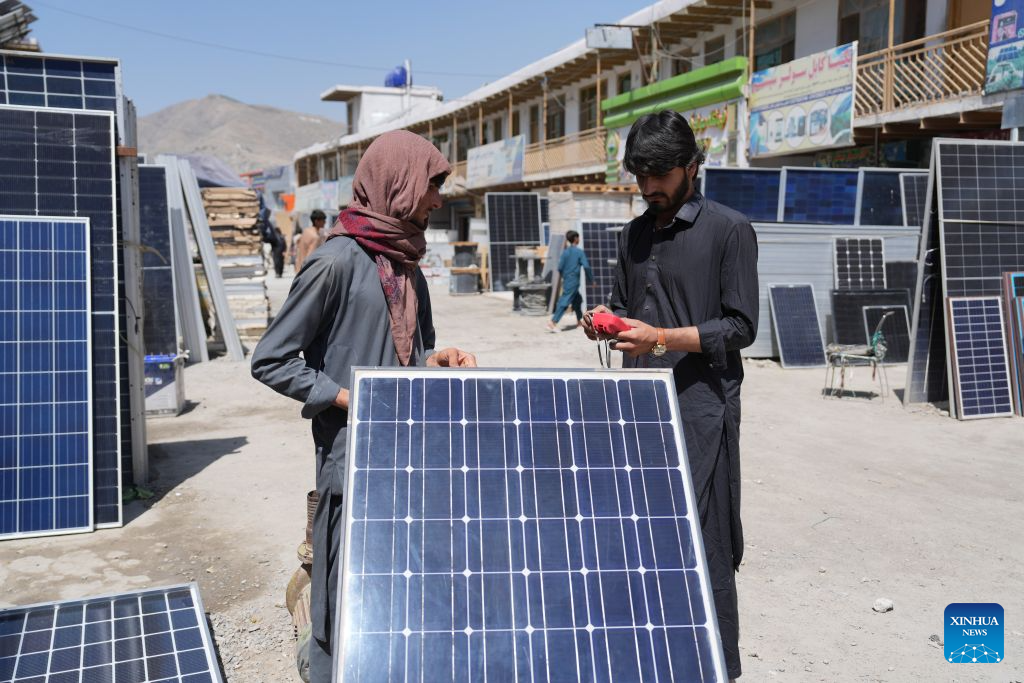
At a busy solar market in Kabul, customers shuffle between displays of solar panels, batteries and inverters, asking questions and comparing prices. Years ago, most would have needed a technician to set up their systems. Today, many buy the equipment and install it themselves.
The shift tells a quiet story about Afghanistan's energy future. Frequent power shortages have pushed more households, businesses and farmers to embrace solar power, and the products filling that need come mostly from China.
"In winter, power cuts are common, and during summer the electricity supply is often not enough for daily needs," said Kabul resident Nusratullah Mohammad Khail, who installed a solar system after years of unreliable power. He said the system has worked reliably and that good-quality batteries can last for many years with proper care.
Qari Gul Alam Samim, a dealer who sells solar equipment, said customer numbers have grown steadily as more people learn how solar technology works. "Now, many people understand how the equipment works and can complete much of the installation themselves after buying it," he said.
The market serves a wide range of buyers. Homeowners want backup electricity. Shopkeepers hope to keep the lights on during outages. Factories need steady power to run equipment. And farmers are using solar-powered pumps to draw water from wells instead of relying on expensive diesel or unreliable grid electricity.
One farmer named Ahmad, who works land in a rural district outside Kabul, said solar panels have changed the way he manages his crops. Before, he depended on diesel pumps or irregular electricity to water his fields, both costly and often unreliable. After installing a small solar-powered pumping system, he can now irrigate his land more consistently throughout the day.
Business peaks between March and July, when demand for solar equipment rises across the country. Haji Qari, another trader, said hundreds of containers carrying solar products arrive during the season. The 600-watt and 700-watt systems are especially popular because they meet the needs of many families without being too expensive.
As solar technology becomes more familiar across Afghanistan, more people are finding they can solve old problems with new tools — and they no longer need to wait for someone else to flip the switch.