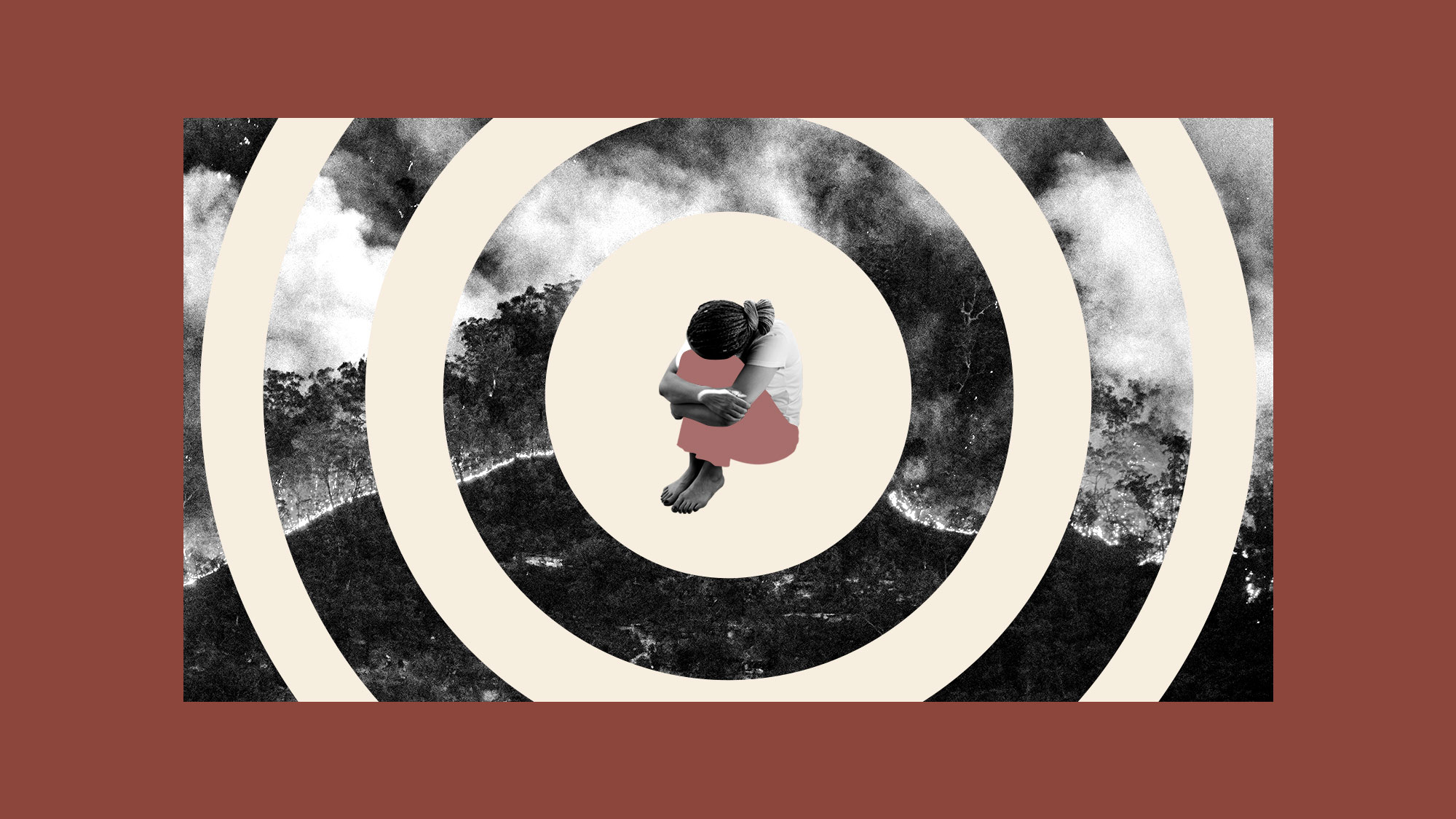
Leslie Davenport, a licensed therapist who works with climate-anxious clients, has reframed a question that troubles many: In a world where environmental collapse is genuinely unfolding, how do you distinguish between healthy concern and unhelpful catastrophizing?
The answer, she says, hinges on a fundamental shift in how we think about reality itself. Before understanding the full scope of climate science, Davenport used the standard therapeutic framework taught to anxiety sufferers: identify distorted thinking, recalibrate toward what's realistic. But that model breaks down when reality itself is increasingly dire. For climate-aware clients, anxiety isn't a cognitive distortion—it's a rational response to genuine threats and inadequate efforts to address them.
The distinction matters because our brains naturally skew toward threat perception. Humans experience the negativity bias, a cognitive pattern that registers threatening situations three to five times more intensely than positive ones. In the age of doomscrolling, this evolutionary hangover can become a liability, overwhelming us with bad news we can't metabolize. Yet dismissing climate concern as catastrophizing would be equally hollow when the actual science points to real destruction.
What separates threat awareness from threat rumination, Davenport explains, is whether your mind cycles through worst-case futures with no path forward. Threat awareness is necessary and healthy. Threat rumination exhausts without informing. The cognitive goal, she argues, must shift from asking "How bad is it?" (accurate assessment, which keeps you spinning) to "Given what I understand, what can I do?" (functional clarity, which moves you forward).
This reframing opens space for meaningful action. Climate-aware therapists help clients channel their distress into engagement with local organizations, advocacy work, or personal behavior change—not as denial of the crisis, but as a direct response to it. The work also requires deliberate effort to seek out progress narratives that rarely dominate the news cycle: dam removals, renewable energy growth, youth litigation wins, communities building resilience. These advances don't diminish the urgency of the crisis, but they remind us that answers exist.
Therapy offers something pure information cannot: a grounding in the body, not just the mind. Climate anxiety lives in both. Somatic practices, processing grief, managing the runaway thoughts that keep people awake at night, and building confidence to act strengthen the capacity to stay present with climate reality without being overwhelmed by it. This isn't "coping" in the sense of managing symptoms until life returns to normal. It's developing the inner resources to keep showing up, keep caring, and keep acting with an open mind and heart.
That kind of resilience—what Davenport calls the ability to maintain "functional clarity" amid genuine crisis—is what makes sustained engagement possible. For anyone wrestling with climate anxiety, the therapeutic task becomes less about convincing yourself the threat isn't real, and more about learning to live truthfully within it.