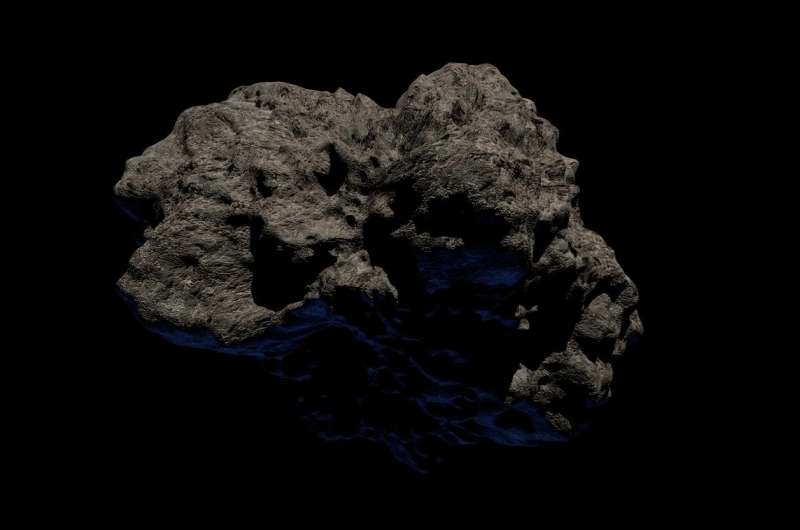
On Saturday at 11:14 GMT, a celestial traveler named (152637) 1997 NC1 will streak past Earth, coming within 2.56 million kilometers of our planet—more than six times the distance to the moon. Moving at a breathtaking 9 kilometers per second, this asteroid offers a rare opportunity for skywatchers to witness a cosmic near-miss, all without any risk to life on Earth. Discovered in 1997, the asteroid is estimated to be between 750 and 1,650 meters wide, making it a substantial object by near-Earth standards. While its exact size remains uncertain due to varying sunlight reflection data, its passage is certain—and safe.
Such close approaches by asteroids of this magnitude are uncommon, occurring only every few years, according to Juan Luis Cano of the European Space Agency’s Planetary Defence Office. This flyby is especially notable not because of danger—it poses none—but because of visibility. With a small telescope or even a pair of large binoculars, stargazers across much of the globe may catch a glimpse of the fast-moving speck against the starry backdrop. As it approaches, observers in the Northern Hemisphere will have the best views. At closest approach, it will be visible from nearly anywhere on Earth with clear, dark skies. On its way out, the departing asteroid will be visible primarily from the Southern Hemisphere.
Still, one celestial neighbor might steal the spotlight: the moon. Bright and full in the night sky, it could make spotting the faint, swiftly moving asteroid more difficult. Light pollution and local weather will also play crucial roles in visibility. But for amateur astronomers and curious skywatchers, the event is a reminder of how dynamic our cosmic neighborhood truly is. Tracking near-Earth objects like (152637) 1997 NC1 isn’t just about spectacle—it’s part of a global effort to understand and prepare for potential future threats, even as this one safely whizzes by.
No impact is possible; orbital calculations confirm the asteroid will not endanger Earth for at least the next century. Yet its passage fuels both scientific interest and public wonder. In an age where space feels increasingly within reach, moments like these connect us to the rhythms of the solar system. As telescopes turn skyward this weekend, people from Lisbon to Buenos Aires may share in the quiet thrill of watching a distant rock, born in the early days of the solar system, make its graceful pass—reminding us that we’re not just on Earth, but of it, and part of something far larger.